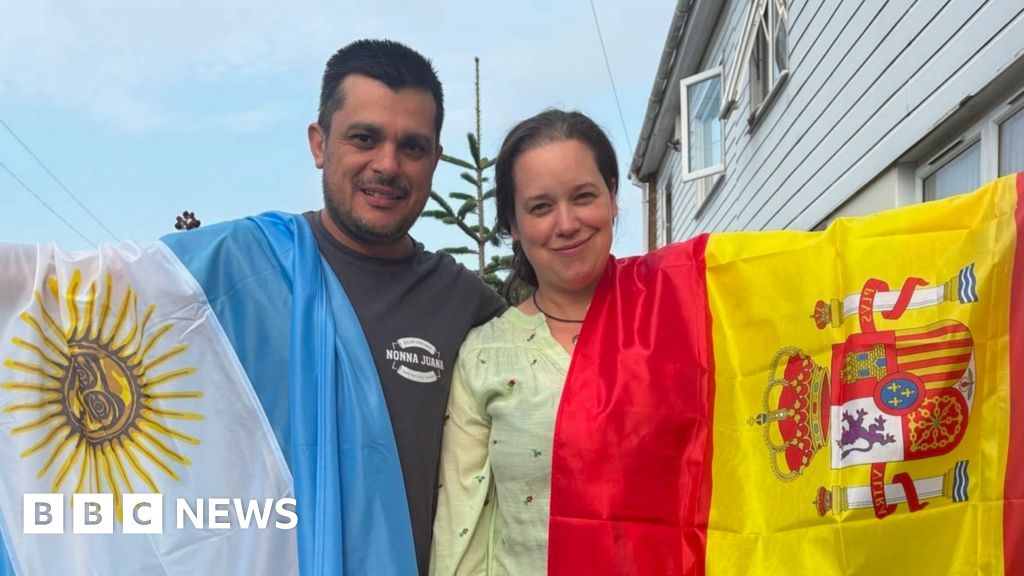
Spain and Argentina have something Americans never will at the World Cup.

The postmortems on the U.S. Men’s National Team’s elimination in the round of 16 during this World Cup had a lot of ground to cover: exposing the American pay-to-play club system, admiring the human-development-forward youth sports system in Norway, considering the aggressive pre-professional academy system in England, understanding how private equity is hollowing out a working-class sport.For my part, I can tell you that as the father of a reasonably skilled young player who has been in the sausage factory of this world, I know youth soccer in America reflects some of our worst national systems. We have lived it.The first time a coach tried to tell me what my older son was, my son was 6.My son had finished a week of soccer camp that ended with a tryout for a selective travel team in Dallas. We did not know he was being evaluated that week. A coach called me and laid out a whole future for a young boy who still wanted to be held during thunderstorms.Our son crawled faster than other kids walked. He didn’t care for a basketball hoop. T-ball held no interest. He loved dance class, especially tap. He was a physically intrepid toddler seemingly powered by cold fusion. I was a keen but mediocre soccer player, and his mother was a very good one, captain of her team at a competitive school. When our Dutch friends gifted my son a mini soccer ball emblazed with the logo of Ajax, the legendary Amsterdam club, my son kept it at his feet for years.I eradicated all screen-time rules during World Cup 2018. We’d wake up for the early game, have blueberries and scrambled eggs for breakfast, and I’d watch my son try to stand up in his high chair and join the applause after each national anthem played. Soccer was his.He’d kick around with me at home, play with his nanny and her family, Hugo Sánchez– and Maradona–revering Mexican Americans. When his mom would return from her taxing job, she’d kick off her shoes and play one-twos with our son. I played defense on him as he dribbled past me in the narrow hallways of our house, encouraging him to use both his feet, cheering when, at 4, he could trap the ball and turn in one motion.Two years later, when that Dallas coach called me to offer my then-6-year-old the chance to join “his” team, all the grown man spoke of was finality. In his eyes, my son was a finished product. The coach said that my son was “a natural at defense. We seem him as a Paolo Maldini. A Philipp Lahm.”For the soccer newbie, that’s like saying a child barely old enough to brush their own teeth unsupervised is going to be a Myles Garrett or a Scottie Pippen.The coach said he was going to send me the sign-up forms and a contract. A contract. It would cost $2,000 to join the team for a six-month “season.” We’d pay that twice annually. Another $200-plus in uniform costs. A hundred for a bag. Lexus dealers don’t move this fast with junk charges.He tried to hang up before I responded, but I had done my research. I asked a couple questions: Why does this league play games 5 vs. 5, reducing the number of touches, compared to 3 vs. 3? And why are you talking positions about a kid so young? The academies at Barcelona and at Ajax—two of Europe’s best—don’t lock a kid into a position until their teenage years.The coach sighed.“If he’s going to be on a team, he needs a position. And, hey, everyone’s got to get their position sometime.”We did not sign the contract.Instead, my son played as he had before. It did get harder over the next year. Kids his age were not hanging around the park to play pickup games. They were already in the circuit of piano lesson Monday, tennis lesson Tuesday, and, of course, travel soccer team practice on Wednesdays. Our second child, his younger brother, was still a toddler and absorbed both my and his mother’s attention.I was hitting my limits as a training partner. Nutmegging Dad and curling free kicks past Dad and then asking Dad for a particular kind of pasta for dinner will eventually lose its charm. An impulse took hold : My kid really likes something that he is also good at. I can’t let that desire of his die on the vine. I want to offer him something more.Through a referral, we found a one-on-one coach for $200 a week. He was young, a professional indoor player, and had worked with kids and teens for years. Enthusiastic, specific, sweet, bro-y, and, crucially, free of any ginned-up hype trajectory for our son, he was a strong match. “He loves it, so let’s find ways to keep him loving it,” he said to me once.My son got better rapidly, turning himself into a very good 8-year-old who could bring down balls in the air with a delicate touch. At home, he’d roll that Ajax ball under his feet while watching old Steve Irwin videos with me.Yes, it would have been worse to have been on a travel team focused on winning utterly empty tournaments where we’d spend the whole weekend traveling for maybe 45 minutes of action. But it took money and time to craft this positive space—about the same amount of money as the travel team might have been. This pricey oasis of training away from the noise of youth soccer couldn’t last. The kids a few years ahead of my son were fully immersed in Dallas’ hothouse travel scene. Those kids posed in team photo shoots emulating the celebration memes of the day: a finger on their temple by the corner flag, face both stoic and arrogant, or shushing the crowd as if taunting the home fans during a Belgrade derby.When we lived in Dallas, I thought that U.S. youth soccer resembled the American healthcare system. Everyone pays a lot of money up front, everyone gets jammed into numbered groups, no one can tell you what the costs and risks are at any stage of the process, half of your spare time will go to managing this as mediocre personnel bark at you, and if you find one great practitioner, it’s a miracle. The outcomes for all but the elite are generally crappy.We didn’t have a chance to find out. We moved from Texas to New Jersey to be closer to family. We also ended up moving from the sports-for-sports’-sake of Dallas’ frying pan to the fire of sports-as-ladder-climbing-advancement of Princeton.In that leafy, bookish, moderately PE Guy–coded hamlet, however, I began to see U.S. youth soccer in relationship to another busted-up American feature: the roach motel of elite institutions and prestige.My son wanted to do travel for real, so he did. He went to a camp in Princeton ostensibly run by a European super club that had partnered with a notable local club. There are lots of these across the U.S. every summer, Arsenal’s and Inter Milan’s and so forth. This too is solid business—one or two coaches might be from Madrid or Munich but the rest are locals from your area. They’ll talk about the possibility of the best kids being “invited” to come to the European club for a very expensive weeklong program. Spoiler: Everyone gets an invitation, airfare is not included, and if you really read the materials, you’ll see that you are paying for a nice stadium tour and the right for your kid to get demolished by the local youth clubs.My son apparently crushed his week at camp and was also offered a spot on that notable Princeton club’s travel team. My wife had concerns. My son was excited, if a little nervous. I was ready to be the driver, kitman, physio, agent, and respected Guardian soccer journalist (“My Son’s Impeccable Wing Play Seals Victory in Newark”).We all felt a little relief when we learned that his club contract was for the team right below the truly elite one for his age group. That elite team had separate gear and uniforms. They had games in Maryland and in California. Their coach, director of all the U-10 teams, barely learned my name until my son got tried out as a forward and thrived, hammering in goals from a distance and launching crosses with elegant spin. Then that program director was calling me weekly. Then they wanted my son to scrimmage with the uber-elite side at the end of practices.Funny thing I noticed: The players didn’t actually get better while on the travel team. Not in the ways that 8-, 9-, and 10-year-olds should. All the drills were tactical, about formations and game states. Almost no time was spent on the ball during practice. The players stagnated technically, something that would never be allowed in other sports that charge similar fees. If you send your kid to a tennis academy and their serve doesn’t improve, or their backhand degrades, you have been ripped off. If American soccer really is going to be the sole domain of the rich, then at least make the progress worthy of the price tag. Nick Bollettieri would never.When you watch the U.S. men’s team compete at the highest level, you’ll see this exact problem. Our players are big and strong and run quite hard, but when they come up against the best players from major European clubs, they wilt. When it comes to who can do what with the ball, our boys look sloppy. The American men are ripped, fast robots that rarely develop elite touch and get their thirst for improvision trained out of them. That process starts the moment we put our children into travel soccer.Seemingly rational parents were focused more on the alphabet soup of the literal pyramid scheme of youth soccer in America—ECNL, MLS Next, EAL, NAL—than on the action happening in front of them. Once, among the fathers who were reciting these league names and affiliate clubs like prayers, I tried to break the tension. I turned to another dad and said, “Hey, best-case scenario, we’re all just trying to flip Skidmore into Wesleyan, right?” I got back a TED Talk about how every kid on this club had a shot at a European club. I demurred. I did not want to introduce the reality that there were 300,000 kids in Paris roughly 300 times better than our kids were.And yet, my son made friends on the team. He expressed himself on the pitch and got comfortable with winning and losing in public. He told us he was having a great time. Thank God that he kept his sweetness: If a teammate or opponent took a hard fall or pulled up with an injury, my son would stop and go check on them, and tell whatever adult was closest that they needed to pause the game.When I saw a father on the sidelines throw up his hands in frustration at that, I lost another fragment of hope for us.So that was my son’s first and only year doing travel soccer. He might do it again, a few years from now. The madness of the system won’t change a lick. Even the indecision and halfway-everything of the system won’t change.When I let the program director know that my son would not be returning next year, the conversations unraveled. He asked if we were going to another club, then ran down the other clubs in the area before I had a chance to tell him that, no, my son is simply not doing travel soccer next year. The Princeton club coach said that every year my son didn’t play travel soccer, the more he’d fall behind his peers, and that he might not be able to return to the club.I tried to be diplomatic. I mentioned that my son would always play soccer, but he wants to do other sports like skating, swimming, rock climbing, and squash. I told the coach that I’m sure he’d agree that avoiding specialization and exploring other sports helps with general athletic development, reduces injury risks from overtraining, and, you know, is fun and good. I reached for a reference I thought he’d understand. Holistic training—that’s how Spanish club Real Sociedad runs its academy, another talent factory that counts current Spanish World Cup stars Mikel Oyarzabal and Martín Zubimendi among its alumni.“All I know is that travel soccer is the only way your son will get better, and every year he doesn’t do travel, he’s losing opportunities. Let’s call it a gap year, and you call me next spring,” he said.If the goal is to produce a winning men’s national team, then so be it. Forces besides private equity will need to take an interest in youth soccer.The U.S. does not have the stomach for the investment required nor the realpolitik stomach to do what other countries do. You want to win? Create a system of relentless scouting that cares little about what ZIP code you’re from and only about your pure skill. Create actual club academies where families are paid for their kid’s success and also where kids can be cut from those academies at any time. Emphasize technical training and properly train coaches. (Italy literally has a Juilliard-esque school for Italian coaches.) Be warned: If you want a ruthless sorting mechanism designed to hone elite talent, you will create a system where formal academic education for players is patchy, and where a player’s best opportunity might be to ride the bench for a club in Germany’s third division.You want American soccer to be more inclusive and more focused on developing the average kid’s experiences with the world’s most popular game? Great! Let’s do what the Dutch did and install Cruyff Courts from sea to shining sea. Let’s set up public facilities like the Norwegians with AstroTurf fields. Let’s create more car-free zones in cities so kids can actually play in the street. Let’s ban selective soccer clubs for kids under 12, as the Norwegians did. Let’s get private equity out of kids’ sports.This past winter was wonderfully snowy in central New Jersey. My Texas-born kids had never seen real snow before, and after a few weekends marshaling the neighborhood kids into multi-hour snowball fights and expeditions around the creeks and woods of our neighborhood, they got bored. Cabin fever arrived.Through the soccer grapevine in Princeton, I found out that a few coaches who had left one of the intense, expensive travel teams in the area were doing their own low-key sessions in the gym of a small local Catholic school. The fee for 12 Saturday sessions was reasonable.I signed my children up, both my older son, who loves soccer, and my younger son, who doesn’t really, but loves his brother and loves to tag along.The gym was quiet. The coaches introduced themselves to me and to the boys and invited them to warm up however they saw fit. A few more families trickled in, one speaking Dutch, one speaking Russian, another speaking Spanish. A dozen kids showed up, one or two as experienced as my older son, the rest ranging from pure rookie (my younger son) to happy casual.The coaches conducted the children like an orchestra. The coaches were from Bulgaria, themselves trained in the Soviet academies of the Balkans in the 1980s. The children began still, with one foot on top of the ball. For 10 minutes, it was basic drills for foot and ankle mobility, rolling the ball across all the surfaces of the foot. When my younger son struggled and lost his balance, one of the older, serious-looking coaches—a coach whose biography mentioned his training in Sofia, his career playing in the smaller leagues of Eastern Europe—came to him and patiently helped him for minutes, even taking his ankle and gently showing him how to move his foot to the right position.It became a beautiful sound: children practicing with learned adults helping them, those adults never raising their voices, never chiding a child for a mistake, but instead showing them how to move, how to notice the progress you’ve made, and how to be satisfied with it.From the bleachers where most of the parents sat, a deeply eager dad called out in Russian to his son a few times. His voice wasn’t angry, nor truly negative, just anxious and ragged. Then one of the coaches met the father’s eyes and held up a hand. The father stopped.
Most Popular
Australia's Oldyroos host over
14 hours ago