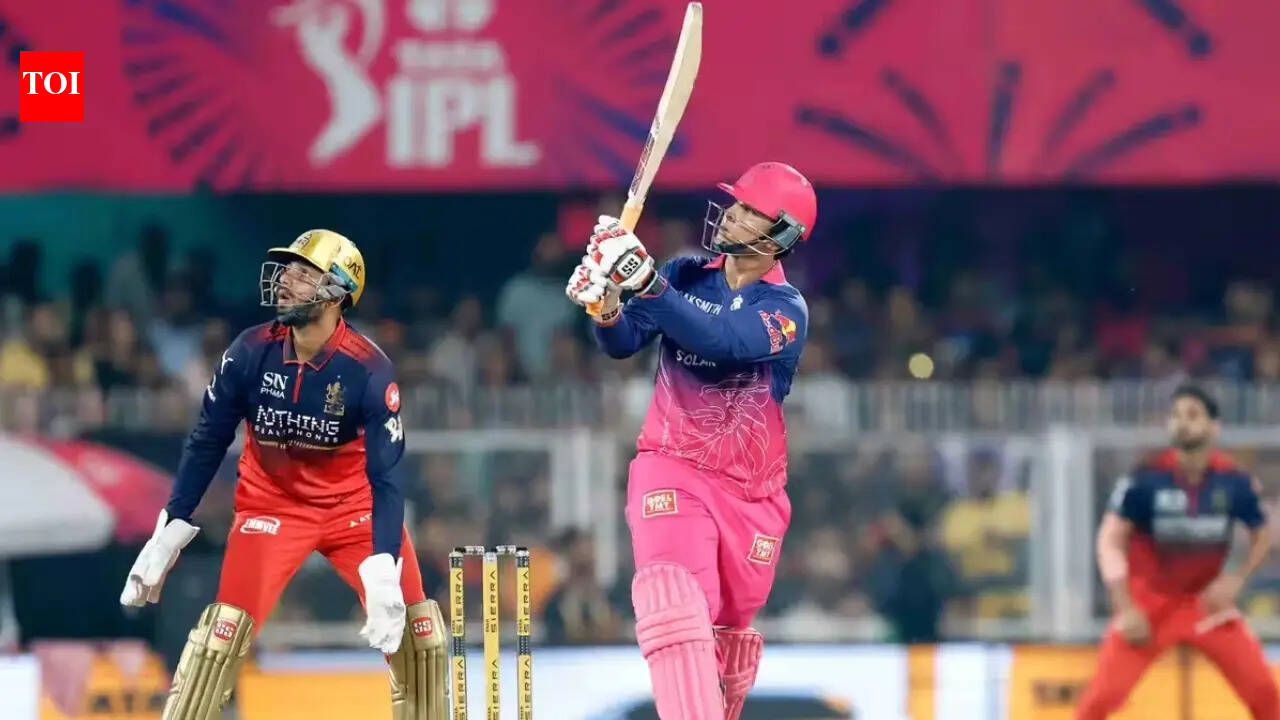
Murali, Hadlee, Warne, McGrath - who's the best Test bowler of all time?
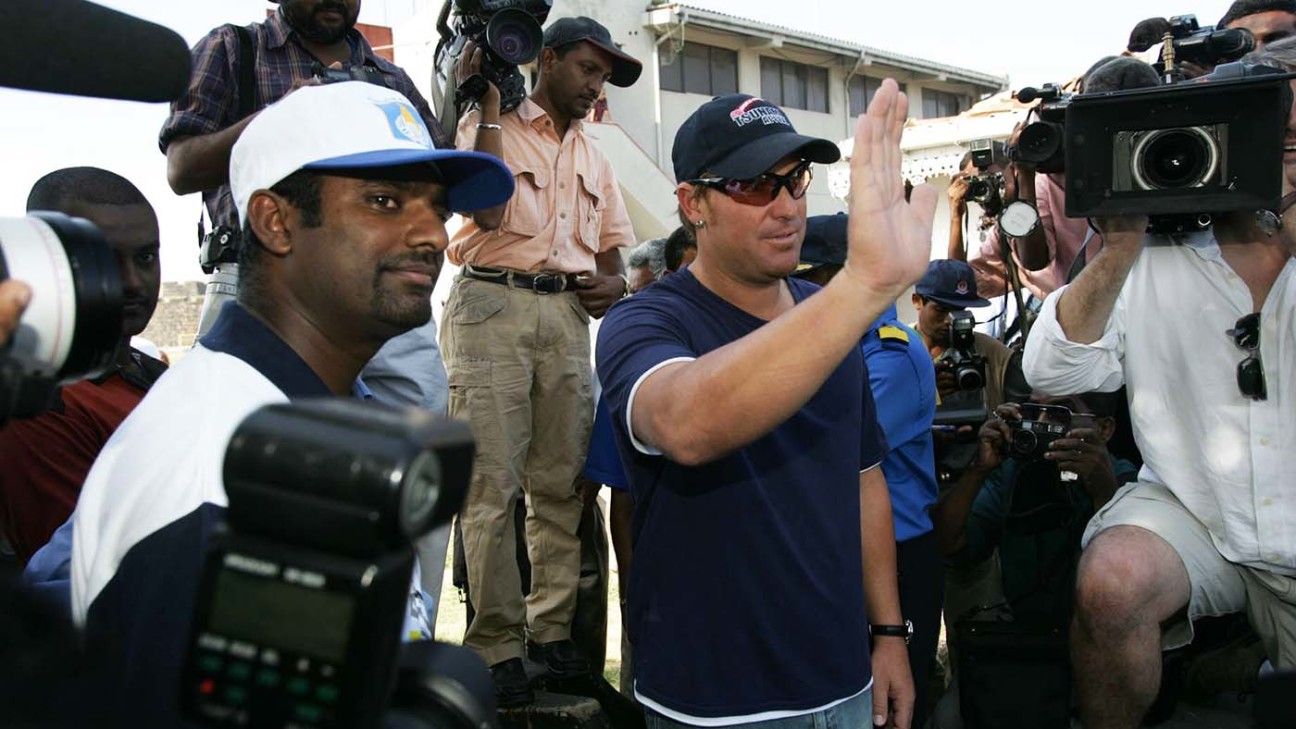
This article, and the previous one, are, inarguably, the most important of my articles ever. In this article, I have done comprehensive analyses of all the measures involved in the complex area of Test bowling and derived a list of the best Test bowlers of all time. This is a really tough ask since what I do has to be fair across 150 years, around six generations, and constantly shifting paradigms of Test cricket. I have spent over six months working on this complex analyses and am quite confident that I have got it correct. Maybe not 100%, but upwards of 90-95%. The Top Test batters article, published last month, was in a similar vein.Let me first set down what aspects of Test bowling need to be covered in this exercise. This is what I am likely to get if I ask cricket followers around the world:It is important to recognise the wickets captured. But that should not lead to an analysis dominated by longevity.The bowling averages are the most important measure of a bowler's career. Different hues of this metric should be introduced.The question of separating the two components of the Bowling Average, namely the Bowling Strike Rate and Bowling Accuracy should be investigated.If a bowler captures key wickets of top batters, it has to be recognised.If a bowler captures wickets on batting-friendly pitches, he has to be rewarded.Away performances are like gold. These should be recognised.The context in which the wickets were captured must become an integral part of the analysis.How was the bowler compared to his peers - both within and outside the team. If appropriate, the bowling type has to be built into the analysis.The performance of the bowler compared to his compatriots in the matches he played must be considered.How easy or tough bowling was during his career. That should be indicated by the global average of all the bowlers from the first to last Test of the bowler.The consistency of the bowler must be built in.The quality of wickets captured by the bowler has to be incorporated, both per wicket and per spell.Cricket is a team game. How much the bowler contributed to his team's aggregate of wickets needs to be incorporated.The special responsibilities that the bowlers shared - such as captaincy - must have an influence, accepting the fact that the bowler's bowling has to be affected.The bowler's contributions in terms of MoM awards, towards wins achieved by the team, and the like must find a place. Please see note below.The bowler's capacity to capture five or more wickets in an innings and ten or more wickets in a match, both in terms of number and frequency, has to be recognised.MoM Awards: Since only two-thirds of the Tests had MoM awards declared, this measure covers both declared and derived awards (matches where the award wasn't announced but has been derived through numbers). Half of the awards that are given for all-round performances are assigned notionally to the bowling aspect of the performance. This means every Test is covered. Both aspects - frequency of receiving the award and the number of awards received - are covered.Let us now move on to the schematic that summarises the entire set of computations and weights. Here is an explainer for some of the terms and indices used in this article.The schematic is self-explanatory. In general, the data points for the maximum allocation are placed between 101 and 110% of the maximum values. An example or two will demonstrate this. The lowest bowling average is 16.43 for Sydney Barnes. The maximum value of 12.50 is associated with an average of 15.0 (109.5%). The highest career wicket aggregate is 800 by Muthiah Muralidaran. The maximum value of 12.50 is associated with a career wicket aggregate of 850 (106.25%). And so on, for 32 parameters.The Average Group (32.5 points)Bowling average, the most important performance measure, is assigned 12.5 points, the equal highest of all.The ratio comparing the bowler's own bowling average to those of the other bowlers of his team is assigned 6.0 points. Only the team's Tests during the player's career span are considered. And bowlers of all types are included.The ratio comparing the bowler's own average to those of the other bowlers of all teams is assigned 4.0 points. All the Tests during his career span are considered. And only bowlers of the same bowling type are included. The two Australian bowlers in the group who bowled during the Bradman era, Clarrie Grimmett and Bill O'Reilly, have had their figures adjusted slightly to take into account the presence of Bradman in their side.The wickets per Test measure is assigned 2.5 points.The away bowling average is an important measure and gets 3.5 points. This is the absolute value. The relative measure, the ratio between away and home bowling averages, is allotted 1.5 points. This measure will benefit those bowlers from the lesser countries.The global bowling average is allotted 2.5 points. This is the average of all bowling innings of every Test during the bowler's career span. The higher it is, indicating that the period was a tough one for bowlers, the more points are allocated. And vice versa.Career Wickets (12.5 points)A total of 12.5 points are allocated for this important measure. That shares the highest weight with bowling average. This is the primary longevity-based measure.Ratings/Contributions (10.0 points)Performance Rating measures are allotted a total of 6.0 points. 4.0 points are for the average performance ratings value and 2.0 points are for the highest performance rating value. Readers will be aware that these are totally context-centric values.Match Contribution measures are allotted a total of 4.0 points: 2.5 points are for the average match contribution value and 1.5 points are for the highest match contributions value. These are non-contextual numbers-based values.WQI/5wI/10wM (10.0 points)The WQI is based on who was dismissed, when was he dismissed, what was the innings and match status, etc. It is a clear indicator of the quality of wicket. Dismissing Bradman for 0 carries the highest WQI value and dismissing Chris Martin, the lowest value. The average WQI/wicket carries a weight of 2.0 points and the more broad-based average WQI/innings carries 3.0 points.Instances of five wickets in an innings and ten in a match are clear indications of the most important contribution any bowlers could make towards the team's quest for victory. As such, these have to be recognised in an impactful manner. The points distribution is given below.The number of five-wicket hauls is allotted 1.0 pointThe frequency of five-wicket hauls (matches/five-wicket instances) is allotted 1.5 pointsThe number of ten-wicket captures is allotted 1.0 pointThe frequency of ten-wicket captures (matches/ten-wicket instances) is allotted 1.5 pointsConsistency/ Wickets-weighted PQI/Wickets-weighted BatQ (15.0 points)Consistency Index is allotted a maximum of 5.0 points.Pitch Quality Index (PQI) Average, weighted by wickets captured, is allotted a maximum of 5.0 points. This is to recognise the tough wickets captured on batting-friendly pitches.Batting Quality Index (BatQ), weighted by wickets captured, is allotted a maximum of 5.0 points. This is to recognise the tough wickets captured against top quality batters.X-Factors (20.0 points)MoM/BP Awards (4.0): The two sub-measures are number of such awards, and their frequency (Tests/Awards).Contribution to Wins (4.0): The two sub-measures are wickets per Test in wins and percentage of team wickets in winsPercentage of Team Wickets (2.0): The ratio of bowler wickets to team wicketsPercentage of Team Balls (2.0): The ratio of bowler balls to team ballsRatio of above two measures (1.0): This indicates the overall effectiveness of the bowlerPercentage of unaided wickets (1.5): These are the bowled, lbw, and caught-and-bowled dismissals. It indicates how penetrative the bowling wasTop-order wickets (1.5) and percent out of total (2.0): A clear indication of the bowler's contribution to the teamCaptaincy Tests (1.0): Number of Tests captainedVox Populi (1.0): This is based on the top-ten selections made by the members of my Talking Cricket Group and a few others in a contest run by me.The "Contribution to Wins" requires a minor explanation. Readers must understand that the wins achieved, per se, are not rewarded. That would lead to bowlers from strong teams like Australia benefiting unfairly. What is recognised is only the bowlers' contribution in the wins achieved by the teams. This will allow the bowlers from the weaker teams to get due credit.Now something very significant. For the first time ever, I have shared a key segment of my program to provide relevant information. Normally I would have extracted the information into a diagram. Instead, I felt that it would be better to share the concerned program segment to open a window into how I work. Even non-programmers will find it relatively easy to see how everything is done. And all the maximum values are presented as comments in the program segment.Let us now move on to the most important table - the top ten Test bowlers of all time.It will not be a surprise to anyone that Muthiah Muralidaran is at the top. While his lead over the second-placed bowlers is not as much as Bradman's in the batting category, it is still very significant. Murali not only captured the highest aggregate of wickets, he had terrific performance figures right across the spectrum. He is in the top tier in almost all the measures. He was indeed the magician and is head and shoulders above the others.The second place battle is a very closely fought one. Two magnificent bowlers, Richard Hadlee and Shane Warne are neck and neck on most measures. Hadlee had the better average but Warne captured more wickets. Hadlee had less support but had the benefits of playing in a weaker team. Warne had better support but had to share everything with a tough bowling line-up. Hadlee was way ahead of his compatriots. Warne bowled to a better set of batters. And so on. The bottom line is that Hadlee pips Warne by a mere 0.08 points.In fourth and fifth places are those all-time great fast bowlers who played nearly a hundred years apart, Sydney Barnes and Glenn McGrath. Despite only capturing a third of the wickets that McGrath did, Barnes had such outstanding performance figures that he moved ahead of McGrath. He may even finished higher still but for the fact that the period he bowled in was a bowler-centric era and the batters he bowled against were not that great a lot. It is clear that the top five are the stand-out bowlers.Dale Steyn is more than a couple of points behind in sixth place. Almost inarguably the best fast bowler of his time, Steyn rode the scene like a colossus. R Ashwin, Imran Khan, and the two great West Indian pace bowlers, Malcolm Marshall and Curtly Ambrose complete the top ten. All four were magnificent Test bowlers and fully deserve their high places.Ashwin had a fast bowler's average, winning more matches for India than any other bowler, Marshall had a terrific average and shone like a lodestar despite playing in a strong bowling line-up, Imran bowled with great heart and captained Pakistan in a commanding manner, and Ambrose matched his colleague and had to share the spoils across his career. A deep look at Imran's figures indicates that he was grossly underrated as a bowler.Anil Kumble, Dennis Lillee, James Anderson, Wasim Akram, and Claire Grimmett are in the next five positions. Any one of these world class bowlers would not have been out of place in the top-ten. Each was a giant in his time.This time around, the spoils are widely distributed. Australia and West Indies have two entries each in the top ten. Sri Lanka, New Zealand, England, South Africa, India and Pakistan have one bowler each. For the other countries, Heath Streak and Taijul Islam are the top bowlers.Granted that Murali has a huge lead over the second-placed bowler. But the other nine are placed within six points of each other. So, please do not quibble over placements such as second vs third, fifth vs sixth, and so on. All there are undoubtedly first amongst equals, possibly in groups of two or three.And, as a sidebar, Ravi Shastri finishes last in this list, the cut-off for which is 120 Test wickets. If Carl Hooper had taken a few more wickets, he would have had that honour. A quartet of spinners - John Emburey, Ray Illingworth, Ashley Giles, and Srinivas Venkataraghavan - keep Shastri company at the bottom.This chart plots the group-wise totals for the top ten bowlers. The chart is self-explanatory. Murali leads in three of the categories - the wickets captured, WQI/5w/10w category, and the X-Factor group. Barnes leads in two of the categories - the average and the ratings/contribution categories. All are very clear and obvious placements.The most open group is the "consistency" group since it comprises three disparate measures. Steyn is the leader of the top-ten group with 11.16 points. However, Graeme Swann is the leader among all the bowlers, with 11.70 points.Now, I present three sub-tables, based on the top five bowlers from three time periods - 1877-1939, 1945-1984, and 1985-2026 (based on when they made their debut). The first one lists the top five bowlers in the first period - the one which ended with the onset of World War II. Barnes is the best in this period, that too by a mile. A low average and many outstanding performance measures helped lift Barnes to this pedestal. Then come the two chalk-and-cheese spinners of the 1920s-30s, Grimmett and Bill O'Reilly. The two magnificent legspinners served Australia very well and provided the bowling spearhead to the team, with Bradman providing the batting base. Then comes Hugh Trumble, one of the great Australian spinners of the 1900s. Finally, that classic English spinner of the 1930s, Hedley Verity.Now, on to the post-war era. Hadlee, Marshall, and Imran are in the top ten. Then come Dennis Lillee and Fred Trueman, those world-class pace men of the '60s and '70s. This was a period of pace bowlers. No spinner is in the top five. Jim Laker just about makes to the top ten.The top five of the current era are in the top ten of the all-time table. There is no need to gild the lilies. These are among the best bowlers of all time.Some interesting facts relating to the top bowlers analysisTop allroundersIf we take a batting average of 35-plus as the minimum requirement to qualify as a serious batter, we have Imran Khan in the top ten. So, Imran is the best-placed allrounder, with a batting average of just over 37. Then in 38th place is Ravi Jadeja, a true allrounder, with a batting average of just over 38. In the next place, which is the 74th, we have Keith Miller, with a batting average of nearly 37. Just inside the top 100 is Shakib Al Hasan, whose batting average is nearly 38. For the record, Garry Sobers is in 131st position and Jacques Kallis is in 153rd position.Bowling captainsBowling captains are quite rare. Batter Graeme Smith captained in 109 Tests, while, in comparison, the leading bowler in this regard, Imran Khan, captained in 48 Tests. Ben Stokes has led England in 42 Tests. Pat Cummins has been the leader in 38 Tests. Both of them are still going strong and are likely to go past Imran. When it comes to captaincy by primarily bowlers, Courtney Walsh and Bishan Bedi captained in 22 Tests each. All these bowlers get a small credit for the extra effort they have to expend. And the fact that most of them tend to under-bowl themselves.Breakdown of the Top-50 positionsThe top 50 places in the Top Bowler table lead to the following country-wise distribution. Australia and England, as expected, are on top. It is not a surprise that South Africa and Pakistan follow next. One of the two Sri Lankan bowlers is in first place and the one bowler New Zealand has in this group is in the second place.13: Australia12: England6: South Africa6: Pakistan5: India5: West Indies2: Sri Lanka1: New ZealandWhen it comes to the top 100, Australia stay in first place, with 24 placings. England follow next with 20. West Indies and India have 12 entries each.The readers might have quite a lot of queries on the Best Test Bowlers analysis - and my responses to those can be seen by clicking on this link. If required, you can download the document.Data files with complete dataSince I have featured only the top ten bowlers, I have made available the following data files, in easily accessible text form. I suggest that you create the Excel sheets yourself if you want to further analyse these.TopBow1.txt: Rating SummaryTopBow2/3/4.txt: Rating Summary for three periodsTopBow5.txt: Rating values for all key parametersTopBow6.txt: Data values for all key parametersTopBow7.txt: Rating values for parameter groupsTopBow8.txt: Rating values for X-Factor elementsTopBow9.txt: Data values for X-Factor elementsThe above files can be downloaded by clicking on this linkSome key pointers for the perusal of the analysis resultsOne important request: I am sure most readers will have their favourites. If, by any chance, they are not placed where you expect them to be placed, do not rush to decry the analyses or send accusatory messages. Take the trouble to find out the parameter values of the player(s) and understand why he/they might have slipped a place or two. Everything related to this exercise has been made available to everyone.And please do not rush with statements like "ABC is better than EFG" without taking the effort to find out why ABC is better, in what areas, and why. If a 200-wicket bowler is ahead of a 450-wicket bowler, find out how he compensated for the lack of wickets. If a 29-average bowler finishes higher than a 20-average bowler, do not rush to post your comments. First, find out where he got those extra points. The answer is always in the numbers, which are presented in total.Just to illustrate this point, let me compare two wonderful Indian bowlers - Ashwin and Jasprit Bumrah. Many followers have placed Bumrah ahead of Ashwin. But in this analysis, Ashwin is seventh and Bumrah is 25th. They are separated by six points and 18 places. Looking at the points distribution, we get the following differentials. Ashwin is ahead on wickets (4.5), 5w/10w (1.9), and X-Factors (1.2). Bumrah could only make up 1.8 points on his average. The other measures are within small differences of each other. So, it is clear that the huge gap in wickets and the absence of ten-wicket hauls cost Bumrah.He will, of course, make up with more wickets and match performances in the future. But this is the status today and has to be respected. And do not forget that Ashwin's points are set in stone while Bumrah could gain or lose points. And not for a moment should anyone think that Ashwin does not deserve to be way ahead of Bumrah. He deserves that, in spades. And as I have mentioned elsewhere, wickets are wickets, going into the scorecards, and yorkers are yorkers, no more than laudable efforts.And let us not forget that the top ten Test bowlers' list comprises one giant and nine first-among-equals. In the top batter analysis, Bradman was ahead of the second-placed batter by a whopping 18 points. Murali less so, but still by more than nine points. At a pinch, I would extend this group to the top 20.Possible moves in the next few yearsUnlike the top batters analysis, in which a few active players were in the top ten, paving the way for moves up, the highest active bowler in this table is Kagiso Rabada, in 17th position. Cummins is in 22nd position, Bumrah in 25th. I would expect that all these bowlers have a reasonable chance in getting into the top ten. That is the best crystal-ball gazing that I can do now. Anything else would be specious.Talking Cricket GroupAny reader who wishes to join my general-purpose cricket-ideas-exchange group of this name can email me a request for inclusion, providing their name, place of residence, and what they do.

Most Popular



Adams & Ejuke host Lookman in crucial LaLiga run
4 hours ago