Strike action threatens new A-League season as post-World Cup glow again fades too fast
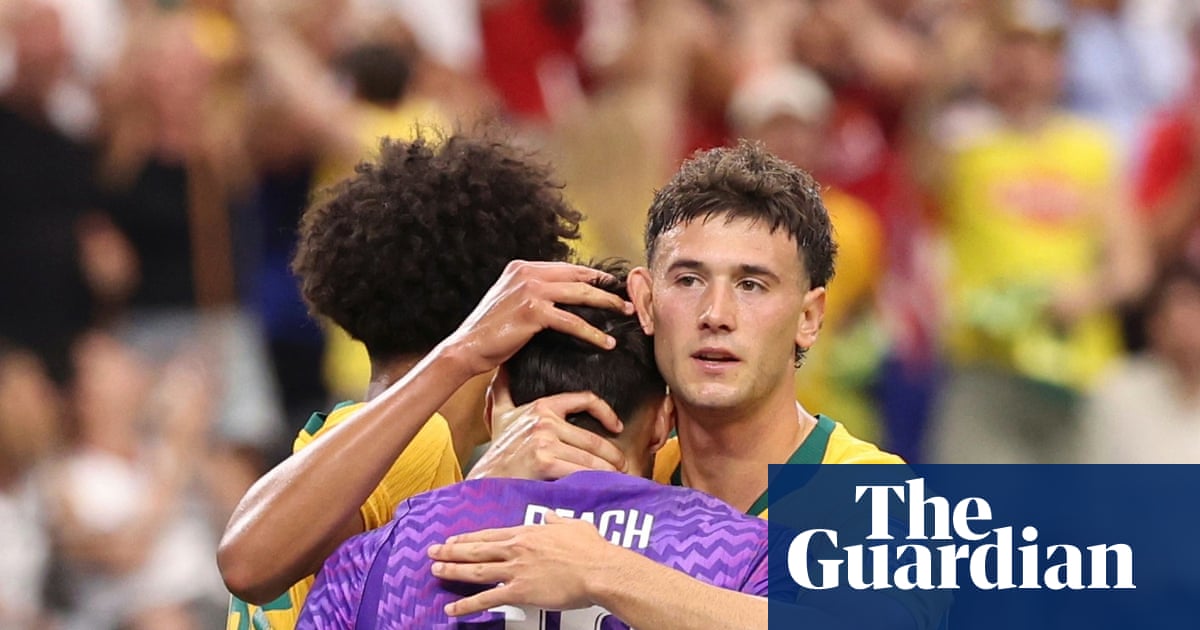
The heartbreak from the Socceroos’ penalty shootout defeat to Egypt and exit from the World Cup is still raw, but normal programming in Australian football is starting to resume. Alas, the scene appears to be set for a sequel nobody asked for.At a time when the A-Leagues should be basking in the reflected glow of the World Cup, it is instead careering towards potential industrial action; players have unanimously rejected the latest collective bargaining agreement (CBA) proposal from league administrators the Australian Professional Leagues (APL). The news carries a sense of deja vu, coming just under four years after an act of self-immolation that saw the sale of grand final hosting rights announced just days after the Socceroos almost took Argentina to extra time at the Qatar World Cup.A CBA dispute doesn’t really compare to sparking an insurgency amongst an entire fanbase, as the grand final deal did. But industrial action, including possible strike action, shapes as an unwanted circuit breaker at a time when the A-League is staging its biennial attempt to harness the interest around a Socceroos or Matildas World Cup run.“We have been negotiating in good faith with the PFA for the past eight months to agree a new CBA to ensure the sustainable growth of the A-Leagues for our clubs and players, and are looking to continue to do so,” APL CEO Steve Rosich said. “We have had collaborative discussions … and we have sought an explanation on the PFA’s position, before further engagement.”Rosich’s statement paints a picture of an APL perplexed at the sudden turn of events, as if an agreement was close. The arrival of the chief executive earlier this year, with intentions of establishing the A-League as a third pillar in Australian domestic sport, led to improved relations between the league and players’ union, and raised hopes that a one-year stopgap deal to replace the pact that expired on 30 June could be found. There was a shift away from the language of a hard cap touted by APL chair Stephen Conroy, unilaterally announced which led to a chilling of relations with the PFA.But PFA chief executive Beau Busch’s message to players upon rejecting the latest league proposal, stating that “the CBA negotiation process has been exhausted,” would suggest a stalemate.It’s not ideal, even if there is ample time for some kind of agreement to be struck before the start of the new season in October. But until a resolution is found, preparations will take place under a cloud of uncertainty. A club’s ability to sign players and plan for the years ahead will not be removed but it will be diminished, especially those in negotiations with players who would previously have fitted inside one of the cap’s many exemptions, or who won’t come on a heavily reduced wage. The season can start without a CBA, but strike action, the big red button, remains alive.But there’s more at play here. Players’ trust in the APL’s ability to deliver a long-term vision to grow the league has cratered since independence and promises of being “unshackled”. Seven months after the release of the Ready for Takeoff document, Busch is unapologetic in stating that the APL “lacks belief in the potential of the women’s game”, based on proposals the union feels don’t go far enough in keeping pace with the broader women’s sporting market and that would constrain investment in the competition. The APL labels a focus on transfer fees at the expense of overall league quality and competitiveness in Asia – and the associated matchday, sponsorship and TV revenue – as a “misguided talent-farm strategy for the men’s [competition]”.“The players are not satisfied with the trajectory of the A-Leagues,” Busch said. “The previous five-year CBA has not protected the game from damaging decisions, declining crowds and an accelerating talent drain.“The players were asked to accept significant concessions without being given confidence that their reform objective would be achieved. The leagues’ challenges are likely to become greater in the next 12 months. Therefore, it is better to pursue change through other means now.”The CBA talks, it would appear, have simply become another front in a broader battle for the future of Australian football; one that has been raging for decades and shows no signs of abating. For those new to the sport, perhaps attracted by Patrick Beach’s heroics or Nestory Irankunda’s star power at the World Cup, this domestic unease may come as a surprise. For those already entrenched in the Australian game, it will come as anything but.
Most Popular