Didier Drogba, Zlatan Ibrahimovic and the 10 best signings of Jose Mourinho's trophy-laden career so far - ranked
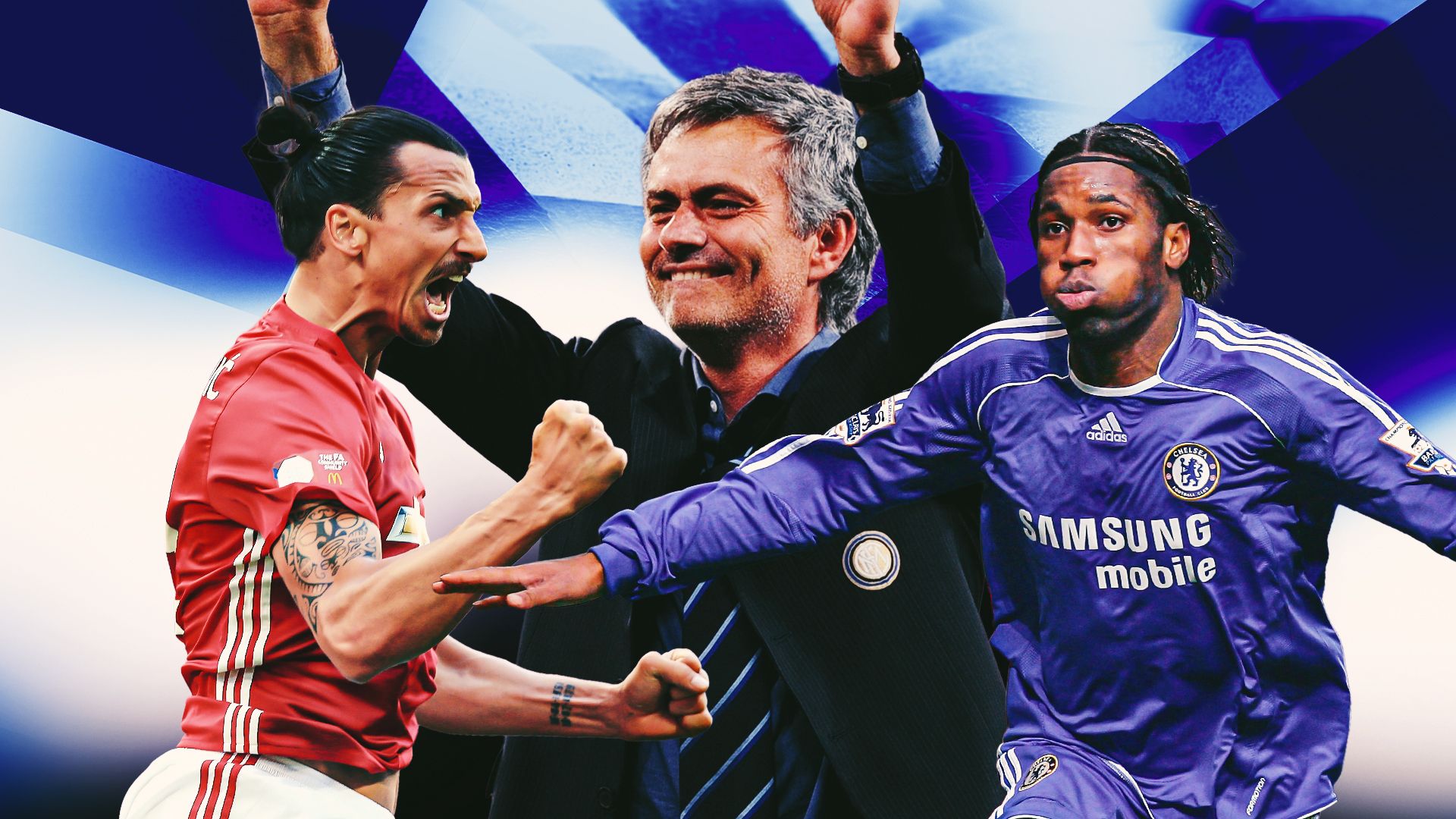
Ibrahimovic reunited with his former Inter boss Mourinho when joining United as a free agent in 2016, on the back of the most prolific season of his career. The Swede banged in 50 goals in 51 appearances in his final season at Paris Saint-Germain, though some critics suggested United had swooped for the 34-year-old too late in his career.In his trademark swaggering style, Ibrahimovic silenced them by scoring 28 times for United in the 2026-17 campaign, including a brace in their League Cup final win over Southampton, and played a key role in their run to the Europa League crown. A serious injury derailed the veteran striker's second campaign at Old Trafford before he joined the LA Galaxy in MLS, but he left as a cult hero after bringing a ferocious winning mentality to the squad.Chelsea's 2014 swoop for Cesc Fabregas was seen as something of a gamble at the time, after his somewhat underwhelming three-year stint at Barcelona. However, Mourinho managed to bring the very best out of the former Arsenal midfielder, who registered a staggering 18 assists in his first year as the Blues stormed to the Premier League title, cleverly deploying him in a slightly deeper position to act as the bridge between defence and attack.Described as a "maestro" by Mourinho, Fabregas' creative genius took Chelsea to another level, and he had a near-telepathic connection with lead frontman Diego Costa. The Spaniard's impact endured long after Mourinho's exit, too, as he inspired Chelsea to another league success in 2016-17 under Antonio Conte.Chelsea broke their transfer record to sign Michael Essien from Lyon in the summer of 2005, and the Ghanaian midfielder turned out to be worth every penny. Essien was the ultimate box-to-box midfielder who boasted the physicality to outmuscle any opponent and read the game brilliantly.He also had a penchant for the spectacular, with his stunning long-range strike against Arsenal in December 2006 considered to be one of the greatest goals in Premier League history. Chelsea's second league triumph under Mourinho was driven by Essien, and he ended up staying at the club for nine years, also getting his hands on the Champions League trophy.After that glorious final bow at Chelsea, Mourinho brought him to Real Madrid on a season-long loan. The Portuguese aptly summed up just how influential Essien was in two short sentences: "If I could have 11 Essiens, I’d win everything. He was incredible - the ultimate professional."Benni McCarthy initially got to know Mourinho on loan at Porto in 2001-02, as he scored 12 goals in just 11 Liga Portugal appearances, but financial constraints prevented them from buying him outright. Fortunately for Porto, McCarthy barely played at Celta the following season, paving the way for a cut-price £3m swoop that would prove to be a masterstroke.The South African forward was Porto's top scorer in their extraordinary 2003-04 season with 25 goals, two of which came in their famous Champions League round of 16 win over Man Utd. Mourinho could rely on McCarthy to gobble up half chances and press relentlessly, while he also possessed elite spatial awareness. Porto had more technically gifted players at that time who got more credit for their Liga Portugal and Champions League double, but no one else worked harder to maximise their ability."He is one of the best strikers at this moment in football," Mourinho told BBC Sport after seeing Diego Costa hit a hat-trick for Chelsea in a 4-2 win against Swansea in September 2014. "He is a special player." No one could argue with either of those statements come then end of that season as Costa finished up with 20 goals in just 26 Premier League appearances, fully justifying the £32m ($43m) fee Chelsea paid Atletico Madrid for his services.His efficiency in front of goal and intimidating strength as a target man gave Chelsea the edge in the title race as he bullied English top-flight defences for fun week after week. For pure streetwise grit, Costa was unmatched, and he cemented that reputation when landing his second Premier League winners' medal in 2017.The 30-year-old Diego Milito was by no means a household name when he joined Inter from Genoa in May 2009. He amassed a very respectable 77 goals across four years at Real Zaragoza and Genoa, but had never played at the very top level.Milito made the step up without any hitch, though, becoming Mourinho's "killer" in a counter-attacking system that suited him perfectly. Inter's treble success simply wouldn't have happened without the Argentine; he scored the winner against Roma in the Coppa Italia final, the only goal on the final day of Serie A away at Siena to clinch the Scudetto, and both goals to down Bayern Munich 2-0 in the Champions League final.As if all that wasn't enough, Milito also scored in all the other Champions League knockout rounds. He was a master at timing runs and showed unerring composure in and around the box, while also busting his gut to win the ball back whenever Inter lost possession. Milito is not the best purchase of Mourinho's career, but he stands out as the most shrewd one.Real sold Wesley Sneijder to Inter in August 2009 for half what they had paid Ajax two years prior, with the midfielder essentially sacrificed to make room for marquee duo Cristiano Ronaldo and Kaka. Mourinho showed far more appreciation for the 25-year-old's talents right from the off, shaping his Inter side around the Dutchman.Sneijder thrived in the No.10 role and saved many of his finest performances for the Champions League stage, most notably in Inter's iconic 3-1 semi-final win against Barcelona as he registered a goal and an assist. He set up more goals than any other player in the 2009-10 tournament (6), and also scored a dramatic 89th minute winner against Dynamo Kyiv in the group stage that saved Inter from an embarrassing early exit.It was a travesty that the Ballon d'Or voters didn't properly acknowledge Sneijder's incredible year, which also included a run to the World Cup final with the Netherlands. He deserved to win it, but somehow didn't even crack the top three. Still, earning the lifelong gratitude of Mourinho was a pretty good consolation. "Wes gave me the Treble, he gave me the best year of my entire career," the ex-Inter boss said earlier this year.Mourinho took Ricardo Carvalho with him when swapping Porto for Chelsea in 2004, and the Portuguese centre-half proceeded to solidify his status as one of the best centre-halves in the world. Carvalho struck up an instant rapport with John Terry, and their fearsome partnership provided the rock solid foundation for Chelsea to win their first league crown in 50 years.As captain, Terry's no-nonsense contributions made more headlines as Chelsea set a new Premier League record for the least goals ever conceded in a season (15), but Carvalho's powers of anticipation and technical prowess were equally important. The Portugal international was also deceptively quick, always on hand to sweep up dangerous through balls and catch recovering forwards.Mourinho once called Carvalho his "perfect defender", and Chelsea certainly haven't had anyone else like him. They linked up for a third time at Real Madrid in 2010, winning La Liga and Copa del Rey honours together.Mourinho was "angry" after seeing Ibrahimovic leave Inter for Pep Guardiola's European champions Barcelona in July 2009. The Swedish striker had just lifted the Nerazzurri to the Serie A title with 29 goals, but pushed for a move to Barca out of a desire to get his hands on the Champions League.It did, however, turn out to be a wonderful piece of business for Inter. They got a £40m ($54m) fee in return that helped pay for Milito and Sneijder, and Samuel Eto'o made his way to San Siro from Camp Nou. "No coach is happy to lose Ibrahimovic," Mourinho told Italian television. "But no one is not happy to have Eto'o – we have lost a top player but we have taken another one."Eto'o made sure Ibrahimovic wasn't missed, despite being moved from his usual No.9 spot to the wing. The Cameroonian ace dropped his ego to become a Mourinho warrior, prioritising defensive discipline over attacking flair. He still scored 16 goals as Inter swept to every available trophy in 2009-10, but Eto'o's willingness to do the dirty work was absolutely essential to Mourinho's system.No other player has ever won back-to-back continental trebles with two different clubs, and Inter's Champions League semi-final win over Ibrahimovic's Barca made it even sweeter for Eto'o. This was the first time Mourinho got one over on Guardiola, and it was a lasting sting.By his own admission, Didier Drogba fell short of expectations in his first season at Chelsea, mustering only 10 Premier League goals, which made him consider returning to Marseille ahead of the 2005-06 season. However, Mourinho knew how much potential Drogba had, and successfully talked him out of it."He said 'if you want to be the only king then go back to the team where you were playing before and score 100 goals'," Drogba told The Sun in 2018. "'But here at Chelsea there are 22 kings, so you have to accept that and work together. Or you go'." Those words gave Drogba the motivation to go on and become an all-time Premier League legend.Over the next two seasons, Drogba scored 49 goals in all competitions, winning the first of his two Premier League Golden Boots in the process. He was absolutely unstoppable in full flow, combining frightening power and exceptional first-touch control to strike fear into any opponent, and lived for the biggest stage.Drogba left Chelsea in 2012, after heading home an unforgettable equaliser in their Champions League final win over Bayern, but Mourinho brought him back at the age of 36 two years later. Despite playing second fiddle to Costa, Drogba bagged seven important goals in 40 appearances en route to his fourth Premier League winners' medal, prompting Mourinho to label him "the best-value Chelsea player ever".

Most Popular