Sam Docherty on football after cancer and life after football: ‘I was a frontman for something bigger’
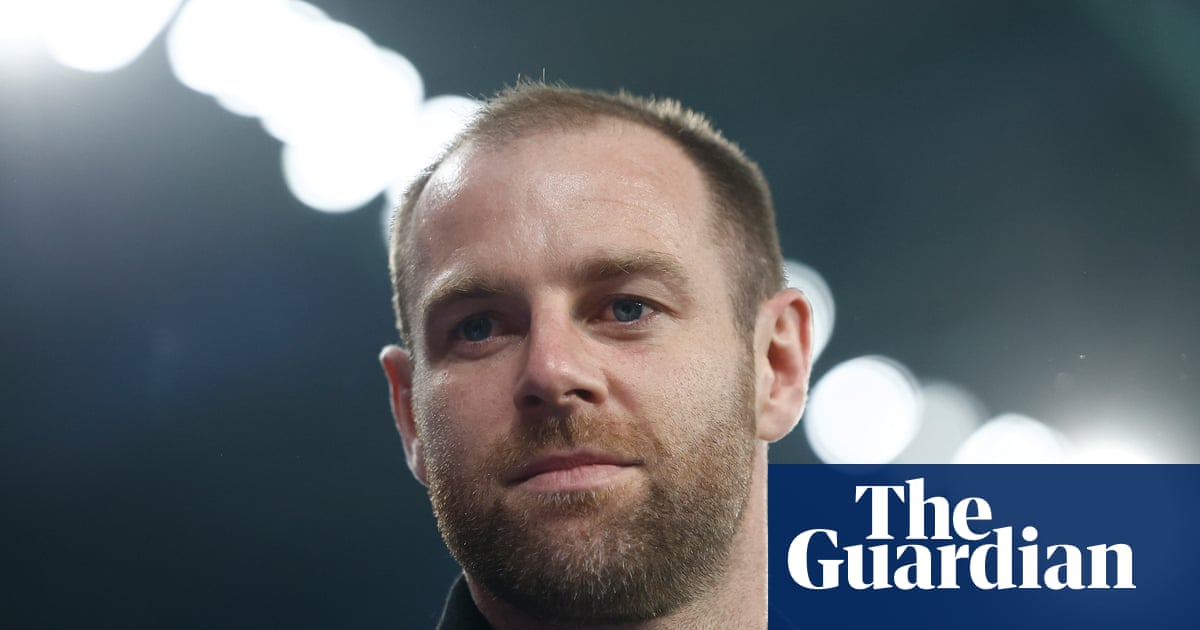
Sam Docherty always thought it would be his body that would tell him it was time to call it quits. He’d had two bouts of cancer, three knee reconstructions, more than a dozen epidurals and serious injuries to a toe, shoulder and even an eye. In his final AFL game, Hawthorn’s Calsher Dear accidentally kneed him in the nose. Docherty played the rest of the game with a tampon up one nostril to stop the bleeding.But it was his mind that got him in the end. His final year with Carlton was exhausting. He was dropped twice. The team was hopeless. The coach Michael Voss was under siege. Docherty was told by senior people at the Blues that he needed to come into the club in a better mood. He felt disrespected, detached, angry and confused. Just before he announced his retirement, the club told him they wouldn’t be offering him a new contract anyway.A year on, Docherty doesn’t miss the internal politicking and the spotlight that comes with playing at a big club like Carlton. He doesn’t miss being in constant pain. He doesn’t miss asking himself whether it’s safe to lift his kids at swimming classes, or to go to the pub on a Friday night. But there’s an adjustment, almost a void, that’s familiar to recently retired sportspeople.“That process-driven, elite-athlete lifestyle, with clear goals, and with everything mapped out – it could be all-consuming at the time,” Docherty tells Guardian Australia. “But it’s also something I find myself missing in retirement. And I miss that really clear purpose, that overarching picture of who you are and where you’re going when you’re a sportsperson.”Docherty, like so many athletes, admits to an obsessive, even an addictive streak. It manifested in different ways – from doing 400 metre sprints between cycles of chemotherapy, to the way he tackled rehab, to developing a gambling problem.“As an athlete, they’re great traits to have at times, but they can also be incredibly unhealthy,” he says. “They definitely helped me in my ability to get back from hard things, especially my obsession with the level of detail, that ability to flick the switch when required. I was able to go to levels in a high-performance environment that few others were willing to, because of my obsession with it. But it got me in a lot of trouble as well.”Docherty is straight to the point when summing up the past decade and a half. “Obviously life’s been pretty hectic,” he says. He had been at Carlton a few days after joining from Brisbane in late 2013, and was on a high altitude camp in Arizona, when he was handed a phone. Docherty’s dad Eddie was a gate ranger in Phillip Island, stopping people from terrorising and stealing penguins. He was having a beer at the pub when he had a heart attack and died. He was 53.Docherty’s first serious knee injury came in November, when the Blues were training at a potholed local dog park. There was no pain. It sounded like a large elastic band being snapped. It took a long time for it to dawn on everyone that he’d seriously injured it. Almost a year later, pitted against Charlie Curnow in a drill called “The Barbarian”, he did it again. Again, he thought he was OK. He was out shopping when he got the news that he’d miss another season. Bill Knowles, one of the world’s leading reconditioning experts, told him he was a JCA – a “joint compromised athlete”. “You will never come out of this,” Knowles told Docherty. “You’ll have to do things differently to everyone else.”During the Covid-19 pandemic, he discovered a lump on his testicle. “Ropey and tough”, he describes it, like the fat cap on the edge of a steak. His surgeon attached a prosthetic testicle, which Docherty says feels like a hard squash ball. A year later, it had spread to his lymph nodes, lungs and stomach. He had four cycles of chemotherapy.Under Victoria’s strict lockdown laws, he wasn’t allowed visitors. Friends and family would leave food at the front door and they’d speak through a partly opened window. Docherty lost a lot of weight, and every shred of hair. He says he looked like Gollum from Lord of the Rings, “a pale, smooth sickly creature”.Docherty also had a 10cm cut in his abdominal wall, rather like a C-section. When he stands in front of a mirror, he says it looks as if he’s been in a knife fight. Through all this, the club asked him to take a pay cut to free up salary cap space for Fremantle midfielder Adam Cerra. They later asked him to step down as captain and leave the leadership group, saying he should focus on his health.Six months after his first chemo cycle, in front of 72,000 people, 17 minutes into the second quarter of the 2022 season opener against Richmond, came his most cherished memory in football. “It was just a goal,” he says. “But I’d been at rock bottom.“To look at me – severely underweight, with no hair on my body, having been barely able to run, few would have believed I could have been able to play the most elite level of football and perform. I’d had so much football taken away from me, I was just desperate to play. But it was more than that. It was so crazy, so strange, but so satisfying to be representing a large cohort of people I’ve never actually met. Here I was, a frontman for something bigger than me.”Docherty ended up finishing second in the Blues best and fairest that year to captain Patrick Cripps, who also won his first Brownlow medal. “I went into footy thinking being successful was winning best and fairest awards, playing 300 games, being All Australian,” he says. “And I walked away with a completely different definition – one that was more to do with me as a person, the amount of people I impacted positively, the hope and drive I gave others.”
Most Popular