Football derbies: who owns trademarks like “El Clásico” or “Fla-Flu”?
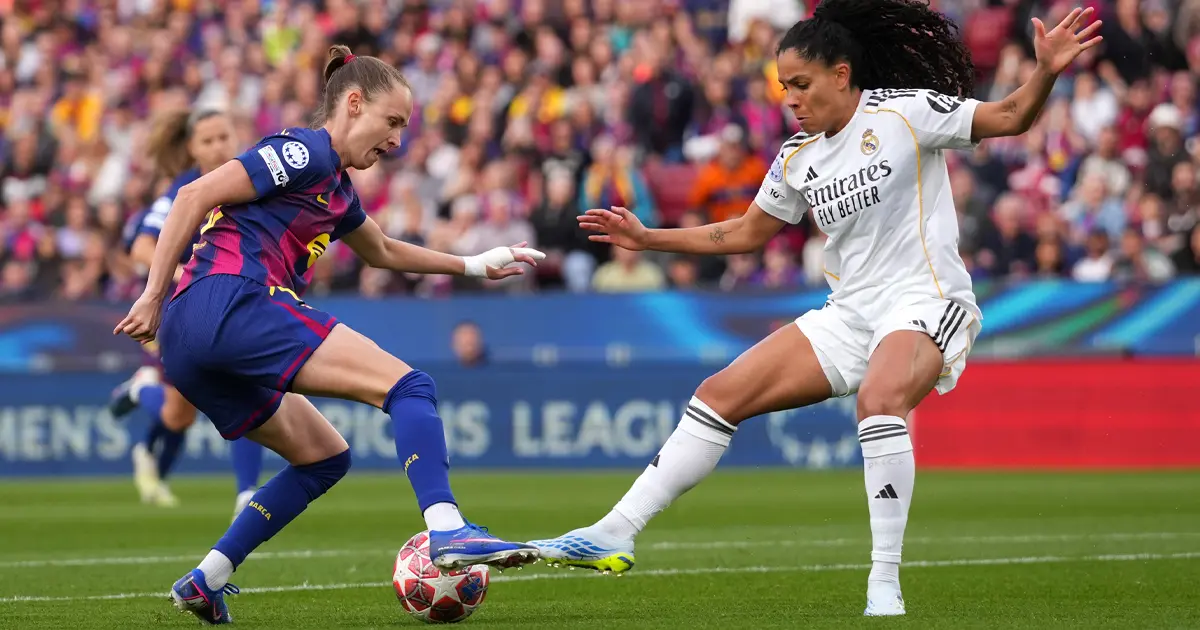
Football matches between rival teams from the same city, region or country are often called “derbies”. But that term alone is not always enough to reflect the history and deep-seated rivalry between the two opposing sides. Sometimes they need a name of their own.In Spain, Real Madrid vs. Barcelona clashes are known as “El Clásico”. In Italy, you might attend the “Derby della Madonnina”, or AC Milan vs. Internazionale (Inter). And Brazil is home to “Fla-Flu”, or Flamengo vs. Fluminense.Over time, such monikers transcend the action on the pitch and enter popular culture, repeated by countless fans, media and sponsors around the world. In many ways, the great derbies are brands in themselves, acknowledged by clubs and written about extensively by sports journalists.When it comes to intellectual property (IP), ownership of a brand that involves assets shared by two or more entities can be complicated, especially if there is antagonism between them. So, who might own the trademark rights to a classic derby name: the clubs, the league or another entity entirely?“El Clásico” trademark disputeThe Spanish derby is one of the most watched sporting events in the world, with the October 2025 edition drawing an estimated 650 million viewers. But classics are rarely born as such; their status is achieved over time. The first match between FC Barcelona and Real Madrid CF took place in 1902 and the myth has been building ever since. The rivalry intensified through historic results and dramatic encounters, such as the Copa del Rey game of 1943, when Real Madrid scored 11 goals against Barcelona.More recently, the battle was amplified by the competition between Lionel Messi and Cristiano Ronaldo, the faces of Barça and Real, respectively, with each vying to be known as the greatest player in the world.Unsurprisingly, the historic rivalry has stirred much commercial interest. In May 2023, La Liga, the premier division in which Barça and Real play, sought trademark protection for “El Clásico” from the Spanish Patent and Trademark Office. When the news became public, the clubs attempted to register the trademark themselves.They were successful too – at first. But the league appealed this decision. And, in January 2025, the Spanish courts sided with La Liga, rejecting the clubs’ application and confirming the league’s earlier trademark registration.Trademark protection primarily gives the owner the exclusive right to prevent all unauthorised third parties from using it for similar goods and services. This affects commercial exploitation such as merchandising, sponsorship or branded media content.However, La Liga having commercial control over the term “El Clásico” does not prevent a fan from purchasing merchandise (such as a scarf) and wearing it. Similarly, journalists may refer to it in written content without this being considered trademark use. By contrast, if a club markets or sells goods or services under a trademark registered to a third party – in this case, La Liga – such use would be unauthorized and could be prohibited.The “El Clásico” case illustrates how the organizer of a competition may claim ownership over the commercial branding of its flagship events, even where those events depend on rivalries between specific teams. It is just one example of how such rivalries can come under trademark law; there are many others.“Fla-Flu” Consortium and Grenal: when Brazilian football rivals team upIn Brazil, games involving any combination of Rio de Janeiro’s “big four” clubs – Flamengo, Fluminense, Vasco and Botafogo – are considered classic derbies. The clash between Clube de Regatas do Flamengo and Fluminense Football Club, however, may be the most iconic.The name “Fla-Flu” was coined by journalist Mário Filho in the 1930s. Brazilian novelist Nelson Rodrigues once described “Fla-Flu” as “the Karamazov brothers of soccer”, likening the intensity, drama and emotional depth of the rivalry to Dostoevsky’s classic novel The Brothers Karamazov. However, fierce competition does not mean that clubs cannot cooperate off the pitch.In 2019, Flamengo and Fluminense – together known as the Fla-Flu Consortium – teamed up to co-manage Maracanã Stadium, the shared arena in which their rivalry plays out. Five years later, they won the right to oversee the stadium until 2044.This kind of arrangement offers a useful analogy for IP law. In many jurisdictions, trademarks can have more than one owner, through what is commonly known as co-ownership, in which two or more people or entities can share legal rights over the same trademark.In 2024, for example, Grêmio FBPA and SC Internacional, rivals from the Brazilian state of Rio Grande do Sul, filed a joint trademark application for the name of their rivalry, “Grenal”, before the National Institute of Industrial Property (INPI) in Brazil (trademark application No. 937366293, in class 41). At the time of writing, the application was still pending.Challenges of joint trademark ownership over football derbiesIn principle, then, rival clubs can register a classic match name together, especially when it clearly refers to the encounter between them and derives its identity from both sides of the skirmish. A jointly owned trademark could then be used to license merchandise, media products or promotional campaigns connected to the fixture.But co-ownership has its challenges too.Trademark law ideally recommends clear agreements between co-owners regarding issues such as licensing, revenue sharing and enforcement against infringement. Without well-defined rules, joint ownership can lead to uncertainty about who is authorized to exploit or defend the mark.So, while co-ownership is legally possible, classic match names are often registered by a league, federation or other entity responsible for organizing the competition, as in Spain, rather than by the rival clubs themselves.Can a third-party file a football derby name as a trademark?Other parties may also become involved and complexities can arise when the derby name incorporates club names. In such cases, the proposed trademark may collide with the clubs’ pre-existing trademark registrations or other rights.In 2009, Brazilian marketing company Banana Mark Assessoria de Marketing LTDA tried to trademark “Fla-Flu” (trademark application No. 901848093). INPI rejected the application on the grounds that it reproduced or imitated Flamengo’s trademarks “FLA” and “FLA-TV”, and Fluminense’s trademarks “FLU” and “FLU EDUCAÇÃO ESPORTIVA”.Also in Brazil, in 2012, an individual attempted to trademark the name “Superclássico” (trademark application No. 904548333), used for many derbies, most notably Boca Juniors vs. River Plate in Argentina. INPI rejected the application, ruling that the term is generic, necessary, common, vulgar or simply descriptive (Article 124, VI, of the Industrial Property Act of Brazil).In countries that apply a first-to-file trademark system, it may be easier for third parties to file applications for derby names. In Italy, 3R Sport SRL, a company specializing in the production and sale of official sporting goods, registered “Derby della Madonnina”, otherwise known as the Derby di Milano, the clash between AC Milan and Inter (registration No. 2017000031338).Applications may be challenged as having been made in bad faith, and registered trademarks may be cancelled if the legitimate rights holders can establish that the registration was obtained in bad faith.Establishing distinctiveness of a derby’s trademarkMoreover, not every sign used as a trademark may be registered or protected. Even the names of classic derbies that carry historical and cultural weight may not meet the legal requirements for trademark registration, which include distinctiveness and availability. Trademark offices may therefore reject terms that are considered generic, purely descriptive or lacking distinctiveness.La Liga registered the composite mark “ELCLÁSICO” internationally in 2021, using the WIPO Madrid System (IRN No. 1619821), but Brazil initially rejected the application. The Brazilian trademark office concluded that “ELCLÁSICO” is a commonly used expression without sufficiently distinctive form, and thus unregistrable (IRN No. 1619821, Brazilian trademark application No. 501619821). La Liga was later successful in trademarking “LALIGA ELCLÁSICO” (IRN No. 1777017, Brazilian trademark application No. 501777017).So, who owns a derby name?From a legal standpoint, ownership of a classic derby name is not determined by sporting regulations. International federations such as FIFA do not regulate the naming or trademark ownership of such names. Rather, the matter is governed by regular trademark law. The question of who owns a “classic” is less about any pre-existing right to the name and more about who brings that name into the trademark system.In the end, then, great rivalries extend far beyond the beautiful game itself. Rather than straightforward administrative decisions, disputes over derby names can become protracted legal battles every bit as thrilling as the matches themselves.
Most Popular