FIFA World Cup 2026: North America built the stage. The attention went everywhere
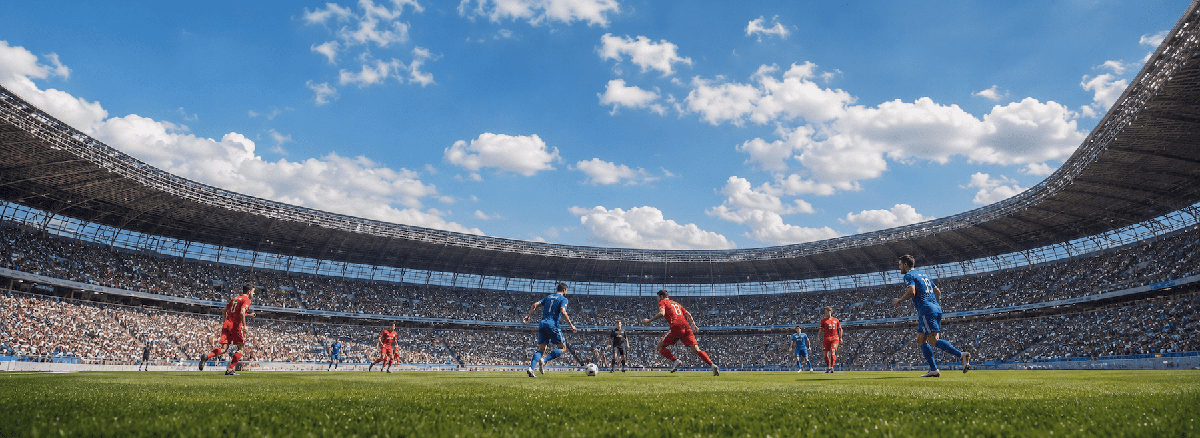
The first North American FIFA World Cup in 32 years showed how completely the world's game connects audiences everywhere. All 46 national football teams tracked in YouGov's Signal platform grew their global search audience in the tournament's first month, with 12 nations seeing average daily search increase by more than 1,000%.Key insights:+749% daily search lift, average of all 46 tracked national football teams+464% daily search lift, average of 52 players tracked42 of 46 national teams posted a single-day search volume of at least 1 millionWhen the tournament kicked off on June 11, Cape Verde's national team carried a daily global search volume of just 13,655: a rounding error in the context of world football. By the tournament's final weekend, the small island nation's daily search volume stood at over 400,000, and on July 4, the day Cape Verde pushed the defending world champion Argentina side to the brink of elimination, single-day search volume spiked to nearly 3.5 million searches.Cape Verde isn't the exception, though. It's one of the most extreme examples of a pattern that held for the whole field. 45 of the 46 national teams tracked in YouGov's Signal platform grew its average daily search volume over the month; 12 teams by more than 1,000%.Cinderellas take the stageOn opening day of the FIFA World Cup 2026, daily search across the 46 tracked national teams sat at 12.8 million searches combined. By the time Spain and Argentina prepared to face off in the final game, this figure rose to more than 27 million, a 113% lift, with the single-day high for the entire field peaking at 62 million on July 12.Five national teams grew global search interest at least 20x over the course of the tournament: Norway, Belgium, Switzerland, Cape Verde and Austria. Search behavior during the FIFA World Cup rewards surprise. Established powers generate consistently high attention, but the tournament's largest percentage gains belonged almost entirely to countries producing unexpected results. Every upset, dramatic finish and historic first appearance created an international discovery moment, drawing millions of people who otherwise might never have searched for those teams.What makes these flashes throughout the FIFA World Cup so special is that each spike in global attention corresponds with a defining moment of an entire nation. For a short period of time, countries with populations smaller than each host city can become the center of the world's cultural zeitgeist.Cape Verde's peak of 3.2 million searches came the day the team took Argentina to extra time, Curaçao's search spiked to over 1.6 million the day of the first FIFA World Cup game in the nation's history, and even the United States Men's National Team saw a single-day spike of nearly 2 million searches following the team's opening win vs. Paraguay.Looking ahead to the 2028 Olympics in Los Angeles, industry executives can begin identifying times and places where the next set of defining moments might occur. Understanding the scale at which underdog stories can lift a nation into the global spotlight can help broadcasters, advertisers and rights holders set expectations for what may come in the future.If Norway was the breakout nation of the FIFA World Cup, Erling Haaland was its breakout star, leading the tournament in both search growth and Instagram follower gains despite competing alongside global icons like Lionel Messi, Cristiano Ronaldo and Kylian Mbappé. Those numbers reflect far more than goals alone—they capture the convergence of a historic Norwegian run and one of the tournament's most compelling personalities.The turning point came in Norway's stunning Round of 16 upset over Brazil, where Haaland's dramatic late brace instantly transformed both the player and his nation into global talking points. That momentum only accelerated as his Viking-inspired celebrations, humorous social media posts and interactions with fans generated viral moments that extended well beyond the pitch.Throughout the tournament, Haaland became as much a cultural figure as a football star.These visualizatons illustrate how modern sporting events create lasting value. Match-winning performances generate immediate search attention, but memorable personalities convert those moments into enduring audiences. Haaland's nearly 31 million new Instagram followers demonstrate how a player can turn six weeks of global attention into a long-term commercial asset for both himself and the brands that partner with him.The whole world, all at onceThe six weeks of the FIFA World Cup in North America united fans from across the globe. A tournament driven by underdog stories early, established favorites late, and star-studded performances throughout provided narratives that are clearly reflected in global search volume.Cape Verde's 28x increase in global searches should come as no surprise to those who watched their thriller against Argentina. Meanwhile, the Norwegian team that captured the hearts of fans globally saw a 60x increase in search traffic, driven by a star striker who grew his social following nearly 3x that of the next closest player.Understanding where attention flows during moments like these offers stakeholders a way to move from measuring the global zeitgeist to anticipating it.
Most Popular