From national pride to fascism: how countries have used the World Cup to build identity
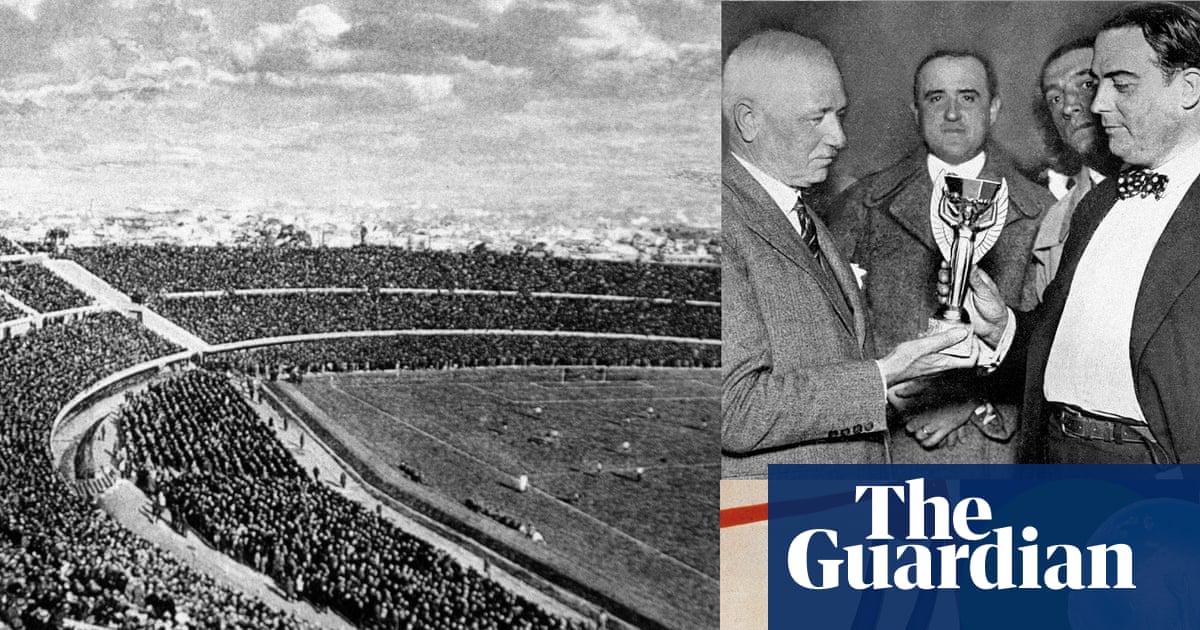
Football fans will be well aware that in 1930 Uruguay both hosted and won the first World Cup, but less well known is the diplomatic backstory of the country’s entry on to the international sporting stage. In the 1920s, Uruguay’s foreign minister, who led one of the country’s two rival football associations, coordinated with a diplomat serving in Switzerland to give his federation legitimacy by joining Fifa. The diplomat also entered Uruguay into the 1924 Olympic football tournament in Paris – which was emerging as the premier venue for global football. That provoked panic back in Uruguay: nobody had expected him to do that and nobody quite knew how they would afford it; a federation official ended up having to use his own house as collateral on a loan to pay for the team’s passage across the Atlantic.Once they got to Europe, Uruguay quickly won admiration. First in nine friendlies as they travelled through Spain and then at the Olympic Games itself, where they became by far the biggest draw. The great novelist Colette was even dispatched to the villa where Uruguay were staying to record her impressions for the newspaper Le Matin. Playing brilliant, coherent passing football, Uruguay took gold at the Games.“In South American diplomatic circles,” the pro-government Uruguayan newspaper El Día reported, “it is said that the performance of the Uruguay team … has done more for the fame of Uruguay than thousands of dollars spent on propaganda.”A national holiday was declared to mark the players’ return home and travel to the capital was subsidised so the whole country could join the party. The illustrated magazine Mundo Uruguayo claimed that the team had proved Uruguay was a “civilised nation” that could export culture as well as meat. Not only did the success make clear to the rest of the world that Uruguay was a state in and of itself, not some province of Argentina, but it seemed an endorsement for the prevailing ideology of batllismo and the values of modernity, liberalism, rationality and Uruguayan exceptionalism it represented.It was not an unreasonable claim: Uruguayan football probably wouldn’t have been as good had it not been for a mass program of state education that included physical training. That lesson was only amplified as Uruguay won the football gold again at the 1928 Games in Amsterdam.When it was accepted that football needed its own regular global competition distinct from the Olympics – in part to allow professionals to play and in part because it was threatening to overshadow other sports at the Games – Uruguay eagerly campaigned to host the tournament. Uruguay’s president, Juan Campisteguy, invited the head of Fifa, Jules Rimet, for an asado at the presidential palace; from its origins, the World Cup was a political event.By coincidence, the tournament was scheduled to fall over the centenary of the signing of the Uruguayan constitution, which seemed like too good an opportunity to miss. A hugely impressive, architecturally ambitious new stadium, the Centenario, was constructed, inaugurated on the anniversary by Uruguay’s 1-0 win over Peru.Twelve days later, Uruguay won the first World Cup final, beating Argentina 4-2. Less than 30 years after the end of the civil wars that had shaken Uruguay for decades, this was a great moment of national celebration. Not that it did Campisteguy much good; the following year as the full impact of the Wall Street Crash was felt, he was toppled in a coup.The template for the tournament as a showcase for national values was solidified in 1934. Benito Mussolini’s use of the second World Cup was an even more overt projection of Italy. For his regime, the tournament was about validation both through winning and hosting. Italy’s victory was not without controversy but, the Florentine weekly Il Bargello claimed, was nonetheless “the affirmation of an entire people, an indication of its virile and moral strength”.To host well was perhaps even more important. Particularly because Mussolini’s government had initiated a program of stadium construction, subsidised travel for fans both to Italy and between host cities, produced and marketed a range of World Cup merchandise branded with the fascist logo, and arranged live radio broadcasts to every competing European nation, plus Egypt. Foreigners who attended were hugely impressed, their praise, the Gazzetta dello Sport claimed, “more than sufficient to show Mussolini’s Italy – that was once little Italy of all improvisations and apologies – has organised the festival of football with style, flexibility, precision, even the courtesy and the meticulousness that indicate an absolute maturity and preparedness.”Very early, the pattern was set. Every World Cup has been to some extent a projection of the host and its government. It can bind a country together in common cause, and it can offer at least supposed evidence of a nation’s pre-eminence. That can be a largely innocent expression of national pride, as it was for Uruguay, or it can be something rather more malign, as it was for fascist Italy. Every World Cup, from Uruguay and Italy in 1930 and 1934, to Russia and Qatar in 2018 and 2022, has been to an extent about nation-building and about presenting an image to the world.What will it mean for the US, Canada and Mexico? We’re going to find out later this summer.



Most Popular


Iran, World Cup loom over FIFA Congress
11 hours ago

Every word: Arteta's post-Atletico Madrid presser
11 hours ago