Threats, corruption and intimidation: Is the Bishnoi gang calling shots at Cricket Canada?

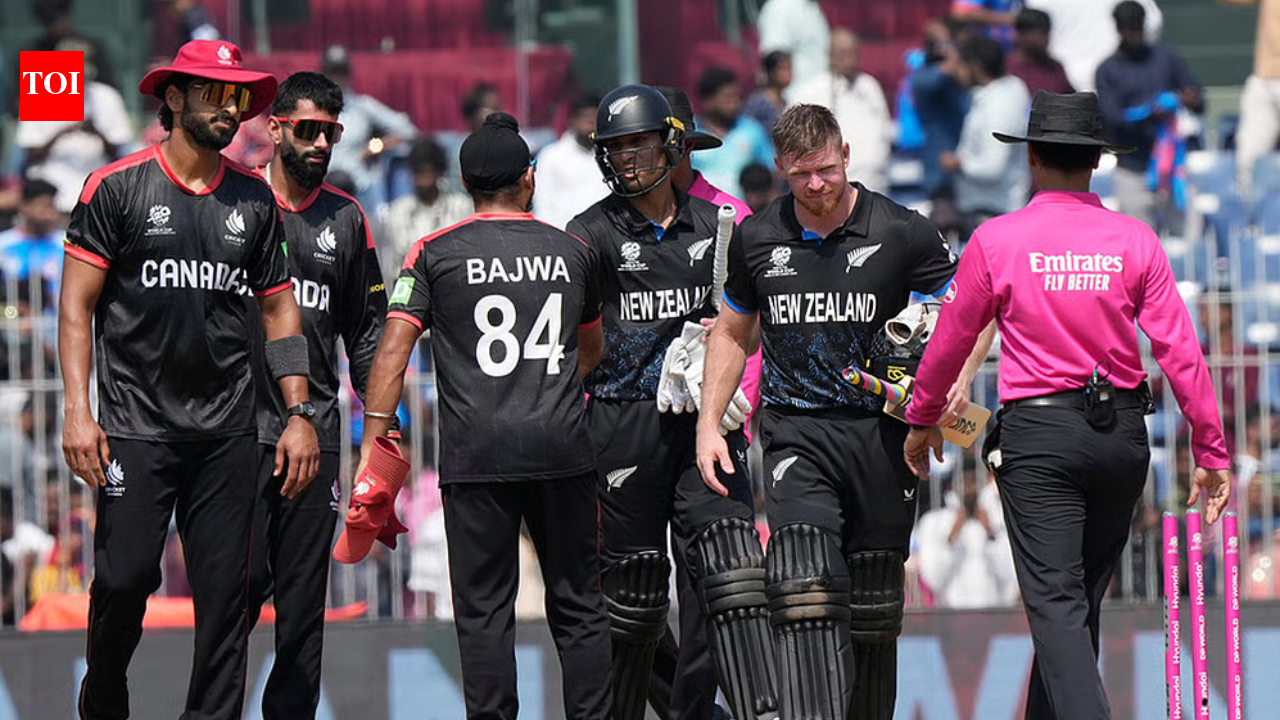
The night was meant to be a celebration. Last July, a group of around 25 cricketers, fresh off a win at a major provincial tournament gathered at a restaurant in Surrey, B.C.Amidst the din of conversations and aromas of chicken curry and aloo gobi, what took place has become what sources describe as a defining moment in a dark new era taking over the sport in Canada, allegedly influencing everything from player selection up to the top position at Cricket Canada.Two players from the tournament made their way from the outside patio to a table inside, where a star on Canada's national men's team was having dinner with another group.The national player — whom the fifth estate is not naming to protect his safety — stepped to one side of the restaurant where the two players issued a stark warning.According to sources, they claimed they represented the Bishnoi gang — a violent criminal group designated a terrorist entity in Canada. They told the star that if he didn't support the rise of a young player named Dilpreet Bajwa and another player on the men's provincial team and the national team, he and his family would face consequences."So they straight up said this wording to him, that ‘You must take care of these guys. These guys should not get dropped from the team. If they do, you are in trouble.' Obviously that was very scary for him," said a man we're calling Noah, whom the national player spoke to shortly after the incident.Noah is not his real name. The fifth estate is not identifying him because, like the national team player, he's received death threats: "We know where you live…. You won't be able to run away from the Bishnoi Group," said Noah, describing a text he received in Hindi viewed by the fifth estate.The Bishnoi gang is run from an Indian prison by its namesake, 33-year-old Lawrence Bishnoi. It has claimed responsibility for shootings, extortion and killings in Canada's South Asian community, including the death of Punjabi rap s tar Sidhu Moose Wala.The rash of targeted shootings prompted the mayor of Surrey in early 2026 to call for a national state of emergency.An investigation by the fifth estate has found the threats at the restaurant are part of a disturbing new trend inside Canada's highest level of cricket of troubling actions by people claiming to be from the Bishnoi gang. They appear to be trying to place cricket administrators and players in specific positions.Watch the full documentary, “Corruption, Crime & Cricket Canada,” from the fifth estate on YouTube or CBC-TV on Friday at 9 p.m.Also raising suspicion about the gang's influence: a red-flagged play during Canada's recent appearance at the men's T-20 Cricket World Cup that led to a Canadian player being interviewed by the International Cricket Council's Anti-Corruption Unit.The allegations of threats and intimidation are emerging in British Columbia and, according to four sources who spoke to the fifth estate, involve individuals connected to Arvinder Khosa. He's head of Cricket B.C. and was elected in early April as president of Cricket Canada after a court-ordered vote on the organization's leadership.The revelations emerged during a months-long fifth estate investigation into broader allegations of corruption, financial mismanagement and attempts to fix parts of matches by major figures at Cricket Canada, including the now former president, the former CEO and a board member."It's become ... a place where corruption thrives," said a high-placed Cricket Canada insider we're calling Graham, of Cricket Canada's leadership.In a statement to the fifth estate, Cricket Canada said of allegations involving corruption and match-fixing that it "takes matters relating to integrity extremely seriously." It added that it supports a review by independent authorities including the International Cricket Council's (ICC) Anti-Corruption Unit (ACU), and conclusions should be based on findings rather than speculation.A growing culture of fearSome at the grassroots are worried that threats from those claiming to be organized crime are infiltrating the game and creating a culture of fear.Cricket Canada oversees 10 provincial organizations for one of the fastest-growing sports in Canada and the second most-watched in the world. Leagues in major cities are bursting at the seams and some municipalities can't build playing fields fast enough to keep up with demand.The threats have left some players afraid for their safety, caused a provincial administrator to seek police protection and seen one high-level official resign his board position with Cricket Canada after receiving multiple threats and having his home shot at twice."I think people in the cricketing world are not any different than the general population and when fear comes into the picture.��… They're very, very disheartened and scared so they don't want to talk about it," Graham said.Multiple sources say the threats are linked to new president Khosa because, in part, he's connected to the players who allegedly made the threats claiming to be from the Bishnoi gang.In an interview with the fifth estate, done before he became president of Cricket Canada, Khosa denied any knowledge of threats by those claiming to be the Bishnoi gang and said those accusing him are trying to ruin his reputation."Just for political purposes, they are trying to ruin my reputation, right?" Khosa told the fifth estate. "This is like political propaganda. I am never involved in this kind of shit."After cricket was banned in a St. John's park, players want more official places to playCricket is growing in popularity in Waterloo region, especially among womenKhosa also told the fifth estate that while he didn't know the full nature of the altercation at the restaurant, a few days later, he, along with then Cricket Canada president Amjad Bajwa, set up a call with the players involved.During the call, he says they asked one of the players to apologize to the national team player.The fifth estate questioned Amjad Bajwa, no relation to team captain Dilpreet Bajwa, about the incident, but he denied knowing about the threats."Nobody came to me," he said. "Maybe they should, maybe … they've gone to police."When the fifth estate mentioned the phone call Khosa said they arranged between the players involved, Amjad Bajwa denied knowledge of the events."Nobody came to me. It's a police matter, not mine."Noah told the fifth estate that the national team player did report the threats to police. And then, while playing outside of Canada, he received more messages and calls including death threats.In an email to the fifth estate, the police department in Delta, B.C., confirmed it "is investigating allegations of interference and threats related to cricket at both the provincial and national levels."It said the case "may raise broader integrity considerations that extend beyond local jurisdiction" so it has flagged the case to RCMP. The investigation remains open and no charges have been laid.Suspicion of match-fixing at the World CupThose who were threatened say the main goal of the intimidation campaign was protecting the ascendancy of 23-year old Dilpreet Bajwa to national team captain.His captaincy was controversial from the beginning. In January, a month before the team left for the World Cup, veteran Nicholas Kirton, a left-handed all-rounder, appeared to be captain.A week after the team's arrival in Sri Lanka to train ahead of the tournament, players and coaches were called into a special meeting where Bajwa was announced as captain. It surprised some players and even the head coach told the fifth estate he was caught off guard.Sources close to the team tell the fifth estate that Cricket Canada's board made the decision, contravening their own selection criteria, which states the board should approve a recommendation from their national selection committee.The choice would prove consequential. Captains in cricket, unlike some other sports, have a large amount of control over decision-making on the field.The fifth estate has learned Bajwa was interviewed by the International Cricket Council's Anti-Corruption Unit for possibly fixing a play during Canada's third match of the tournament in Chennai, India.During that match against New Zealand, Bajwa's first delivery set off sirens in the stadium. He had bowled what's known as a no-ball, an illegal delivery because his foot had stepped over the line.No-balls historically are key indicators that fixing could be happening in a match, according to Osman Samiuddin, senior editor at ESPNcricinfo, a leading cricket news website, and author of The Unquiet Ones — A History of Pakistan Cricket."When they occur, fans and monitoring authorities immediately think something dodgy might be going on," Samiuddin said."One of the big spot-fixing scandals that happened back in 2010 involved the Pakistan cricket team in England, where two bowlers bowled a couple of no-balls and a newspaper investigation exposed that the game had been fixed."Spot-fixing is the latest evolution of match manipulation. With sports betting becoming more sophisticated, and with bets available on specific moments in the game, players have been influenced or coerced into fixing specific points in a match. It may not affect the overall outcome, but anyone with advanced knowledge of the spot-fix could win big money.The fifth estate has learned that after that game, Bajwa missed an important team meeting. Multiple sources who attended the World Cup say Bajwa was called in by the ACU, interviewed and had his phone searched.The ACU said it would not confirm that Bajwa was taken aside because it doesn't discuss or confirm ongoing investigations.But Cricket Canada board member Pawan Joshi told the fifth estate that he was aware that Bajwa was called in by the ACU."To be honest, it's a sad thing, but again it's within ICC's jurisdiction. If they'll be investigating it, whatever they'll be recommending, we'll be doing it," Joshi told the fifth estate.When asked about Dilpreet Bajwa's actions at the World Cup, now former Cricket Canada president Amjad Bajwa said he wasn't aware of the situation."I have no idea. Nobody told me," the president told the fifth estate shortly before his removal on April 9. "This is a matter between ICC and the player, right? We don't have any say in these things."But that wasn't the only suspicious incident at the World Cup involving Canada. Ahead of Canada's first match at the World Cup in February, the fifth estate met with a betting insider in India, where gambling on sports is illegal in most states.We are calling the source Pintu because identifying him would put his physical safety at risk.Pintu told the fifth estate that a script — a series of plays choreographed in advance for the purpose of being bet on — was available for us to buy at Canada's first match played in Ahmedabad, where the team faced South Africa.According to Pintu's contact, known as a "fixer," it would cost $37,000 Cdn to see the script. The fifth estate could not verify the script's legitimacy or if it matched what was occurring on the field.Cricket Canada did not respond to questions about the script the fifth estate was offered.Khosa's influence on the riseWhile Khosa may have just recently become president of Cricket Canada, his fingerprints appear to be on key decisions, including Dilpreet Bajwa's ascent to captain.While it came as a surprise, it appears it was months in the making. Shortly after the national player was threatened at the Surrey restaurant, Noah, the B.C. provincial cricket insider, says Khosa overruled the selectors and board decision to make Bajwa the captain of the provincial team, even though the selectors had chosen someone else."I opposed it and within 30 minutes or 40 minutes, I got another message from the same number and that terrified me because it was a picture," said Noah, who had two police cruisers parked outside his home for weeks as a safety precaution.Noah said he'd already received threatening calls and texts and that the picture was of a written note containing another threat.According to Noah, it said: "We warned you and you didn't obey. Your time is over now, you want to run anywhere? Run. You will not survive, again, Bishnoi group." The text was in Hindi but used the English alphabet.At the end of July, when Cricket B.C. attempted to assemble a team for the Canadian championships, the national player withdrew his participation, saying in an email obtained by the fifth estate that "due to recent threats I have received from certain B.C players … I do not feel mentally prepared or safe to take part."A source close to Cricket Canada also tells the fifth estate that Khosa was part of a group that put Bajwa's name forward for the national team and that Khosa told Bajwa that he owed Khosa for his place on the team.While the illegal delivery at the World Cup could be chalked up to nerves or a mistake, sources say the revelations about threats made to solidify Bajwa's position on the team add another dimension to those events."I personally feel they wanted to fix the games, make money out of it. That's why they knew they can use him," said Noah, referring to those claiming to be from the Bishnoi gang."What other reasons can there be that they can go to an extent to make him captain for a Canadian team?"Noah also said there were at least five other more experienced players on the team better qualified for the captaincy.When asked by the fifth estate if he pushed for Bajwa's selection or captaincy, Khosa who was not yet elected as president of Cricket Canada, denied any involvement."How can I? I am not in the Cricket Canada, right? I have no vote in the Cricket Canada," Khosa said.A phone recording alleging spot-fixing emergesThe events at the recent World Cup are just the latest allegations of fixing parts of matches involving Cricket Canada.In late May of last year, former Team Canada coach Khurram Chohan was recorded during a phone call alleging he was asked to fix parts of matches by then Cricket Canada president Amjad Bajwa, then CEO Salman Khan and Rana Imran, a board member from Saskatchewan.The fifth estate obtained the recording, which is in Punjabi and was made without the knowledge of Chohan. When it surfaced in June, it rocked the Canadian cricket world, in part because of the level of detail of the allegations and because they included Cricket Canada's top brass."They said they'll arrange the team and you'll make them play," Chohan said on the recording. "I said, ‘Have you gone mad? What do you mean?'"In one instance during a match against Bermuda at a tournament in the Cayman Islands in April 2025, he said the CEO and the president told him in advance what the starting batting order should be on the field.In addition to moments and plays during matches, bets can be placed on the starting 11 or the order that players will bat during a match.Canada won the match, but Chohan said he did not follow instructions, and as a result, got an angry call from Khan."He yelled, ‘What did you do?' I asked, ‘What happened?' We made a team with you. We gave you the whole batting order. We told you who will play and who will not. What did you do?'"Chohan's job was terminated in July, about a month after the recording was made. The fifth estate tried to reach him but he did not answer multiple phone calls.In a lengthy email, Khan said he categorically denies "any involvement in spot fixing, session fixing, betting or influencing team selection for improper purposes."Cricket Canada suspends CEO, citing 'negativity' around fraud chargeCricket Canada CEO says charges of theft and fraud are 'completely false'When asked about the allegations, former Cricket Canada president Amjad Bajwa said the ICC was looking into them and that "I can be accused of anything, but it has to have a proof in it."Imran, the board member from Saskatchewan who was also accused of fixing in the recording, told the fifth estate in a phone call that the allegations against him are false and asked to see proof.After decades of fixing scandals plaguing the sport within cricket-dominant countries, including South Africa and India, the International Cricket Council's Anti-Corruption Unit has worked to root it out. Spot-fixing is hard to prove without concrete evidence, so despite its work, allegations persist.Cricket Canada's new presidentThe allegations of match-fixing involving regimes past and present are just some of the challenges facing Arvinder Khosa as he takes the reins at Cricket Canada.Khosa became Cricket Canada president in early April after a court ordered the national sport organization to undergo a leadership review.In December 2025, a group of provincial cricket bodies filed a petition in the B.C. Supreme Court claiming that because of "governance concerns" and "lack of proper financial controls" it was necessary to hold a special vote on the leadership and remove four directors from Cricket Canada, including the president and vice-president.In March, a judge sided with the provinces and ordered the vote to go ahead, which led to Khosa becoming president, ousting former president Amjad Bajwa.In his ruling however, Justice David Crerar described Cricket Canada and the provincial cricket organizations as being engaged in "multiple civil wars," and said the "machinations and squabbles before the court appear to be driven at least in part by the egos and ambitions of certain named individuals."He also criticized the parties involved for spending taxpayer money on lawyers instead of spending it on developing the game.The court case was a reckoning for Cricket Canada, which had been beset by a number of scandals in recent years, including the controversy around former CEO Salman Khan, who's facing criminal charges for allegedly stealing money from the local cricket association in Calgary.In a statement, Khan wrote, "these matters are currently before the courts and I categorically deny these allegations."A former director at Cricket Canada, he became CEO despite the organization knowing he was under police investigation.His contract also had a provision that states he is to receive pay for his full term if he's fired for any reason other than a criminal conviction related to this job as CEO.After the criminal charges became public, despite letters from the International Cricket Council and Sport Canada questioning the decision, it took nine months before Khan was fired by Cricket Canada.Now, the fifth estate has learned, Khan wants Cricket Canada to honour his contract and pay out the remainder of his deal, to the tune of $475,000.What's the future of Cricket Canada?Ahead of the broadcast of the fifth estate episode on this investigation, Cricket Canada published a statement on its website that said that while it has yet to review the full program, "we will assess its contents carefully once it is released. Where matters are raised, we are committed to reviewing them responsibly and taking appropriate steps as needed."But with numerous previous scandals to deal with, and now allegations against the new president, critics like Graham, the Cricket Canada insider whose identity the fifth estate is protecting, say the only way to resolve the problems isn't a new board, but instead for the federal government or the ICC to take control of operations."You have to change the system. It's not worked so far. So to do the same things and expect a different result will be the height of stupidity," Graham said.Sport Canada says it's encouraged Cricket Canada "to improve its governance" if it wants to receive future funding, but says an overhaul of the organization's leadership is beyond its mandate.It is within the ICC's mandate, but so far the Dubai-based governing body has chosen not to intervene.In an email to the fifth estate, the organization said it "does not ... get involved in day-to-day matters within member boards," but that members are subject to certain criteria under the ICC Constitution.An ICC spokesman said it would not answer further questions involving governance at Cricket Canada "for reasons of both confidentiality and/or because that information is outside of the ICC's knowledge base."In B.C., the provincial insider t here worries that the new national leadership won't actually improve cricket's development at any level and instead the increasing threats related to the Bishnoi gang will impede the sport's growth."With these people running the show, there is no future for these kids," Noah, the B.C. insider, said. "Why would any parents send their kids to play this sport where the people on the top level are corrupt and using the gangs to influence the sport?"

Most Popular






ALM PREVIEW: Brisbane v City
13 hours ago