The great Indian catching slump: T Dilip leaves behind a crisis demanding answers
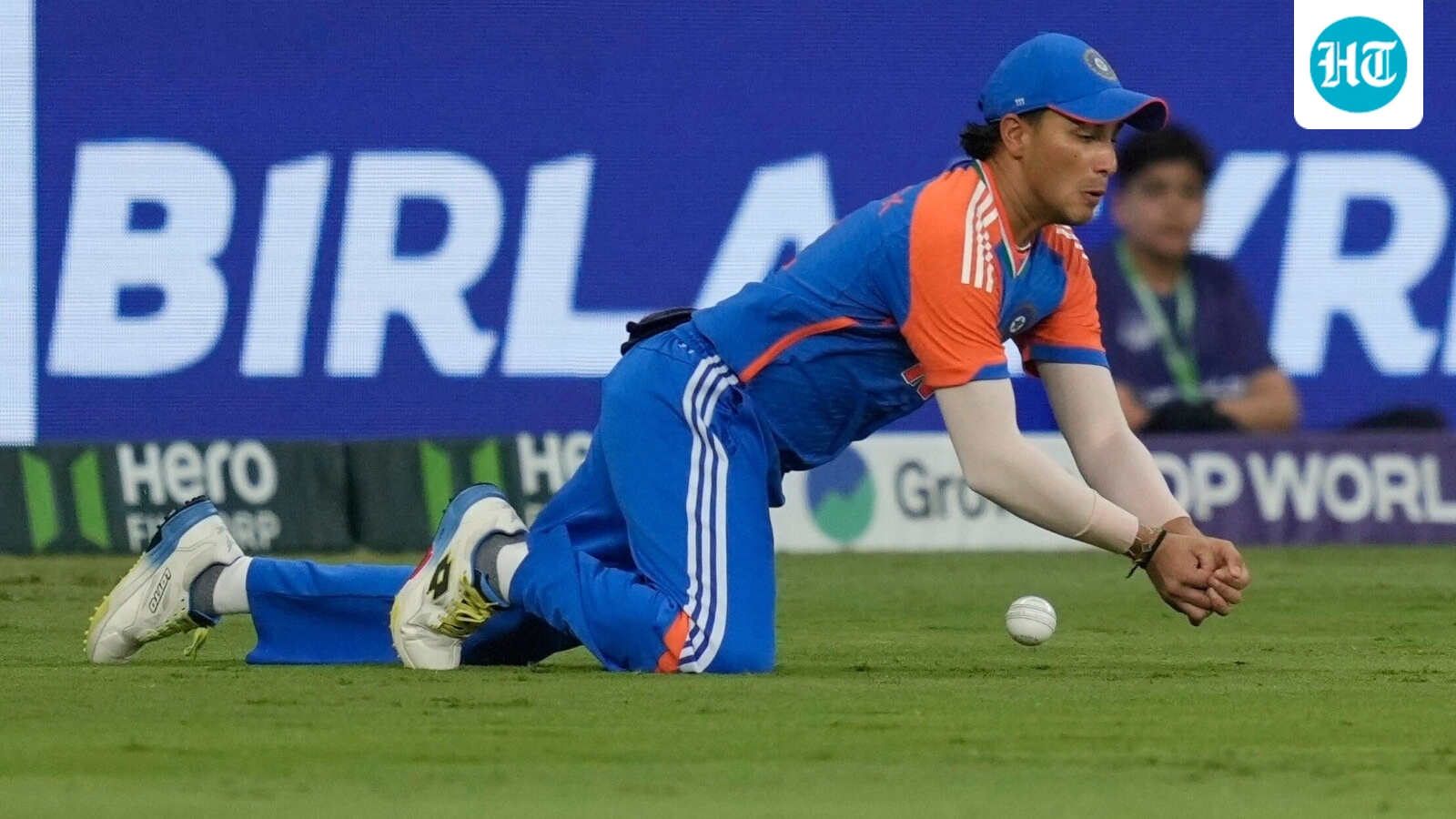
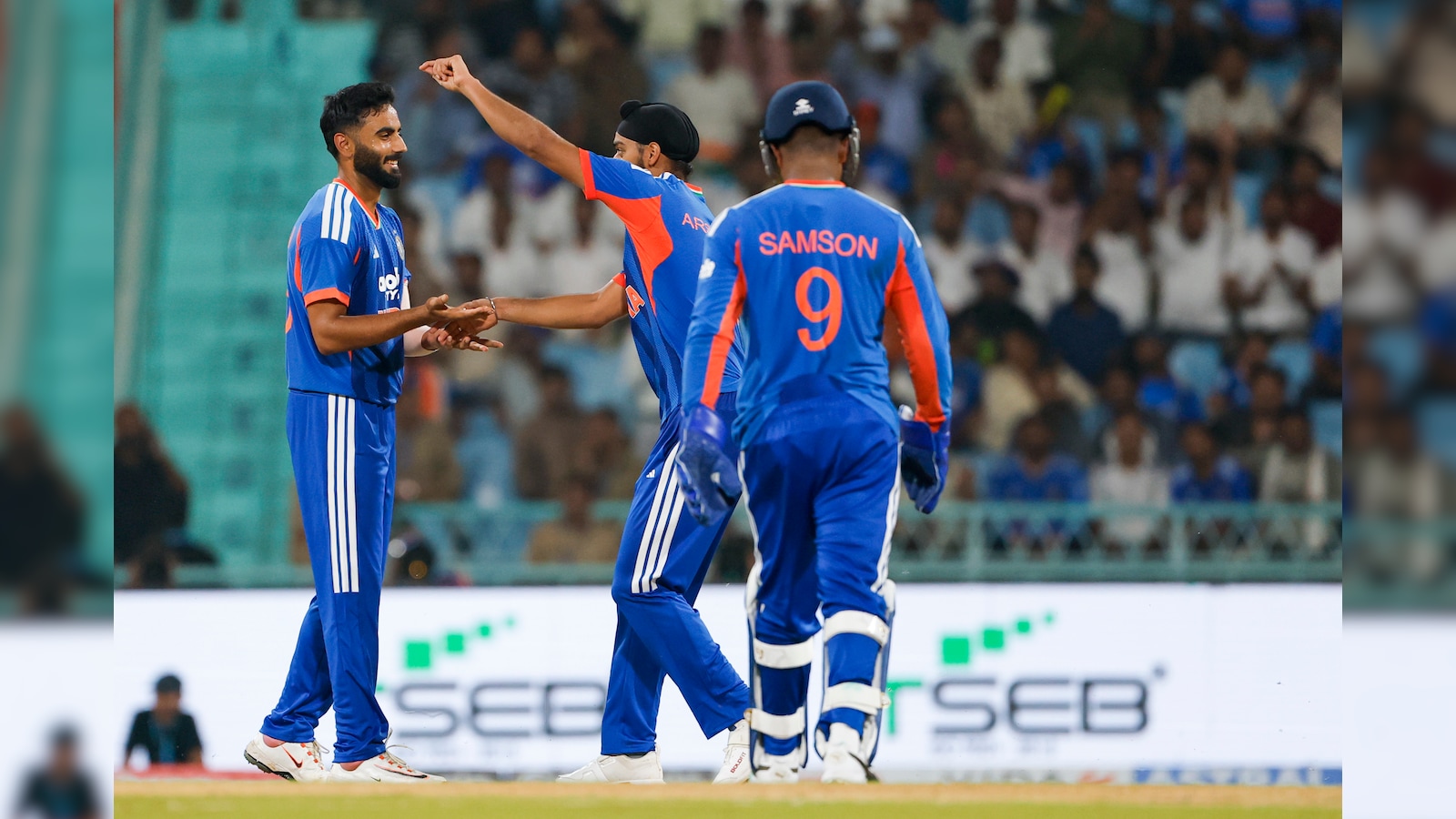
T Dilip’s departure as India’s fielding coach arrives at the end of a conspicuously successful period for the national team. Yet beneath the trophies, celebratory fielding medals and occasional acts of athletic brilliance lies a more disquieting statistical record.Across three major, publicly documented samples from the closing phase of Dilip’s tenure—the 2025 Test series in England, the 2025 Asia Cup and the first eight matches of the 2026 T20 World Cup—India completed 103 catches and dropped 48.That amounts to 151 recorded opportunities and a combined catching efficiency of only 68.2%.The datasets are not perfectly identical in their classification of chances. They therefore cannot be treated as a forensic evaluation of one coach. But, in this period, India were dropping almost one catch for every two they completed.The 23 missed chances were also India’s highest recorded total in a Test series. Their previous worst was 16 during the 2018-19 tour of Australia. The England performance did not represent a marginal deterioration; it exceeded the previous record by 43.8%.The Asia Cup produced an almost identical pattern. India held 25 catches and dropped 12, converting 67.6% of their opportunities. Only Hong Kong had a poorer rate among the eight participating teams. India put down four catches against Pakistan and afforded Bangladesh’s Saif Hassan four separate reprieves in one innings.An 80% conversion rate across those 37 chances would have yielded approximately 30 completed catches. India finished with 25. Even against a relatively modest benchmark, five additional dismissals were lost.The weakness persisted at the 2026 T20 World Cup. Before the semi-final against England, India had completed 33 catches and dropped 13. Their efficiency of 71.7% ranked 15th among the 20 participating teams and was the lowest among the eight sides that reached the Super Eight stage.England, their semi-final opponents, had converted 87% of their opportunities. Had India operated at the same rate across their 46 chances, they would have completed approximately 40 catches rather than 33—a difference of seven dismissals.India ultimately won the World Cup, and Axar Patel transformed the semi-final through two outstanding catches. That result, however, should not be mistaken for statistical exoneration. India entered the knockout match having dropped more catches than any other side in the tournament.Those figures extend the sample beyond a single difficult tour or a short tournament. They indicate that India had ceased to be an elite catching side well before Dilip’s final year. A team converting between 75% and 78% of its opportunities is not catastrophically poor. But it is also not operating at the level required of a side whose bowlers are expected to manufacture victories against the strongest opposition.The deterioration became severe in 2025 and early 2026. Across the three major samples, India’s combined efficiency fell to 68.2%—between seven and ten percentage points below their already underwhelming longer-term figures. The movement was therefore not merely from excellent to average. It was from average to repeatedly damaging.In 2018, Rohit Sharma completed all 11 catches that came to him. On India’s tour of England that year, KL Rahul recorded a catch-conversion rate of 93%, dropping only one opportunity across the tour. Ravindra Jadeja played nine ODIs after returning to the side in 2018. He saved 30 runs and conceded three through fielding errors, leaving him with a net fielding contribution of 27 runs.At the 2018 Asia Cup, Kedar Jadhav fielded 97 balls, produced 60 accurate throws and only three inaccurate ones, completed the tournament without a fumble and saved 17 runs. Jasprit Bumrah, not ordinarily regarded as one of India’s elite fielders, was involved in six successful run-outs across 23 matches in 2017.The numbers were not uniformly favourable. Yuzvendra Chahal missed nine catches between the beginning of 2017 and India’s home series against Australia in early 2019, eight of them from his own bowling. That weakness was identified, quantified and incorporated into an individual training programme.That is the essential difference between possessing statistics and using them. Sridhar’s database classified catches by difficulty, measured clean interceptions and fumbles, distinguished accurate from inaccurate throws, recorded runs saved and conceded, and calculated a productivity ratio for every fielder.The value of the system was not that every player produced flattering numbers. It was that shortcomings could be isolated at the player level rather than submerged within a general impression of the team’s energy or athleticism.Also Read: First post-Bazball England squad signals selection reset as Lawrence, Pope, and Cook return for Pakistan TestsThose moments, however, existed alongside far more frequent routine failures. The fundamental statistical question is not how many exceptional catches a team completes. It is how rarely it wastes the ordinary opportunities created by its bowlers.Across the England series, Asia Cup and the pre-semi-final portion of the T20 World Cup, India dropped 31.8% of their recorded chances.Put differently, fewer than seven of every ten opportunities were converted. A side can occasionally survive such inefficiency when its batting and bowling possess sufficient superiority. India did so repeatedly. But the capacity to compensate for a weakness does not make that weakness inconsequential. It merely makes its cost harder to see in the final result.The publicly available data also does not permit an exact, player-by-player reconstruction of every chance during Dilip’s complete tenure. It would therefore be intellectually dishonest to attribute a precise proportion of India’s decline to his methods.The team-level record nevertheless establishes a legitimate case for change. India ranked 10th out of 12 teams in catching efficiency in both Tests and ODIs from 2023. They then recorded efficiencies of 66.2% in England, 67.6% at the Asia Cup and 71.7% before the T20 World Cup semi-final.Across those three samples, they dropped 48 catches. The fielding medal created visibility. The trophies preserved the impression of success. The occasional brilliant catch supplied enduring images. The underlying arithmetic remained less forgiving.Subhadeep Ghosh does not inherit a team incapable of excellence in the field. He inherits one whose excellence has become intermittent—capable of completing the improbable while too frequently failing to complete the expected. His first task is not to produce more spectacular catches. It is to restore the missing 31.8%

Most Popular