What you need to know about Glasgow Commonwealth Games
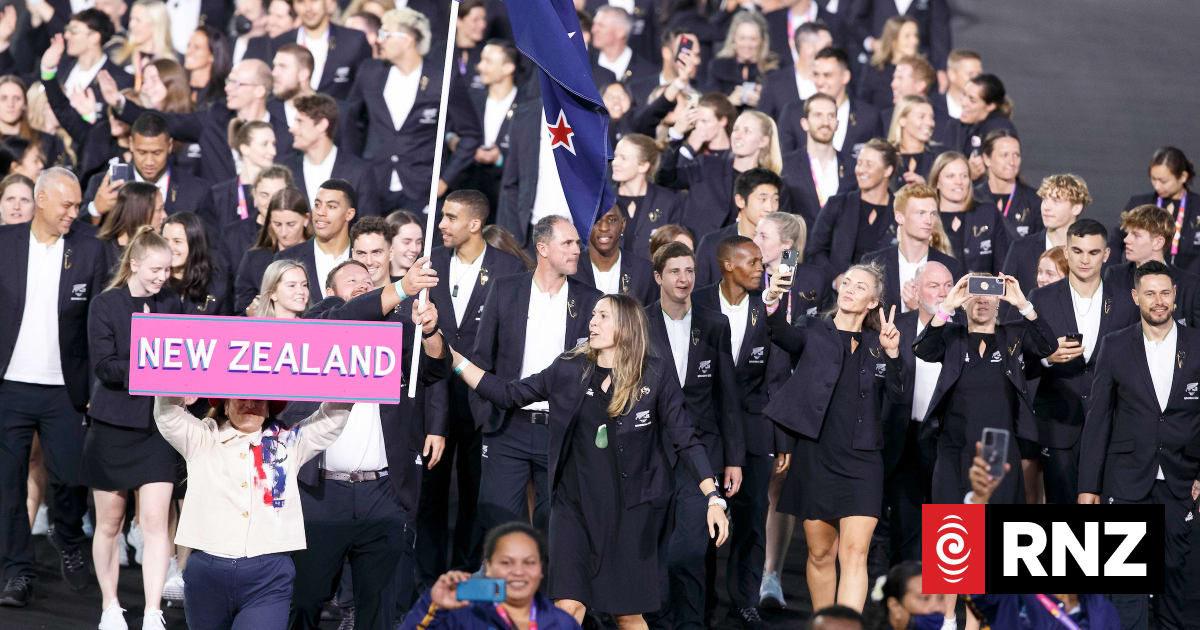
Leonard Powell gauges excitement over Comm Games in GlasgowMorning ReportGlasgow Commonwealth Games24 July-3 August (NZT)Live blog updates on RNZRegardless of how you feel about New Zealand's relationship with the British sovereignty, the Commonwealth Games remain an important part of our sporting landscape.The latest edition will begin this week at Glasgow, spread over 10 sports and 10 days.While the Games are often regarded as a second-rate festival, especially compared to the Olympics, some events will still feature some of the best competitors in the world.The Olympics are undoubtedly the pinnacle for most sports, but the Commonwealth Games fill a crucial role in an athlete's high performance pathway, often acting as a more realistic stepping stone to bigger and better things.Here's what you need to know about the Glasgow Commonwealth Games.HistoryThe Commonwealth Games are scheduled every four years between Olympics, bringing together the nations traditionally under British rule.The event began in 1930 as the British Empire Games, changed to the British Empire and Commonwealth Games in 1950, and again to the British Commonwealth Games in 1966.Since 1978, the multi-sport festival has been known as the Commonwealth Games, also referred to as the 'Friendly Games'.The Games few out of the 1911 Inter-Empire Championship, contested by Australasia, Canada, South Africa and the United Kingdom to celebrate the coronation of George V.The first British Empire Games were staged at Hamilton, Ontario, attended by 11 countries, with 400 athletes across athletics, boxing, bowls, rowing, swimming, diving and wrestling. Women competed only in aquatic events.Only six countries have attended every Commonwealth Games - New Zealand, Australia, Canada, England, Scotland and Wales - and only the first four have won gold medals at each.Nine countries have hosted the Games, with Australia (5), Canada (4), New Zealand (3), England (3) and Scotland (3) doing so more than once.Auckland and Edinburgh have staged the event twice, while Glasgow will join them in 2026.Australia has won the most gold medals, topping 1000 at Birmingham 2022, followed by England (773), Canada (510), India (203) and New Zealand (179).Glasgow 2026The Games have landed in the Scottish city for the second time in just 12 years, through a comedy of errors and indecision.Hosting rights for 2022 were originally awarded to Durban, South Africa, but when it was stripped of those rights, due to financial concerns, Birmingham moved its bid ahead four years, leaving 2026 vacant.Initially, the Australian state of Victoria accepted that responsibility and intended to spread sports across its territory, instead of concentrated on one city. Twelve months late, the state government got cold feet, citing cost escalations, and cancelled the Games.Several other options were explored, including London, Gold Coast, Malaysia, Singapore and Accra (Ghana), but ultimately, Glasgow took on the hosting role, re-using many of the venues from the 2014 Games.Four years ago, the Birmingham Games featured 20 sports across 15 venues, but Glasgow will feature a cut back programme, consisting of just 10 sports.Many of those dropped were disciplines where New Zealand had historically succeeded, including rugby sevens, hockey, triathlon, road cycling, cricket and squash.Surviving sports will also undergo some notable changes - bowls will be contested indoors for the first time, while the men's and women's 1500m will revert back to the mile, 60 years after the imperial distance was last raced at the Games.All 74 Commonwealth nations are expected to attend, with African nations Gabon and Togo making their debuts. Australia and England will field the biggest teams (264), with hostsScotland (173), Canada (149), India (124), New Zealand (114), Wales (114) and South Africa (112) sending more than 100 athletes.The Glasgow opening ceremony is scheduled for 6am Friday, 24 July (NZT) at the OVO Hydro indoor arena, headlined by Scottish singer/songwriter KT Tunstall, and the programme will run until Monday, 3 August.In New Zealand, events can be viewed on Sky Sport or free-to-air on Three.NZ at Commonwealth GamesNew Zealand is one of only nine nations to attend every edition of the Games and one of only six to win gold medals at each.It has won 706 medals over the 23 instalments, consisting of 179 gold, 232 silver and 296 bronze. It ranks fourth in total medals and fifth in gold.Athletics has been our most successful sport, producing 142 medals and 39 gold, ahead of cycling (131/35) and swimming (94/24).Shooter Greg Yelavich won 12 medals across six games from 1986-2010, while thrower Val Young won five gold medals in shot put and discus, more than any other Kiwi.New Zealand's most successful event in terms of medals is the men's cycling road race, which has produced four gold, nine silver and four bronze. The men's 1500m/mile has yielded three gold, four silver and five bronze.Women's shot put and cycling individual pursuit, and men's sevens have produced five gold medals each.New Zealand has hosted the Games three times - Auckland 1950, Christchurch 1974 and Auckland 1990, and our biggest medal haul came at Auckland 1990, when we won 58 medals and 17 gold.New Zealand at GlasgowMedal contenders in each sport include:AthleticsGeordie Beamish - reigning world steeplechase champion and former world indoor 1500m championAnna Grimaldi - three-time Paralympic gold medallist in long jump and 200mImogen Ayris - 2022 pole vault bronze medallist and world indoor bronze medallistHamish Kerr - Reigning Olympic, world, world indoor and Commonwealth Games high jump championEliza McCartney - former Olympic pole vault bronze medallist, world indoor and Commonwealth Games silver medallistEthan Olivier - Reigning world junior triple jump championTom Walsh - Twice Commonwealth Games shot put champion, former world champion and four-time world indoor champion3x3 BasketballMen (Josh Book, Te Tuhi Lewis, Christian Martin & Aidan Tonge) - Reigning Asia Cup championsTrack cyclingEllesse Andrews - Defending Commonwealth Games sprint, team sprint and keirin champion, reigning Olympic sprint and keirin championDevon Briggs - Two-time world para-cycling time trial and scratch race championTom Sexton - Reigning Commonwealth Games team pursuit champion, 2022 individual pursuit silver medallistBryony Botha - Former world omnium and elimination race champion, 2024 Olympic team pursuit silver medallist and omnium bronze medallistEmily Shearman - Olympic, Commonwealth Games and world team pursuit silver medallistJudoKody Andrews - 2022 Commonwealth Games +100kg silver medallistMoira de Villiers - Eight-time Oceania champion, 2022 Commonwealth Games 78k bronze medallist, 2014 Glasgow 70kg silver medallistSydnee Andrews - 2022 Commonwealth Games +78kg bronze medallistBowlsShannon McIlroy - Former world singles and team championAli Forsyth - Three-time world fours and team championMark Noble - Two-time Commonwealth Games parasport triples silver medallistTayla Bruce - Former world singles and team champion, 2022 Commonwealth Games fours and triples bronze medallistKatelyn Inch - Former world team champion, 2022 Commonwealth Games pairs bronze medallistSelina Goddard - Former world team champion, three-time Commonwealth Games bronze medallistNetballSilver Ferns - Two-time Commonwealth Games champions, three-time silver medallists and 2022 bronze medallists, five-time world championsSwimmingLewis Clareburt - Defending Commonwealth Games 200m butterfly and 400m medley champion, former world 400m medley championErika Fairweather - Former world 400m freestyle champion, 200m freestyle silver medallistCameron Gray - 2022 Commonwealth Games 50m butterfly bronze medallistJosh Willmer - Reigning Commonwealth Games para-swimming 100m breaststroke championWeightlifting

Most Popular
Second time's a charm as Sixers announce coach switch
41 minutes ago