
Could Asian teams be catching up with Europe at this World Cup?
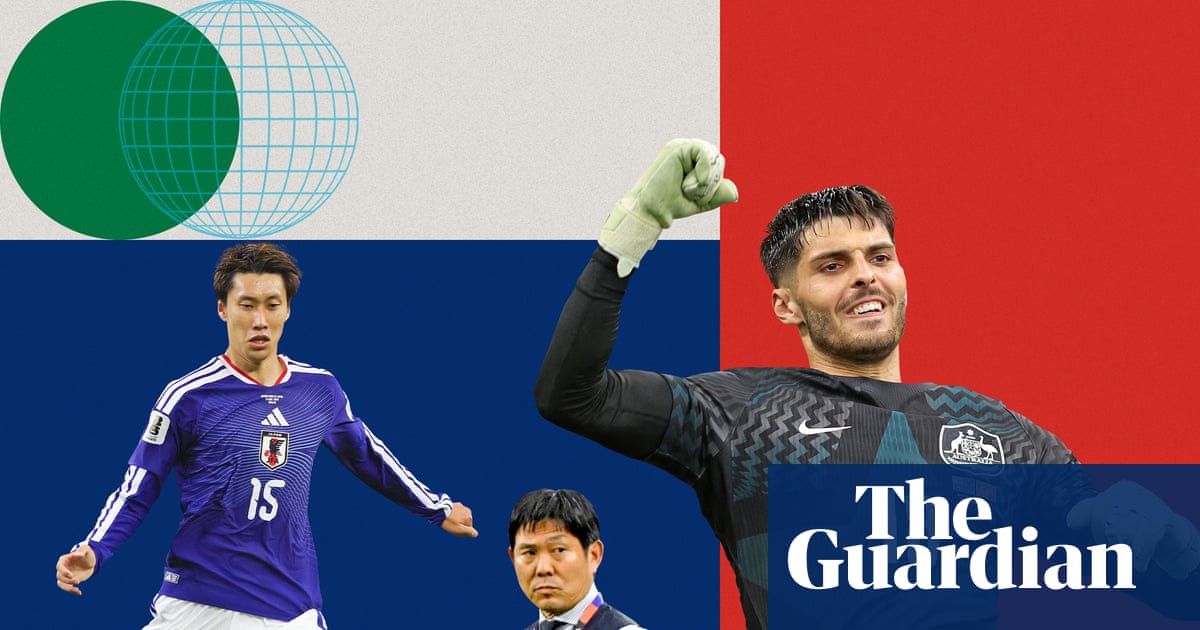
Daichi Kamada’s late equaliser for Japan against the Netherlands on Sunday did not merely mean that the scoreline more accurately reflected the game. It also extended to four the unbeaten run of teams from the Asian confederation against Europe at this tournament. There is a degree of contingency to that record, and nobody should draw definitive conclusions from the first week of a World Cup, but equally if there were a shift in the power dynamics of world football, it might look a bit like this.The tone was set on day one with South Korea’s victory over Czech Republic. It perhaps shouldn’t have come as a surprise to anybody who saw their qualifying playoff semi-final against Ireland that the Czechs would be so ponderous and lumbering, a side that understood the value of dead balls and long throws and little else. But still, the ease with which South Korea passed their way around them was striking. If Son Heung-min had been the player he was three or four years ago, the Korean victory would have been far more emphatic.The other AFC win over Europe saw Australia beat Turkey. Again, nobody could really claim that this Turkey, who dragged their way to qualification with 1-0 wins over Romania and Kosovo in the Uefa playoffs, really represent the pride of Europe. Nor was there any great sense that they’d been outplayed by Australia. Rather, Turkey had 30 shots but came up against an inspired goalkeeper in Patrick Beach, who made eight saves. But still, Australia had a smart gameplan that worked, and it wasn’t quite the smash and grab the stats may make it appear.Qatar’s draw with Switzerland can be attributed less to clever strategy. They sat in, seemed content to keep the score down and got away with it as Switzerland wasted chance after chance. Even the goal Switzerland did score – via a first-half Breel Embolo penalty – was controversial, the semi-automated offside apparently breaking down at the key moment. Miro Muheim’s injury-time own goal gifted Qatar a point, but it was not one they had ever looked likely to achieve. Switzerland had 26 shots to Qatar’s six and, on another day, could have won by three or four. So, again, it would be hard to portray that as a victory that demonstrated any sort of Asian superiority.The really intriguing game was that draw between Japan and the Netherlands. Even without three key players in Kaoru Mitoma, Wataru Endo and Takumi Minamino, Japan are highly fancied and they showed exactly why. There have been two real heavyweight clashes so far in this World Cup: Brazil v Morocco and the Netherlands v Japan. Both finished level. In both, it was the up-and-coming side who probably shaded the game. And in both cases, the up-and-coming side seemed to be playing the style of football more usually associated with their opponents.Morocco played with a fluency and verve, confident in possession, a pleasing smoothness to their passing. Japan interchanged positions and, although they had only 40% possession, there was a purpose and precision to their attacks that was redolent of the Dutch at their best. But crucially, there was no sense of inferiority.That’s something the Japan coach, Hajime Moriyasu, has stressed over the past few months. He is worried that his side have a mental block about progressing further than the last 16 and has chosen to address it by speaking of his side as potential champions. That may be a psychological ploy to jolt his players through the last-16 barrier but equally, if the Netherlands are contenders, why not Japan?The left wing-back Keito Nakamura, who scored the first goal, was one of two Japan starters to achieve a 90% pass accuracy, along with the defender Hiroki Ito. Kamada was aggressive and intelligent in the centre of midfield. Junya Ito came off the bench to offer creative edge. The 23-year-old Zion Suzuki may live up to predictions that he will be the best ever Japanese keeper. If there was a slight disappointment, it was the centre-forward Ayase Ueda, who struggled to impose himself, but he showed at Feyenoord last season just how effective he can be.AFC teams have in the past perhaps been guilty of lacking belief against Uefa sides, but no longer. Japan celebrated the equaliser as any side that has snatched a draw should, but the disappointment when they fell behind was clear. First and second in this group play second and first in the Brazil, Morocco, Scotland, Haiti group. It’s an indication of how far both Morocco and Japan have come that it’s not at all clear that it would be easier to face them than Brazil or the Netherlands.Four games are nowhere near sufficient for grand sweeping statements, but perhaps the best Asian sides are drawing closer to Europe.



Most Popular




Spain v Cape Verde: World Cup 2026 - live
5 hours ago
