
Alex Manninger obituary: goalkeeper who helped Arsenal win Double

The reserve goalkeeper is, in a strange way, one of football’s most challenging roles. It may well involve sitting on the bench during matches for many months or even years, playing no part, reinforcing the idea that goalkeeping can be football’s loneliest position. Yet if suddenly called upon by injury or a sending-off, the reserve keeper needs to be instantly alert and available if his or her team is not to be seriously weakened.Alex Manninger was Arsenal’s 20-year-old reserve for the 1997-98 season, expecting to play little or no role given that the team’s first-choice keeper was England’s David Seaman. But when Seaman was injured Manninger stepped in for a remarkable series of performances including six clean sheets in a row, earning him the Premier League’s Player of the Month award.He was agile and courageous, with the positional sense essential for good goalkeeping and formidable reactions enabling him to recover quickly to make multiple saves. There was one especially memorable stop, when he flung a strong arm upwards in an FA Cup penalty shoot-out against West Ham. His ability to deal with crosses was less assured but despite his youth and inexperience he always appeared calm and focused. In a match at Old Trafford, Manninger repulsed strikers of the calibre of Teddy Sheringham and Andy Cole as Arsenal secured a 1-0 win vital for their eventual title triumph.“There was something almost charmed about him,” said the former Arsenal defender Martin Keown, who described Manninger as one of Arsenal’s unsung heroes. “We didn’t miss a beat with Alex in the team and what still stands out now is how quickly he convinced me he was up to it.” For his part, Manninger spoke of the importance of having such formidable defenders as Keown and Tony Adams in front of him. Although he had not played the number of games normally necessary for a championship medal, a special arrangement was made to award him one in 1998.Some thought it unjust when Seaman displaced him as soon as he returned to fitness. “I must admit it was touch and go as to whether I would get back in the side,” recalled Seaman. However, Arsène Wenger, the manager, spoke of the benefits of having “real competition” for the goalkeeping slot. Despite that competition, the two Arsenal keepers became good friends, bonding over fishing trips. Seaman praised Manninger’s relentless eagerness to improve. “He wanted to be the best and if he let a goal in, he wouldn’t shut up about it.”Signing for Arsenal in the summer of 1997 had seemed, Manninger recalled, “a once-in-a-lifetime chance”. He had arrived from Grazer AK in his native Austria, the first from his country to play in the Premier League. Born in 1977, he had been a youth player in Salzburg and played also for Vorwärts Steyr.After several seasons and 64 appearances for Arsenal Manninger “didn’t feel like a No 2 any more” and moved on loan to Fiorentina in Italy — though he later wondered whether he had left too soon. Establishing a permanent top goalkeeping role proved challenging and he subsequently played for several Italian clubs. He also returned to Austria for a spell with Red Bull Salzburg.In 2008 there was another period in the limelight after signing for Juventus when their star keeper, Gianluigi Buffon, was injured and Manninger made more than 20 appearances that season, becoming popular with the club’s fans. He remained there until 2012.Then in what he called the “twilight” of his career he joined the squad at Augsburg in Germany, where he was best remembered for a penalty save that helped to keep the team in the Bundesliga. Finally came a return to England with a year at Liverpool as No 3 keeper, playing in pre-season friendlies but not in the Premier League.Manninger had also made 33 appearances for the Austrian national side. In a World Cup qualifier against England in Vienna in 2004 there was an uncharacteristically wayward performance when he picked up a back pass from a team-mate in his own penalty area, giving England a free kick opportunity from which they scored. Many also thought he should have been sent off later for handling the ball outside his area. But there were vital instinctive saves too as the Austrians fought back to draw 2-2.After retiring from playing in 2017 Manninger moved away from football, using joinery skills he had learnt as a young man to establish a furniture and property business in Austria. Buffon, who had come to know him well in Italy, noted how he had remained detached from many of the game’s uglier modern characteristics despite his long career. “You chose to remain independent from the addiction of the world of football,” he said, “seeking your happiness in the simple things: a healthy life in the woods, fishing, nature, family. This was your credo.” He was also a keen golfer.With their two young sons Alexander and Nicolas, Manninger established what his wife, Emily, described as a “perfect life” until an incident at a railway crossing near Salzburg this month in which his car was hit by a train and he was killed.There were tributes from many players and clubs after the news of his death. Arsenal, recalling the time when he stepped in to help them towards a League and FA Cup Double, described him simply as “magnificent”.

Most Popular
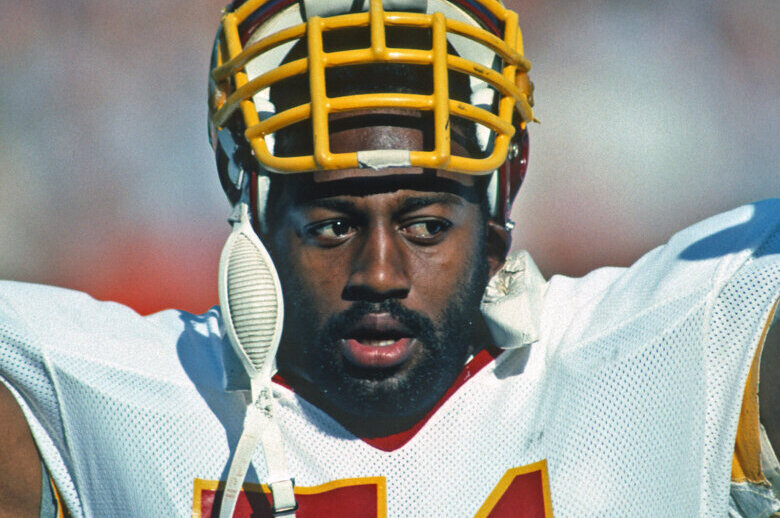
Decorated Washington linebacker Monte Coleman dead at 68
33 minutes ago



Deuce Blenman Signs Contract with CFL’s BC Lions
22 hours ago

University of Colorado Athletics
22 hours ago