Inside Trump’s college sports lobbying push
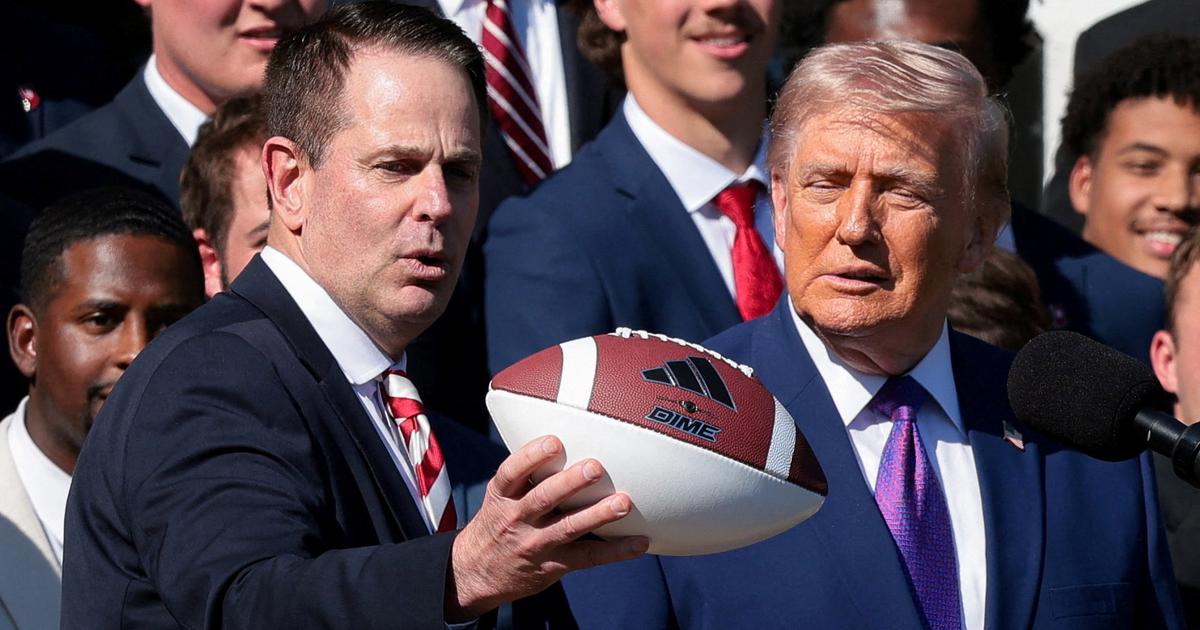
President Donald Trump has a new legislative obsession: College sports.The president is getting closely involved in efforts to pass the Senate’s bipartisan college sports bill. He’s spent the last week whipping senators to support it and even enlisted former Alabama football coach Nick Saban to dial up undecided lawmakers, according to people familiar with the matter.Trump has become a fan-in-chief during his second term, attending the Super Bowl, the US Open tennis finals, and the FIFA World Cup Finals, among other events. But his latest effort is bigger than the athletic focus that helped him appeal to younger voters in 2024 — it’s a legacy play that would put his stamp on the multibillion-dollar college sports economy, and a boost to a long-ago rival in Texas Sen. Ted Cruz.“This is a priority for him, and not everything that we do up there is of paramount importance,” Sen. Eric Schmitt, R-Mo., told Semafor of Trump. “He’s a sports guy … some politicians feign interest in ‘sportsball,’ that’s not him. He actually cares about it. He knows college sports.”Trump’s close ties to sports luminaries have helped him on the campaign trail and are paying off this summer, with the Senate scheduled for its first votes on the bill next month. Saban has “obviously been out there in front, sort of helping shape and counsel the president in his engagement and how to best shape this,” said a White House official.ADThe legislation seeks to create a national framework for college athletic deals after a series of legal battles pushed the system into chaos, though it avoids taking a clear stance on the bigger question of whether student-athletes are employees. Unlike the voter ID bill Trump has spent much of his time on this year, the college sports bill is bipartisan; it came from negotiations led by Cruz, Schmitt, and Sen. Maria Cantwell, D-Wash.If it passes — which isn’t a given, in light of lingering skepticism from the Congressional Black Caucus as well as senators in both parties — it could stand as the biggest bipartisan accomplishment of this Congress and one of Trump’s signature legislative achievements.In addition to Saban, Trump has sought the help of a number of other boldfaced sports names who have worked with him previously, like New York Yankees President Randy Levine and commissioners of college athletic conferences, according to the White House official.ADTrump hasn’t gotten everything he wanted so far: He urged the Senate to stay in session to pass the bill over the weekend, but the chamber left for its August recess without holding a vote. The legislation will now come up in mid-September.“He understands that this is something that needs to get fixed, and he’s glad it’s bipartisan. I think he understands that’s how it has to be,” Schmitt said.Trump sees the bill as the answer to a “substantial policy objective” that improves paths to success for young people while “reducing economic and competitive pressures” on college athletes, the White House official said.ADAs multiple athletic conferences vie behind the scenes for a leg up in talks on the final product, the official added, Trump has focused on “balancing those interests appropriately and gently encouraging those interests to see the bigger picture rather than focusing merely on their own sort of narrow scope.”Still, it’s going to take a big presidential effort from Trump to get most Republicans behind the bill. Democrats have leverage to extract more concessions if they want — or to block the bill outright if they don’t want to give Trump a legislative win before the election.Know MoreThe college sports bill doesn’t cut across traditional political lines. Cruz, Cantwell, and Schmitt earned the endorsement of the Big Ten and Southeastern Conferences, which unlocked more backing from senators representing schools in those regions.And Cruz credited Trump’s “strong support” as vital to finishing the bill.“Like millions of sports fans, President Trump knows that college sports is riven by chaos. He sees the Protect College Sports Act as the only viable solution or else we’ll lose dozens of programs and thousands of scholarships, particularly in women’s sports,” Cruz said on Tuesday.But Trump has other tough votes to whip, even among his closest allies.One of them, Sen. Rick Scott, R-Fla., said he is a no right now. His concern is the bill would hamstring his state’s colleges, like Florida State University and the University of Miami, if they decided to switch conferences. The bill allows some realignment but does force power conference schools to go through a probationary period if they switch affiliations.“They need to amend it so when somebody changes conferences, they don’t have to become independent for five years,” Scott told Semafor. Asked if Trump had talked to him about the bill, he replied: “I talk to the president all the time. I’m sure he wants it done.”Sen. John Kennedy, R-La., is weighing whether to offer an amendment that would cap annual ticket price increases at 4 percent even though he’s “not a big believer in price controls.” He said he hadn’t heard from Trump but indicated he might want to chat about it.“I haven’t heard from them. I like everybody at the White House, but unless the president calls, sometimes I don’t take their calls,” Kennedy said.Social conservatives are also concerned that the bill would preempt state laws governing who can play in women’s sports. The White House counsel’s office recently sent Senate offices a memo saying that’s not the case, but it doesn’t seem all GOP senators are convinced.On the Democratic side, high-profile senators like Cory Booker of New Jersey and Chris Murphy of Connecticut are currently opposed. If Republicans can shore up their whip count, though, they may only need a handful of Senate Democrats to get the bill passed.


Most Popular