'Night and day': Difficult to draw footballing parallels between Cape Verde and Singapore, say experts
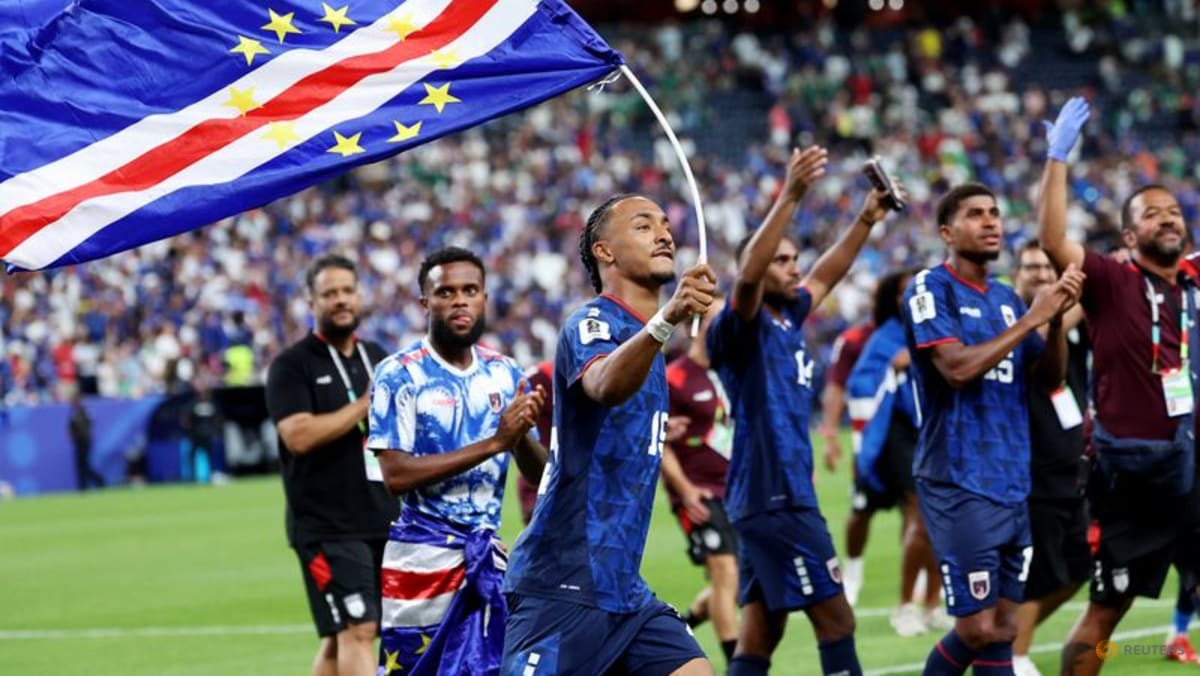
SINGAPORE: Following Cape Verde's fairytale run to the World Cup knockouts, some online commentators have been quick to ask – if the African nation can do so with a population of 500,000, why can't Singapore?But given the many differences between the two countries, it is difficult to make such comparisons, said members of Singapore's footballing fraternity.For one, population size is not a determinant of footballing success, they added."Population size is never a direct reflection of quality for football at the highest level," said football consultant Khairul Asyraf."The comparison is night and day. I think it's not fair to make this comparison."The five most populous countries in the world are India, China, the United States, Indonesia and Pakistan.India and Pakistan have never qualified for the World Cup, while China has done so once, in 2002. Indonesia, as the Dutch East Indies, was in the 1938 tournament.Cape Verde stunned the world when they held European champions Spain to a 0-0 draw in their opening match.They backed up that performance with a 2-2 draw against two-time champions Uruguay before a 0-0 draw with Saudi Arabia sealed their progression as the second-placed team in Group H.In the round of 32 clash, they took defending champions Argentina to extra time before falling 3-2 after a 111th-minute Diney Borges own goal.THE DIASPORAAn archipelago of 10 islands, Cape Verde is situated in the Atlantic Ocean off the western coast of West Africa.A former colony of Portugal until it gained independence in 1975, it is the second-smallest country by land area and the third least populous to qualify for the World Cup.The country has a vast diaspora community, which is estimated to be more than that of the current population.The country's football federation has tapped this diaspora over the years, recruiting heritage players from abroad.More than half the 2026 World Cup squad hailed from Cape Verde's diasporic communities in countries such as the Netherlands, Portugal and France.Centre-back Roberto Lopes, also known as Pico, was contacted by the Cape Verdean football association on LinkedIn and asked if he was interested in representing the country.Pico was born in Ireland to a Cape Verdean father and plays for Shamrock Rovers.This heavy focus and reliance on its diasporic communities abroad means that it is difficult to draw parallels with Singapore, experts told CNA.For Cape Verde, the issue was not that the players were not out there, but convincing them to play for the country when they might have other options, said Deloitte's sports business group leader for Asia Pacific and Southeast Asia James Walton."The difference for Singapore, honestly ... are the players even out there in the first place?"Even after these players are found, there are additional complications such as residency and citizenship rules, he added.Cape Verde also permits dual citizenship, noted Mr Khairul. While Singapore has fielded naturalised footballers over the years, no player with ancestral links to the country has ever played for the Lions.This could change should England-born Cardiff City defender Perry Ng be granted citizenship.Ng received his Singapore permanent resident status in March 2025 and has applied for citizenship via the Foreign Sports Talent Scheme.“My desire (to play for the Lions) is stronger than ever. I just try to be as patient as I can … play at a high level, keep fit and healthy, stay injury free,” he said last month. “Fingers crossed.”FOOTBALL AS "A WAY OUT"Attitudes toward football as a profession in Cape Verde and Singapore are also different."Cape Verde is a small country, it is a country where it is difficult to survive," Cape Verdean journalist Victor Hugo Fortes told CNA previously."We are a poor country, but we have people who believe, people who work hard."For some Cape Verdeans, football is a way out."I always told my mother, 'I will be a professional football player and you won’t have to work. I will do everything for you'," Cape Verde's Sidny Lopes Cabral told The Guardian.Things are markedly different in Singapore, said former professional footballer Emmeric Ong."In Singapore, we do not have the same mentality ... We grew up very protected, in a safe environment. We don't need to take that risk," he said.For youngsters, the path to follow is well established, he added."Sometimes to bring the best out of a person's abilities, you really need to step (out of) your comfort zone, or you really need to be in a life-and-death situation where it is do or die.""The sky's the limit (for them) in the financial sense," said Mr Khairul."Over here, we have not really seen that. When you don't see something you can achieve, you don't have enough to fight for."While there is more parental support towards children pursuing football now, the real test comes in the later years, said Mr Ong, who is currently a coach."They really want the kids to do well," he added. "It's still yet to be seen whether this support goes further."NOT ONE SIZE FITS ALLThose who spoke to CNA pointed out that Cape Verde is by no means a minnow in African football.They have appeared four times in the African Cup of Nations since their debut in 2013, and reached the knockout rounds in 2021 and the quarterfinals in 2023.In contrast, Singapore qualified for the Asian Cup on merit for the first time last year.Given the different circumstances, the route that Singapore is taking to footballing success is far different from Cape Verde."What Singapore is trying to do is to identify local talents on the ground in Singapore and either develop them here or send them for short stints on scholarships or training overseas ... It's a very different model in that regard," said Mr Walton."Cape Verde's model – for the most part, these players were never trained in Cape Verde. They grew up in the French system, the Portuguese system."While the Cape Verde domestic league is not a strong one, this does not matter because they have a path forward with diaspora players, said Mr Khairul."For us, the league must be strong, the grassroots must be strong, so that we can continue to build and develop players, because that's the only way we can do well," he added."The diaspora option is not possible, the naturalisation process takes (a long time).""Somewhere around the world, somebody has done it before. But that does not mean it works in your jurisdiction, or it works in your society," said Mr Jose Raymond, founder of The Monitor Singapore, an independent football news and commentary site."We also need to recognise that sometimes what works in other parts of the world may not work in Singapore."It is important for footballing authorities to set a clear final target and work towards it, said Mr Raymond. "There must be an end goal."
Most Popular