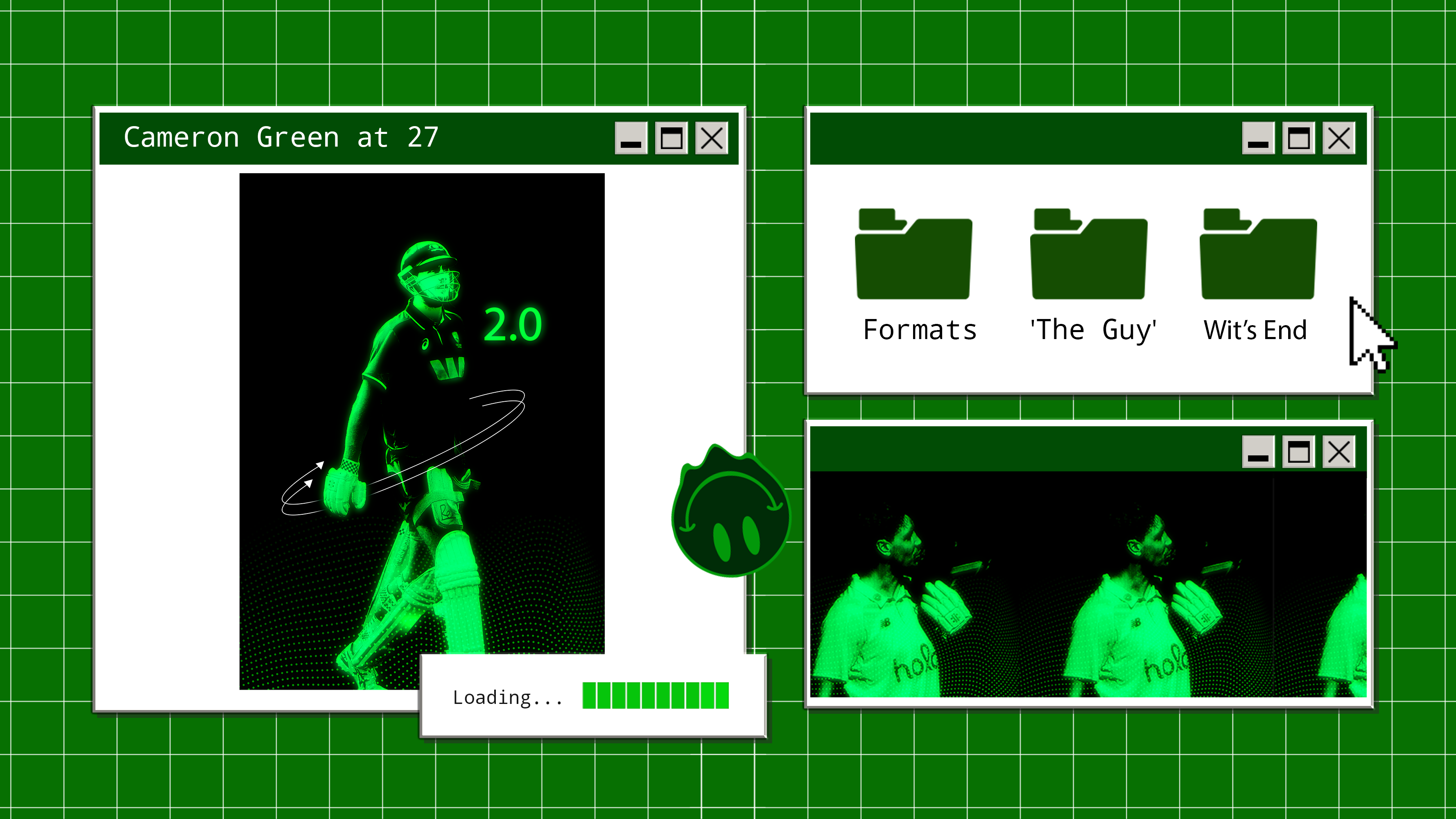
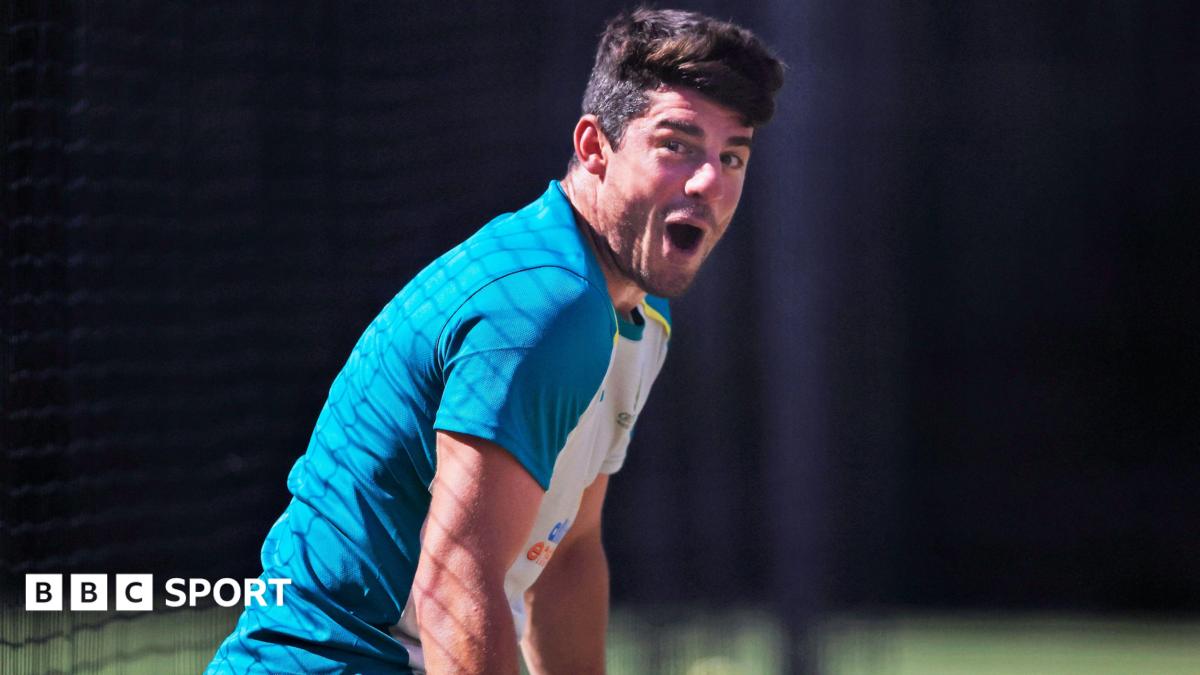
Wonder boy to 'wit's end': How Cameron Green is starting over
For around six weeks this winter, along the familiar footpaths and amid the welcoming cafes of Perth's City Beach, Cameron Green finally exhaled.It had been that kind of 12 months.What started out so promisingly – a successful return from back surgery, some crucial innings to help Australia to a Test series win in the Caribbean, and a jaw-dropping 47-ball ODI hundred in Mackay – had descended into something else altogether.Fifty-one games of cricket – far more than any of his Test teammates – had been punctuated by criticism; by underperformance and frustration; and even – and this was new for Green – by a blow-up with a journalist.In mid-June, he flew home from Bangladesh exhausted. It was the 10th country in which he had played cricket since the winter prior. The next fortnight was set aside for rest and recuperation."We're so used to coming home for a week, max, and you try to do so many things – catch up with this many people – that (by the time you leave) you actually haven't relaxed," Green tells cricket.com.au."So when you do come home for six weeks, it takes two weeks to go, 'I'm actually here for a while'. You're always a bit anxious that you're about to head off on another plane."Across July, as the Perth sun gently warmed the winter days and the seasonal rains stayed away, Green found his groove. In the company of his fiancée Emily, just a few months out from their wedding, he let himself unwind, and be present."Sleep-ins, walking down to the local cafes, hanging out with friends and family on the weekends," he says. "I tried to stop (his mind) ticking."As he checked out mentally, he kept his body in check. Armed with a fitness program from the national team's high-performance experts, he ensured he remained in shape; to maintain his ideal 100-102kg playing weight, the restaurant dinners and lazy mornings could be no more frequent than the gym and running sessions.It was all an easy compromise. In the weeks and months after his 27th birthday, Green's relaxation paired happily with his fitness program. He got in and out of the gym as quickly as he could, and maximised his free time. With every day away from a blowtorch that has recently burned more harshly than ever before, he could feel the benefits."It's been a pretty hectic year," he says, "so those six weeks were pretty crucial to reconnect with friends and family, and, like, me as a person."You kind of remind yourself what real life is. We play so much cricket, and travel so much, that you do forget that."Green was intentional about his downtime for another reason. Truth be told, he couldn't ever quiet his mind completely. Because if the past year was a snapshot of his undulating career to date, the one ahead looms as his most demanding yet.* * *Green flew out of Perth last Monday and touched down in Brisbane that night as the last man to join an extended national squad. The next morning, he linked back up with his teammates and launched straight into a 30-overs-per-side game at Allan Border Field. Through the middle of a perfect August day, he batted for a couple of hours, making 53 from 101 balls, hitting three seemingly effortless sixes, and looking as if he was exactly where he was supposed to be.Five years ago, hitting the ground running in the Australian set-up wouldn't have been so simple. Green was overawed by – and perhaps underprepared for – life as an international cricketer. Even just being around the likes of Steve Smith and Mitchell Starc made him nervous. Now, with 102 national caps to his name, he is far more comfortable slipping back into the fold, and views those legends simply as teammates and friends."I think that comes from experience," he says. "You don't use as much nervous energy … and you also get slightly more used to the time away from home, the constant cricket, and then the expectation around performance, the media, all the rest of it."His teammates, including Pat Cummins, have quietly observed the evolution. Cummins spent more than five years of the initial part of his career looking at Test cricket from the outside in. Yet that time was also valuable: he learned about life as an international cricketer and all it entailed while moving through his early twenties as one of a number of promising young fast bowlers in the pack.Among this current crop, the skipper is perhaps the only one who carried a similar burden of expectation to Green across his early years in international cricket. But while Cummins played his second Test a couple of months before his 24th birthday, by that point in Green's timeline, he had played 20.It is no small thing to be labelled a prodigy. Green has been dealing with that – and at times, struggling with it – for almost a decade now. With his physical gifts and his performances in the Sheffield Shield, it was inevitable. Greg Chappell once called him Australia's most gifted young batter since Ricky Ponting. Ryan Harris compared him to Andrew Flintoff. Only last week, Moises Henriques described him on The Grade Cricketer podcast as "an extraordinary cricketer … (he) could be the best cricketer I've ever seen live".During last summer's Ashes though, that script flipped. It had been brewing for a while. Green's run of low scores, an "embarrassing" dismissal in game two at the Gabba, and his increasingly poor Test batting record in Australia particularly, resulted in large swathes of the public, as well as prominent voices, calling for his axing. He needed to go back to Shield cricket, they insisted, to figure things out.For a likeable young man who had never experienced such sustained and direct criticism, it was difficult."Oh certainly, you always like people liking you," he says. "The best way to do that is to perform. That Ashes was definitely a tough (series). Going into it … with how much England was saying and what the English media was saying … kind of how everyone was talking about it, I was like: I don't really care how I go, I just want to beat them."We had a great Ashes as a team. A couple of guys individually were incredible, but I didn't have the tournament that I wanted. So you do finish that pretty disappointed, and you question everything: what worked, what didn't work. You're batting throughout the series, and you're obviously battling – just the flow is not quite there."There were definitely still some positive moments, but whenever I got into those good positions, I found a way to get myself out … they didn't get me out, essentially, which is probably the disappointing part … it was just in my head at the time."For the final two Tests of the series, Green was relegated to number seven. Outside of nightwatcher scenarios, that had happened only once before, when Australia lined up with two allrounders (Mitch Marsh the other) at Old Trafford in the 2023 Ashes."He fits around others at the moment," head coach Andrew McDonald said between those Tests. "He hasn't nailed down a spot."Which was cause for concern. Just six months earlier, Cummins had labelled Green the "long-term option" at number three. Now here he was, 36 games into what was supposed to be an all-time Test career, sliding down to seven because he hadn't nailed down a spot?It spiralled from there. Two months after the Ashes, Green came home from Australia's miserable T20 World Cup campaign and rounded out his summer with Western Australia in the Shield. Against New South Wales in Sydney, he broke his barren spell with a first hundred in any format in more than six months.Out for 135 early on the third morning, he was scheduled to speak to media in the afternoon before belatedly cancelling on the waiting reporters. After then relenting, and fronting up to speak, he refused to answer a question regarding his form from Nine Entertainment Co journalist Tom Decent. A terse exchange followed, during which Green suggested Decent was "out to get" him. In around 15 seconds, a summer's worth of tension bubbled over."I think it was potentially me at my wit's end, and the journalist probably at his wit's end as well," Green says. "So it was just completely bad timing from both parts. It had been a long few months, we'd just come off not a great World Cup, and I was just about to go off to India for two-and-a-half months as well, so I knew that was coming up … there was a lot happening at the time."It certainly wasn't a big moment, and probably was a reflection of how I was feeling at the time. Obviously, it's not something I want to happen ever again, but at the same time, it didn't really faze me at all."It was also a first notable departure from the 'gentle giant' persona he seems to have cultivated quite organically. Even this has been a point of criticism; for an imposing figure who boasts all the shots, he has at times looked incongruously tentative with bat in hand. Although Green insists his regularly even temperament in the national side has been not so much about his natural levelheadedness but simply "knowing my place" as typically the youngest player."There's so much experience in that team," he says. "They don't need me putting my head up and having something to say."There was no respite from the spotlight in India. Green came under fire from the Kolkata Knight Riders faithful when it was revealed he would be playing the early rounds of the IPL as a batter only, due to workload restrictions imposed by Cricket Australia. For a player with a price tag of A$4.17m, it was always going to be a contentious decision.Afterward, he went straight from India to Pakistan, and then Bangladesh, for white-ball series with Australia. He hit a couple of half-centuries but by then, he was running on fumes. The finish line couldn't come soon enough.* * *If Green has his way across the next 12 months, history will one day pen Australia's 20-21 Test passage as the dividing line in his career.Timing-wise – 27 years of age, 37 Tests to his name – there is reason to believe he might just have reached a tipping point. Among Australia's number five and six Test batters of the past 40 years, more than three quarters of hundreds have been scored by players aged 27-plus. Among top six batters more broadly through the same period, 28-year-olds are the most productive century makers (39), narrowly ahead of 30- and 31-year-olds (37 and 36 respectively).Given his relative experience (only Ponting, Smith and Steve Waugh played more Test cricket before turning 27 among Australia's top seven batters), Green might be well placed to hit his straps at the front-end of that age range.Allied to that is a run of red-ball cricket he has circled in his calendar with a smile. In recent times, he has taken a journal with him on his travels. He has jotted down key points – reminders, really – that detail how he likes to bat in each format, allowing him to fast-track his recalibration through the constant shifts.But red ball is taking centre stage for much of the next phase of Australia's schedule. With five Test series in a year – plus potentially two standalone marquee fixtures – Green is eyeing his moment."Staying in one format, if you're playing really well, you can really cash in during this period," he says. "I absolutely love playing all three formats, but that's when you get a little bit jealous of guys who just play the one format – they can go back to their state and just keep honing exactly the same skill set, then come back up to Test cricket … their (training is) repetitive."And the way I bat in in all three formats is different. It's not like David Warner, for example, who bats pretty similar the whole time. Travis Head obviously chops and changes a little bit more but in Test cricket, he bats relatively the same. So for sure, it's a challenge … I think it just comes from experience – the more you do it, the more you understand how to quickly get back into (the style required): What do I do in T20 that works? And then flip back to Test cricket: What works? What worked last time? What stump to bat on? What type of balls am I leaving, or playing, or looking to score off?"Speaking on SEN in March, Greg Chappell, who was Cricket Australia's national talent manager when Green was first coming through, said he was concerned that the allrounder's bowling had "impacted his batting" and wondered if he had the wherewithal to rediscover his best batting self.Speaking about Green's early years, he said: "I saw a very athletic young batsman with a beautiful setup, and (he was) able to move in any direction. Now I see a batsman who is stuck at the crease, who cannot move, cannot use his reach to score runs."He can still be one of the great allrounders of the game because he has the talent, but (it depends on) whether he has got the decision making, the mental skills to go with it, whether he's getting the best advice on where he is going."Clarity around exactly where Green is going – and how he is going to get there – has been difficult to find. In May, while speaking about his top all-format allrounder, McDonald pointed out how "incredibly complex" it is for batters trying to perform across the three formats. He also said he feels Green is under-appreciated given "the sum of all parts he brings"."We want him to average more with the bat," he added. "He wants to average more with the bat, but … we feel he will come good."We had some good outcomes leading into the New Zealand series (in 2024) … he goes into a Test match and gets a big hundred away from home (in Wellington). So maybe there's something in the management of how we (did) that."The 174no struck by Green in the match McDonald references remains his most recent Test hundred. It came at a time when Steve Smith was being used as an opener in place of the recently retired David Warner, which meant Green – who was actually out of the side before Smith's elevation – was given a shot in his preferred second drop position."I think what I like (about four) is I've got a bit of time – I've always felt maybe a touch rushed at six," he said at the time. "I've always felt like I've maybe had to push the game along (at six), where I feel like number four is my natural game where I can take my time and settle in."Despite the century, the arrangement was short-lived. Both Green's subsequent back surgery and Smith's preference to slide back down to four mean he hasn't occupied that position in the Test side since that New Zealand series, despite averaging 59.58 there from 24 first-class matches, with seven hundreds.Instead, he has batted at three, five, six, seven and eight – five positions across just 16 innings since his comeback, with one fifty. McDonald and Cummins seem to prize flexibility in their batting order – with Head's stunning success as an opener last Ashes going some way to validating their point – but Smith for one is a defender of the more traditionally perceived benefits of playing "a single role" consistently.From a smaller sampler size, Green's first-class numbers are almost as impressive at five: 13 matches, four hundreds, average 57.53. With the position vacant heading into this first Test after Usman Khawaja's retirement, speculation abounded as to whose it might become: Steve Waugh last week suggested to News Corp it would be the "ideal" spot for Green; Alex Carey recently put his hand up; and Ricky Ponting also said he believed Carey had earned the spot.Ultimately, the opportunity has fallen to Green, with Cummins yesterday confirming his line-up while also urging the youngest member of his team to "get out of your own way, and just go and play"."It's been a bit of a break, so he's had a bit of time to think about his own game," he added. "The good thing is he's played quite a lot now in his Test career. He's had moments where it's worked, moments where it hasn't."I think it's that journey of most cricketers, particularly batters ... it's a really tough job being the finished product when you're young. I think now the job for someone like Cam ... is distilling the lessons from his career so far and working out what he is, and how he plays when he's at his best. It's no secret we like when he's nice and busy, and putting pressure back on the bowlers. Same with when he's bowling, having that presence – he's quite an intimidating sight when he gets going. So just taking a lot of confidence and (getting) out there and ... asserting himself in the game."It was a clear directive, spoken publicly, and likely along the same lines as the long discussion Cummins, Green and McDonald had while walking laps of the Marrara Cricket Ground at Australia's training session some 24 hours earlier. Green understands he walked a fine line last summer with his run of poor form. Now he has the continued backing of captain and coach, he is desperate to not let anyone down."The progression I've had in Test cricket probably hasn't been as quick or as good as I would have wanted, from when I started to where I am now," he says. "I think I've definitely underperformed for my ability, or for where I thought I would be at."But also, we've had some seriously good players batting ahead of me (in the order). It kind of feels like when the wickets are a bit better, you don't get much of a hit, and then when the wickets are pretty bad, obviously they're just bad."That probably goes hand in hand with added responsibility, maybe batting at four – but there's obviously someone who's pretty good batting at four."More than merely a number in the batting order, Green is hitting on something else here; something that is going to need time to come to fruition."I think I've always played better cricket when there's been a bit more responsibility (on me)," he says. "That's certainly the case when I go back to play for WA; I think being 'the guy' – the guy they're trying to get out, and it's on you to score the runs for the team – that's always, I feel like, brought out the best in me."It's a tough thing to do in this team … it's always felt like you hadn't quite needed to be the guy, and we're just winning anyway. So that's always been a tough one to grasp in this team, but it comes from a really good place that we've got so many good guys."Green worries all of that sounds like it's coming "from a selfish place", though his desperate desire to be play match-winning innings can hardly be counted against him. Perhaps his existing mindset – of being an around-the-edges contributor – nowadays comes quite naturally with the allrounder tag, an unintended consequence of a white-ball game that celebrates one or two key involvements across the course of 40 or 100 overs.Over five days however, Green wants to dominate in the manner he has at Shield level: by occupying the crease for long periods, and making big hundreds. Maybe a degree of selfishness could assist with that. So too might this move to number five, from where Waugh and Michael Clarke piled on more than 12,000 Test runs between them across 30 years. Perhaps it is from there that he will begin to see his responsibilities increase, as the make-up of Australia's Test team continues its irrevocable shift in the next 12-18 months."It definitely feels like it's coming to a head – there's going to be quite a few guys that will be slowly moving on just through age," he says. "So having a bit more responsibility, maybe, is a positive thing for sure."* * *Green is patently aware he cannot afford to bide his time until he is the main man, and maybe it is as simple as a shift in his mindset. He knows that whenever he pulls on his Baggy Green, the masses are watching, and the runs and wickets are expected. It was the same for Mitchell Marsh, and Shane Watson before him. Something about Australia's allrounders of recent times has made them a lightning rod for criticism. Green is across that, too, and suspects the blowtorch is an upshot of unrealistic expectations."It does feel like it's a pretty consistent thing that when an allrounder comes through, they get bombarded," he says. "I think just the expectation of playing for Australia is high – you've got to average a certain amount, you've got to score a certain amount of hundreds … and that's just in one skillset."We're doing both, (but people) are expecting us to be having exactly the same averages (as top-line bowlers and batters). Getting five-fers, making hundreds. But the skillset of being an allrounder is tough."In recent years, he has taken heart from the way the wheel has turned for Marsh: from his "most of Australia hates me" moment, to an affable veteran, a respected leader, and a man at peace with himself."Everyone saw the criticism he got … I felt like it was pretty full on," he says. "I try and avoid (reading the criticism), so I don't really (know), but it doesn't feel like it's Mitch Marsh sort of level."But (with Marsh) you can see the progression he's had since that point … I see him now as a guy who's extremely happy and free, and that's really encouraging, knowing that's probably what's to come (for me)."To get there though, Green understands what must come first. Though it was lost amid the journalist drama, the Shield hundred he scored in March was, for him, a timely reminder of not only his talents, but his most effective method. He thinks now is the time to double down on that."Obviously I'm not going into this series with a whole lot of runs under my belt – that's just a (reality) of where I'm at," he says. "But it's always good when you can go back to Shield cricket and still dominate, (and) know your game's in a good way."Most of it has got nothing to do with ability – a lot of it's completely to do with external noise, and playing in front of big crowds, and wanting to perform against some really good players, and probably more just being in your own head than anything."I've tried a lot of different ways to see what works (with his batting), and nothing's quite worked apart from just how I go about it in Shield cricket."So that's the plan against Bangladesh?"Definitely for now," Green says. "I think during the Ashes, I was trying to be really aggressive at the start of my innings, and I'd get off to a lot of starts, but just would not go on with them."I try to fight my way through (the early part of an innings) because I'm quite a nervous starter normally. I've tried to find different ways to go about it, but I think I'm pretty settled at the moment with just being happy with being a nervous starter, because I know what I do blossom into. Don't try and fight it, because that's probably the right way to go about it."Now here he is in Darwin. All two metres and 101kg of the best cricketer Moises Henriques has ever seen live, preparing for Australia's first Test in more than seven months. Feeling refreshed and focused, and with a game plan he knows can work."I'm in a pretty good space at the moment," he says. "I'm really motivated to do really well."


Most Popular