
NFL draft winners and losers (from the college perspective)
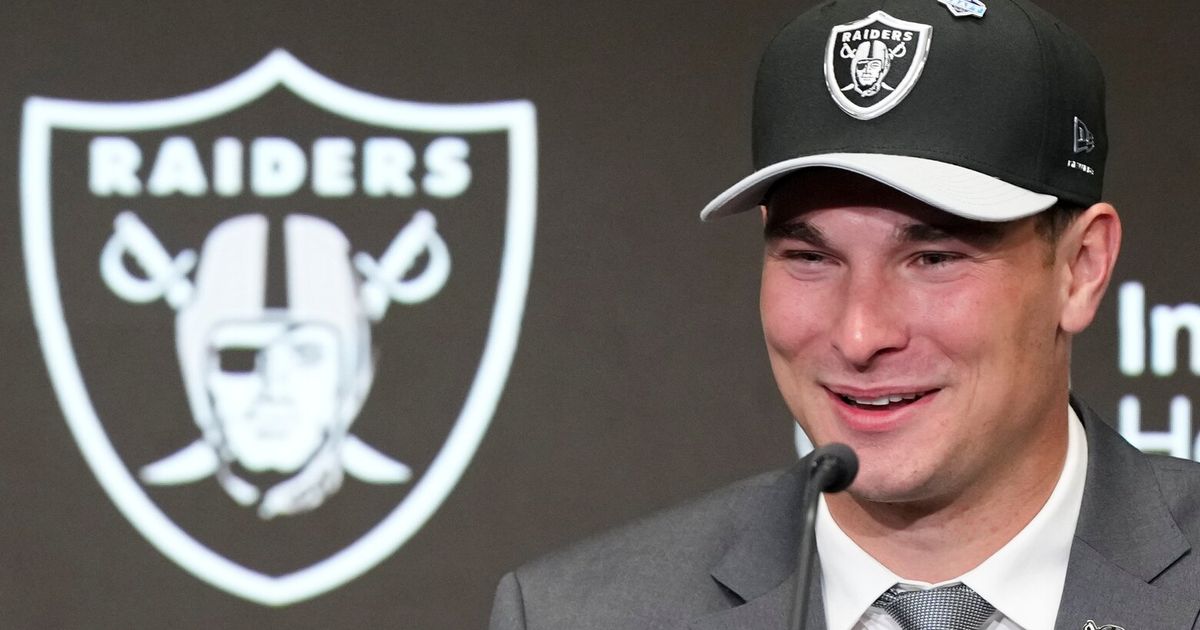
The Big Ten won the first round, and the SEC won the draft. But the Big 12 grabbed the narrative — at least in a fashion that could carry over to the College Football Playoff selection process.What happened in Pittsburgh during the three-day NFL draft won’t stay in Pittsburgh. It will ripple through the summer and into the fall, looming over results on the field and impacting the debate on ESPN’s studios shows and in the selection committee meetings.The Big 12 had a perception problem, which we’ll address momentarily.First, let’s frame the relevant numbers:— The Big Ten produced 10 first-round selections while the SEC generated just seven, marking the first time since 2015 that the SEC did not lead all conferences in Day 1 picks.— However, the SEC led all conferences in total picks across seven rounds with 87 (a draft record), followed by the Big Ten with 68 and the Big 12 and ACC with 38 each.That gap expands when accounting for the disparity in number of schools in each conference:SEC: 5.4 (picks per school)Big Ten: 3.8Big 12: 2.4ACC: 2.2How does the post-draft narrative affect the Big 12? Consider the state of play prior to Thursday evening.In two seasons of the 12-team College Football Playoff, the Big 12 was the only power conference that had not produced an at-large participant or won a game.Arizona State was the conference’s lone entry in 2024 and lost in the quarterfinals to Texas, while Texas Tech was the only participant in 2025 and lost in the quarterfinals to Oregon.Actually, check that. The Red Raiders didn’t just lose. The team that dominated the Big 12 from start to finish was shut out and blown out by Oregon, which finished third in the Big Ten.It was a bad look for the Big 12.Meanwhile, the conference most closely associated with the Big 12 competitively, the ACC, has produced at-large participants and won games. (Miami played for the national championship in January.)All of which suggests the Big 12 had a creeping perception problem — that it not only trailed the Big Ten and SEC in the conference hierarchy but also the ACC.What happened in Pittsburgh should help the Big 12 claw back control of the optics, because the number of NFL players drafted plays a role in framing the in-season narrative.The more picks produced, the more likely fans, media and even committee members are to presume the quality of competition is high. Yes, even in the subsequent season.Recency bias is all too real in college football.Last spring, the Big 12 had just 31 players selected — far fewer than even the ACC. Did that paucity of high-end talent impact the perception of the league during the 2025 season, even at a subconscious level? Perhaps.The conference office was ready to pounce on the uptick in production this week, sending the following blast on the social media platform X following the first round:6 First Round PicksTying the most in Conference history since 2011.The success continued for six more rounds, as the Big 12 set a conference record with 38 selections. The previous mark of 35 was established in 1997 and tied in 2003, when the conference had fewer members but included Texas, Oklahoma and Nebraska.Without those blue bloods, the Big 12 is scrambling to maintain its place in the hierarchy.Optics matter.Draft success matters.April impacts November.The results this week undoubtedly brought a measure of relief.To the winners and losers …Winner: SEC. The conference has watched its dominion over the sport vanish in the NIL era. But with 5.4 draft picks per member school (16), compared to the Big Ten’s 3.8 picks per school (18), it once again laid claim to the deepest well of NFL talent.Loser: Clemson. The Tigers had nine players selected, including four in the top 50. Their success this weekend stands as a major indictment of longtime coach Dabo Swinney, whose team won just seven games last fall. More draftees than victories is never a good look.Winner: Indiana. The prevailing but erroneous narrative that Curt Cignetti won a national championship with lesser players was officially debunked this week: Eight Hoosiers were selected (more than Oregon and Michigan). Cignetti’s true genius lies in his evaluation and development skills.Losers: Colorado and UCLA. The Buffaloes and Bruins were two of 10 schools in the power conferences (ACC, Big 12, Big Ten and SEC) that were shut out of the draft. The situation in Westwood is somewhat understandable given the coaching woes. But it’s an inexcusably poor result for Deion Sanders and the Buffs.Winners: Arizona and Arizona State. The Wildcats had four players selected — all of them were defensive backs — which matches their 2025 total and gives them 11 across the past three years. The Sun Devils had two players selected in the first round (receiver Jordyn Tyson and offensive tackle Max Iheanachor) for the first time since 2001.Losers: Cal and Stanford. The Bay Area schools were the original homes of the No. 1 and 2 picks in the draft: Quarterback Fernando Mendoza and edge rusher David Bailey. The fact that both players improved exponentially at Indiana and Texas Tech, respectively, doesn’t reflect well on the Bears and Cardinal. (Notably, both schools have new coaching staffs.)Winner: San Diego State. Teams that will make up the rebuilt Pac-12 generated one first-round selection this week: SDSU cornerback Chris Johnson. In fact, Johnson was the only player from a school outside the power conferences to be picked on Day 1.Loser: Diego Pavia. Vanderbilt’s quarterback, who finished second in the Heisman Trophy voting, was not selected — quite a contrast to the player who beat him out for the award (Mendoza). We expect Pavia to be scooped up in the free agent process and would not be surprised if he wills himself onto a roster.Winner: ex-Group of Six players. According to ESPN, there were 18 players picked in the top 100 who began their careers in the G-6 leagues, then transferred into the Power Four. As much as the portal has benefitted the richest schools, it has opened roads to fame and fortune for athletes on the sport’s second tier.Loser: FCS players. That’s not the case for players in the Football Championship Subdivision, however. Per Stats Perform, this was the first time no FCS players were selected in the top 100.Winner: Navy. The Midshipmen had two players drafted, defensive lineman Landon Robinson and tailback Eli Heidenreich (both in the seventh round) for the first time since 1956. Even better: Heidenreich, who is from Pittsburgh, was picked by Pittsburgh in Pittsburgh. Predictably, the crowd went nuts.Losers: Nebraska and Florida State. You know things are bad when the Cornhuskers and Seminoles have fewer players selected (one) than Navy.Winner: NFL Network. The Hotline spent time watching both the NFL Network and ESPN broadcasts in order to assess the competing coverage. Frankly, it was a blowout. ESPN does many things very well, but its draft coverage is awful.Loser: high-profile QBs. Prior to the start of the 2025 season, college football was buzzing over the array of returning NFL-caliber quarterbacks. Instead, Cade Klubnik, Drew Allar, LaNorris Sellers, Arch Manning, Garrett Nussmeier and others struggled mightily. The only QBs selected in the top-two rounds (Mendoza and Alabama’s Ty Simpson) came from well off the radar.Winner: Miami and Texas Tech. Two of the prime beneficiaries of the NIL era, thanks to deep-pocketed alumni, each produced nine draft picks. That surpassed the totals for Penn State, Notre Dame, Texas, LSU and Georgia.Loser: USC. The Trojans had three players selected, pushing the total across Lincoln Riley’s four years to 17. Of those, only five have been offensive or defensive linemen. In that same span, Oregon has had 12 linemen drafted.

Most Popular
Decorated Washington linebacker Monte Coleman dead at 68
46 minutes ago

Women’s Tennis: Macalester Clinches MIAC Playoff Bid with 4
19 minutes ago


University of Colorado Athletics
22 hours ago

Deuce Blenman Signs Contract with CFL’s BC Lions
23 hours ago