
Brain injury epidemic coming due to headers, warns Nobby Stiles' son
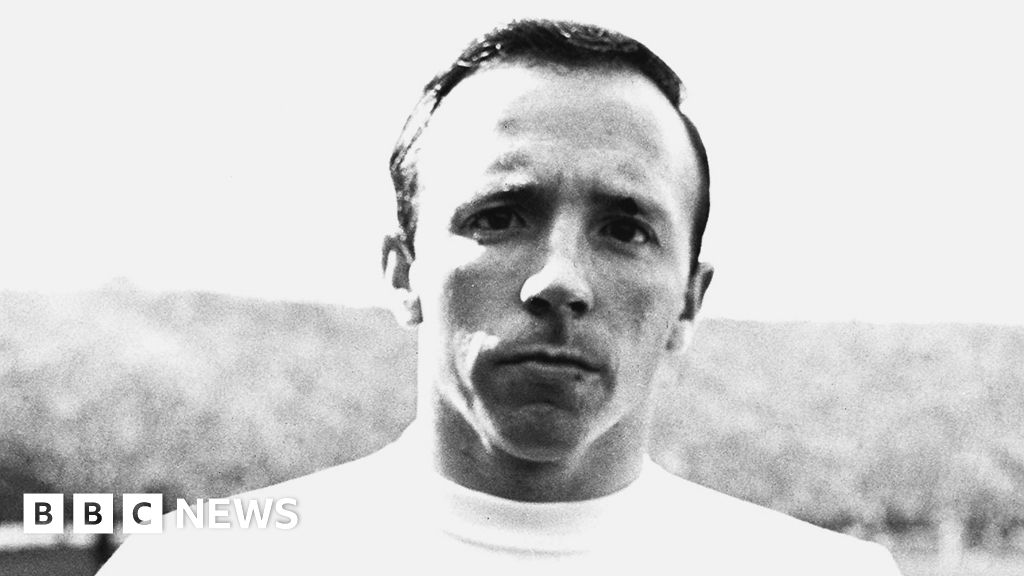
The son of England's 1966 World Cup winner Nobby Stiles is predicting an "epidemic" of brain injuries among players who head footballs, especially women.John Stiles spoke after an inquest on Wednesday into the death of his father, Nobby Stiles - the 78-year-old ex-Man Utd and England midfielder - heard thousands of headers during his career had caused his chronic traumatic encephalopathy (CTE).Senior Coroner Alison Mulch is writing a prevention of future deaths report after recording Stiles' cause of death in 2020 as Alzheimer's disease, contributed to by CTE.The Football Association (FA), which has been asked to comment, is phasing out all football heading up to under-11s this year.Stiles died with severe dementia in 2020 aged 78 and had headed a football about 140,000 times in his career, Stockport Coroners' Court heard during the inquest into his death, held on Wednesday.Neuropathology expert Dr Daniel Du Plessis told the court: "I'm quite convinced his heading the football that many times has caused his CTE [chronic traumatic encephalopathy]."John, who founded campaign group Football Families for Justice, said afterwards that women's football was "a particular concern" that "really needs to be addressed".He added: "Tragically the brain injuries epidemic will grow as so many more girls play football: women's brains are even more susceptible to damage from heading."However, he also said: "Anybody who heads the ball is very likely to get this disease and, for God's sake, we must do something about it now."He said a "proper fund" was needed for when ex-players go into a care home, adding funding form the Premier Leaguer and players union, the Professional Footballers' Association (PFA), was not "adequate".Six years ago, former Southampton and England player Sue Lopez, one of the pioneers of the women's game, revealed she had dementia and cited heading as the likely cause.Four other members of England's 1966 winning team died as a result of dementia-related illnesses - Sir Bobby Charlton and his brother Jack along with left back Ray Wilson and midfielder Martin Peters.Stiles, who was born in Collyhurst, Manchester in 1942, was capped 28 times by England and played nearly 400 times for Manchester United.He lived in Stretford, Greater Manchester, and died in a care home on 30 October 2020, having been left bed-bound by his dementia.His family has campaigned for football authorities to do more to help ex-players cope with injuries they claim were caused during their playing days.Wednesday's inquest into his death heard that Old Trafford used to have a ball that would hang down from the stand and the players were encouraged to head it.The coroner recorded the cause of Stiles' death as Alzheimer's disease with "high stage" CTE, and also said a condition known as "stage three limbic predominant age related TDP-43" had been a contributing factor, as well as cerebrovascular disease.The FA co-funded, with the Professional Footballers' Association (PFA), a 2019 study that found footballers were three-and-a-half times more likely to die of neurodegenerative disease than age-matched members of the general population.The PFA, which has also been contacted, said previously it had set up several services to support players with dementia and other neurodegenerative diseases.Listen to the best of BBC Radio Manchester on Sounds and follow BBC Manchester on Facebook, X, and Instagram. You can also send story ideas via Whatsapp to 0808 100 2230.



Most Popular

awaited comeback, forward returns for Crows clash
12 hours ago

The economic cost of losing the World Cup
2 hours ago