Debuted with Tendulkar, bone tumour ended career at 28: Indian pacer who played one Test later fought severe depression
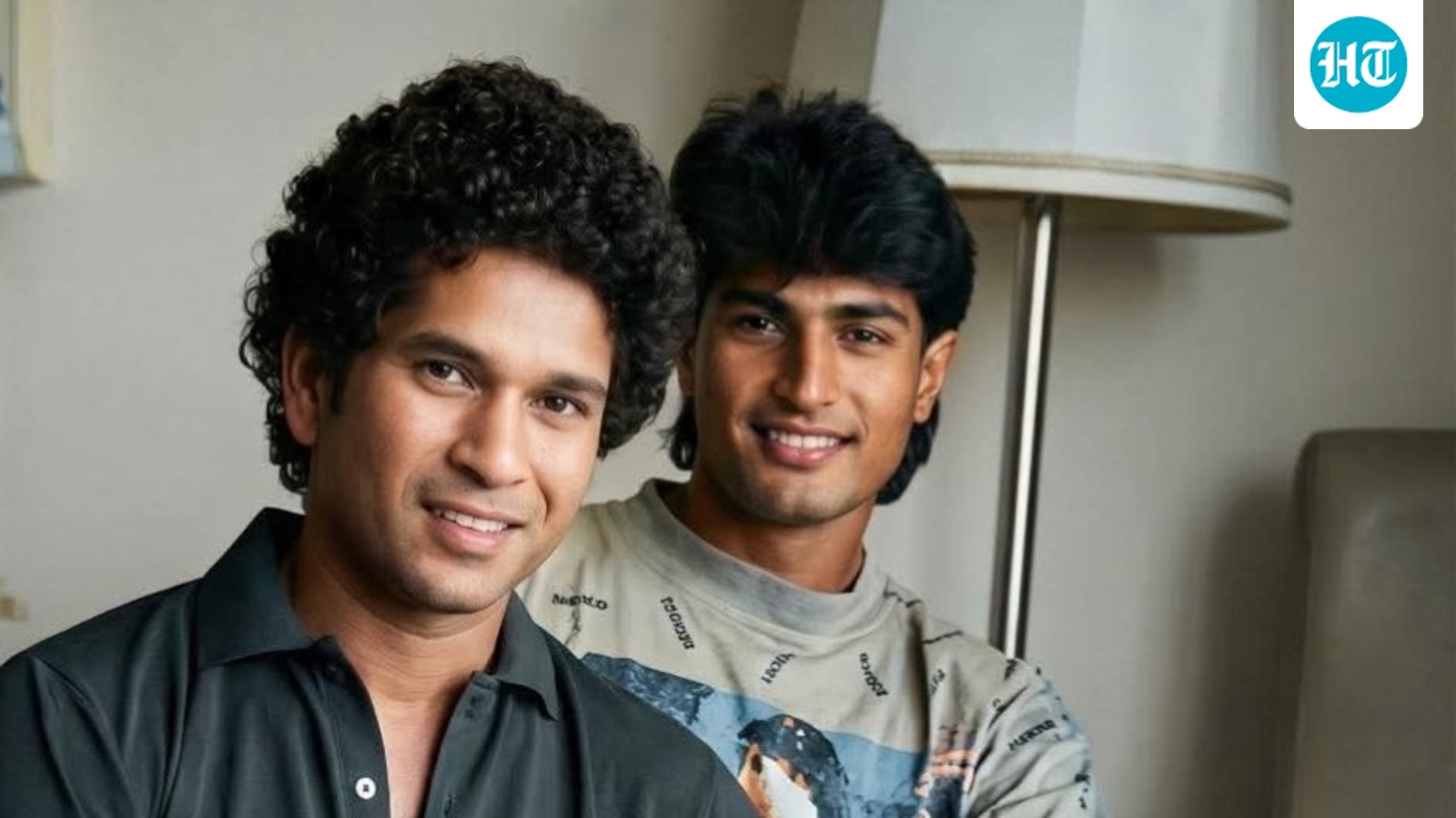
On November 15, 1989, four young cricketers walked onto the National Stadium in Karachi to begin their Test careers. One was a 16-year-old Indian whose name would eventually become inseparable from the sport itself. Another was an 18-year-old Pakistani fast bowler destined to become one of the most feared exponents of reverse swing the game had seen.Sachin Tendulkar would finish with 200 Tests and 15,921 runs. Waqar Younis would play 87 Tests, take 373 wickets and become a Pakistani great. Yet that Karachi match also contained two careers at the opposite end of cricket's unforgiving spectrum. The other Pakistani debutant, Shahid Saeed, never played another Test. Neither did one of India's new faces.For the Indian fast bowler, that single appearance was particularly difficult to reconcile with what had come immediately before it. He had stormed through domestic cricket, forced his way into contention within one season and impressed again on the tour of Pakistan. At 21, there was little reason to imagine that the first Test cap would also be the last. His name was Salil Ankola.A hat-trick, two six-fors and an India call-upAnkola's ascent had been remarkably rapid. The right-arm fast bowler made his first-class debut for Maharashtra in the 1988-89 season and announced himself spectacularly against Gujarat. He scored 43 and took six wickets in an innings, with a hat-trick included in the haul. There was no long settling-in period. Against Baroda soon afterwards, Ankola took another six-wicket haul, returning 6/51. By the end of his first season, he had collected 27 wickets at an average of 20.18, with three five-wicket hauls.For a young Indian fast bowler in the late 1980s, those numbers were difficult to ignore. Ankola was picked for India's formidable tour of Pakistan in 1989, where the hosts had Imran Khan, Wasim Akram and the emerging Waqar waiting. Even before the Tests began, Ankola strengthened his case. In a tour match against BCCP Patron's XI, he took 6/77 in the first innings and added another two wickets in the second. India subsequently handed him his Test debut in Karachi.That match is remembered overwhelmingly for Tendulkar and Waqar, but Ankola did not leave it wicketless. His first Test victim was Saleem Malik, caught by Mohammad Azharuddin for 36. In Pakistan's second innings, he dismissed wicketkeeper Saleem Yousuf and finished his debut with two wickets. They would remain the only two Test wickets he ever took.One Test became an entire Test careerAnkola suffered an injury after the Karachi Test and missed the remainder of the four-match series. What initially looked like an interruption ultimately became something far more consequential: despite later being around India's plans and squads, another Test appearance never arrived. His international career was not completely over. Ankola made his ODI debut on the same Pakistan tour and would return to the limited-overs side intermittently over the next several years.There were glimpses of what India had first seen in him. Against South Africa in the 1993 Hero Cup, Ankola took 3/33 at Mohali, the best figures of his ODI career. He played four ODIs on India's tour of New Zealand in 1994 and eventually earned selection for the 1996 World Cup on home soil. Yet even the World Cup opportunity came with a familiar frustration. Ankola played only once in the tournament, against eventual champions Sri Lanka in Delhi. He bowled five overs for 28 without taking a wicket as Sri Lanka chased India's 271 with considerable comfort.His ODI career stretched until February 1997, but it amounted to only 20 matches spread across more than seven years. He took 13 wickets at 47.30. The numbers were a stark contrast to a domestic career in which Ankola remained a far more substantial bowler.Also Read: India's youngest double-centurion, U19 World Cup hero; Yuvraj Singh beat him to debut, back injury destroyed his career181 wickets, but injuries kept returningAcross 54 first-class matches, Ankola took 181 wickets at an average below 26, including eight five-wicket hauls. His best innings figures were 6/47. But injuries became a recurring adversary. Ankola worked with former England fast bowler Frank Tyson, who was involved with Mumbai's fast-bowling programme, and altered his action and shortened his run-up in an attempt to place less strain on his body while improving his control.There were comebacks, selections and renewed hopes, but never a sustained run for India. In an era in which Javagal Srinath established himself as India's premier fast bowler and the likes of Manoj Prabhakar, Venkatesh Prasad and others competed for places, Ankola remained on the margins.By 1997, his playing career was effectively finished. A bone tumour on his shin contributed to his premature exit from cricket at just 28, an extraordinarily early end for someone whose first-class career had begun with such force. Ankola subsequently travelled down a path few Indian internationals have taken. He entered acting, appearing in television serials and films, before eventually returning to cricket in administrative roles. He became Mumbai's chief selector and later served on India's senior men's national selection committee.More recently, Ankola has spoken openly about another difficult battle away from cricket. He underwent treatment for severe depression at a mental health care centre near Pune in 2026, having struggled following the death of his mother and other personal difficulties. In an interview with HT City in July, Ankola said the treatment had helped him considerably and that he was now “much better and at peace”. He also urged people struggling with depression to seek professional help rather than allow the stigma surrounding mental health to prevent them from speaking about it.Yet his cricketing story will forever return to Karachi. On the same November morning, Tendulkar, Waqar and Ankola were all international cricketers for the first time. Nobody standing at the National Stadium could have known where their careers would lead. Tendulkar would play Test cricket for another 24 years. Waqar would collect hundreds of wickets and terrorise a generation of batters. Ankola took two wickets in that match, walked away injured and never wore India's Test cap again.Sometimes the distance between a historic debut and a forgotten career is not measured in years. For Salil Ankola, it was measured in one Test.
Most Popular
The Good and Not So Good About Australia
2 hours ago



University of North Dakota Athletics
3 hours ago