Keith Duggan: The World Cup had the goodwill of the American people, but corporatism won

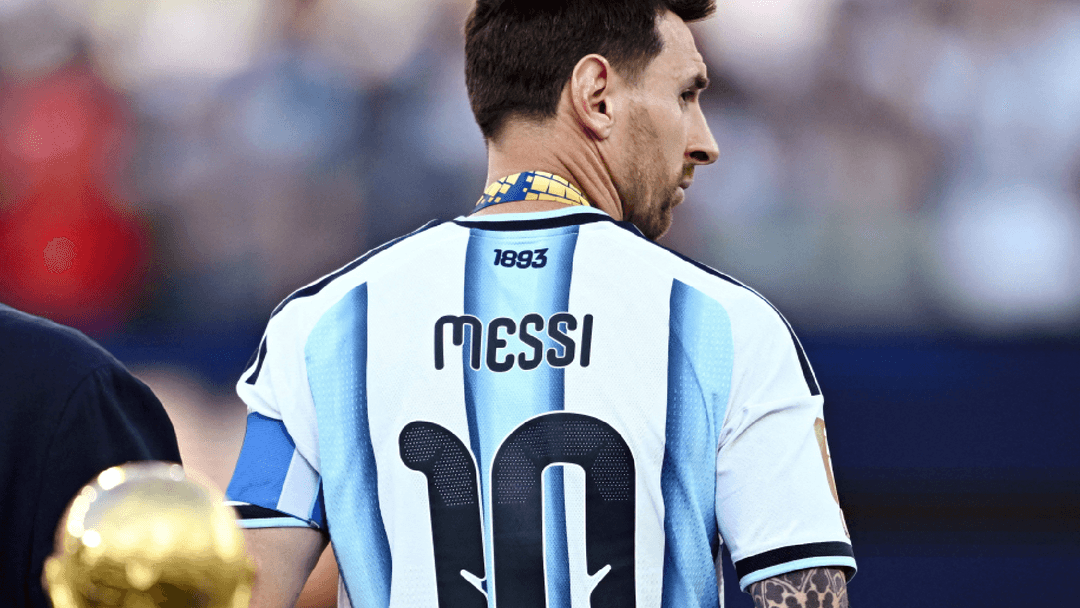
The Meadowlands pitch was almost deserted by the time the lights went out on the BBC studio, located far above the goal into which Ferran Torres had, about an hour earlier, scored the only goal of a tetchy and curiously hollow World Cup final.As soon as the broadcast was done, Wayne Rooney, England’s original teenage football sensation turned 40-year-old pundit, did what most of the world does after being separated from their phone for a few hours: he leaned on the wooden frame and began scrolling. Hot gusts hurried through the stadium, which felt forlorn now. People had paid obscene prices for the privilege of attending this day, this occasion, but they fled for New York City in a hurry.Meadowlands is a natural marshland that had been a despoiled dumping ground for most of a century, until the Giants took a gamble and built a stadium there: an ecological revival operation has begun since the new stadium was built. But there is nothing out there, it’s a concrete emptiness. A small band of football fans were loitering, waiting for Rooney. He came down the wooden steps. Two security guards shadowed him as he walked along through the dregs of the arena. The beer and food stands were already shuttered, and a few dozen traipsed after Rooney trying to take selfies. Micah Richards, his fellow pundit, followed behind with the crew, laughing at the fact the fans didn’t bother him.Rooney will always be football royalty: second only to Harry Kane now on England’s all-time goal scoring list (85 to 53); still England’s youngest ever goalscorer, haunted by the tabloids during the years when the Premier League was going supernova and playing long enough to bag a £17 million contract towards then end of his career.“It was beginning to change then,” he said sympathetically when Roy Keane and Gary Neville, team-mates in his early years, couldn’t disguise their shock when he told them.Rooney is a touchstone, one of the last of the street footballers, brimming with a caustic, Croxteth tongue that he has begun to use more liberally as a pundit and at once England’s brightest hope and Ireland’s lost son.Rooney was adamantly English - or, more specifically, Scouse. The London tabloids punished him for not being Enid-Blyton English like Lineker, or glamorous like David Beckham, and they punished him because he carried himself with Liverpudlian separateness.[ I watched on a plane as Argentina delivered a World Cup highOpens in new window ]I remembered something he’d said about playing for his granny’s country as he walked past us along the upper tier of the Meadowlands. The last time I’d laid eyes on him was after England had been held to a 1-1 draw by the USA in Rustenberg at the South Africa World Cup.“Mine would be Ireland,” he said when asked about another country he might have played for.“Mick [McCarthy] called me up. I was 16. I’m close to doing it. And he called up for 21s. I said I’m not playing for Ireland 21s. If you want me, I’ll play for the seniors. I can play for England 21s. But it never happened. I obviously went to England.”The Croxteth boy was a good earthing point for the closing finale in Meadowlands. More than anything, the World Cup had been an epic immigrant story, a sprawling event spread across three enormous countries currently locked in economic and verbal warfare.The entire event was foreshadowed by international apprehension of the difficulties of merely getting into the USA. Teams from Haiti, Senegal and the Ivory Coast contested the tournament despite visa restrictions and a late removal of those restrictions on its notional fans.Iran’s entry to the United States was limited strictly to the eve-of-match access to play its three first-round games in Los Angeles and Seattle, which took place during the fragile peace deal that has since fallen apart.Journalists, officials, team-coaching staff from Ghana, Jordan, Tunisia, Morocco and Algeria also complained of high visa refusal rates. Somali referee Omar Artam arrived at Miami International Airport with a visa and diplomatic passport but was refused entry.In other words, the treatment of arriving teams and fans mirrored the Trump administration’s attitude towards those countries. Some countries were immune. Trump has been vehement in his criticism of Spain in recent months. But Spain is European, and its ties to this country are centuries older than the United States itself. They had no difficulties.Footage has emerged of Dani Olmo and a few of Spain’s players freewheeling down a Manhattan street on Citibank rentals a few days before the tournament, happily anonymous and enjoying one of the touristic delights of that city.The Iran team never really set foot in the US, shepherded from airport to hotel, which they never left apart from the training ground and stadium. On the streets, Iranians in the US protested against their presence as an instrument of the regime and turned up in great numbers to support them. In Seattle, by far the most authentic football stadium experience I encountered, the streets around Pioneer Square were an odd combination of boozy revelry and earnest protest. Locals protested against Trump and US Immigration and Customs Enforcement (Ice). There were anti-Islamic regime protests and pro-union marches and, just a two-minute walk from Lumen Field, a number of people holding banners in support of Cuba.[ Keith Duggan: Seattle appeared magical – the US may have found its natural football homeOpens in new window ]Chris Melrone told me she had been an activist for more than 50 years, travelling from the farm she grew up on in North Dakota to take part in the Wounded Knee occupation of 1973, when Native Americans demanded the recognition of 19th-century treaty rights. She spelled her name and explained: “It was given to my grandfather on Ellis Island because they couldn’t understand what the hell he was saying in Norwegian.”[ Message from the Editor: When sportswriting rises to something approaching literatureOpens in new window ]I told her that Seattle, with its mists and forests, seemed far removed from Washington DC, but she said the pessimism was general.“This is the most disheartening time because of the amount of greed and grifting, and because we are not recognising the grifting. It is so hard to understand how other Americans aren’t seeing that. We are doing a lot of scenario planning in terms of protecting the vote, and you don’t hear about that,” she said.Seattle was the venue for the most explicitly controversial moment of the World Cup, when Trump intervened, or publicly lobbied Fifa president Gianni Infantino, to overturn the red card issued to USA striker Folarin Balogun in advance of the host team’s knockout game against Belgium. Trump happily shared details of the phone call, as though under the impression it would reflect well on him. Once again, Infantino appeared craven and unapologetic about the development. It tainted the tournament and arguably robbed the USA of the momentum they had built up.They were thumped 4-1 in a brutal exhibition illuminating the gulf between “soccer” and the European game. And Balogun is American by accident of birth: his Nigerian parents were visiting New York and were refused admission by flight attendants on their return to London because his mother was in advanced pregnancy. He was born in New York, grew up in London, where he went through the coaching systems and declared for his birth country. The controversy occurred just weeks after the US supreme court had rejected Trump’s executive order overturning 150 years of birthright citizenship.The controversy broke just as the World Cup had reached a cruising altitude in the national imagination. It had become, despite the ominous previews, a triumph of human spirit. The vast majority of travelling fans went through immigration with no problems, and they got to discover American cities and its landscape on their own terms.The Scots took over Boston. The Norwegians delighted the Americans with their highly organised rowing fun, setting aside its menacing historical connotations. Teams from Argentina, the Netherlands and England set up shop in Kansas City.In the three decades since the 1994 World Cup, soccer has grown enormously in the US. Premier League jerseys have become a fashion item, but it remains a minor sport in the country.Yet, the US seasons are defined by its big sports: American football to guide them through the brutal winters, basketball in the spring and baseball, “the national pastime” in high summer. So, the sudden arrival of three international football games a day, day after day, without the imposition of advertising breaks every three minutes, involving extraordinary matchups, was an exotic curiosity.The Algeria team chose Lawrence, a liberal college town in Kansas (where George Kimball, late of this parish, once ran for sheriff as a jape) as their base. Lawrence residents transformed their city into an Algerian supporters club for the month. Algerians living in United States drove across country to experience it because, as they told the local television networks, they would never see anything like this again.While Mexico and Canada were co-hosts, the USA was the gravitational centre of the tournament. Unsurprisingly, the Americans ran the event like clockwork. In Los Angeles, it was easy to move through the city on the Friday of the opening game, between USA and Paraguay, blissfully unaware the World Cup was even taking place.The US is too dynamic and impatient - and the advertising too expensive - for lengthy preludes. It happens when it happens. On Wednesday, June 3rd, the World Cup was impossible to find. By Friday, it was everywhere. Each host city was taking on its own mini Olympics, with volunteers and traffic lanes and street merchandising. The infusion of so many foreign visitors, all at once, was a distraction from the emotional drag of the political atmosphere. The stadiums were mostly full, mainly with Americans who were willing to pay larcenous fees to attend an event that may or may return.As the tournament gained momentum, Argentina came to occupy a curious place in the story. In short, Argentina made this World Cup. It didn’t matter who they played, their presence came to guarantee a rich melodrama and controversy. Many neutrals found themselves rooting for Lionel Messi while turned off by the teary petulance and histrionic displays of his team-mates.Against that, it was difficult to feel anything at all about their opponents in the final, Spain. Rodri, their lodestar, was so composed and immaculate in everything he did that he hardly seemed to break sweat in the tournament. He could have played the final wearing a three-piece suit and carrying a briefcase.The final itself was an exhausting anticlimactic affair. In the earlier rounds, it felt as though the World Cup had been appropriated by the people, Americans and international visitors alike. Back in the Meadowlands, the closing game was designed to project Infantino’s vision for Fifa in the future.As the supreme sports event, it was at once boring and obscene, with the $1 million velvet sofa seats (four places, complimentary sunhats, steak dinners and a terrible view), a heavy emphasis on celebrity, the security complications caused by Trump’s attendance and that disastrous half-time mini concert that sucked the last of the energy and goodwill out of the day. It felt as though the global understanding of the World Cup was undergoing a metamorphosis before the eyes of the world: that it had been officially signed as yet another vehicle for the relentless promotion of the luxury lifestyle and the celebrity grift. Despite the overwhelming goodwill of the American people, corporatism had won out in the end.Messi himself seemed infected by the general garishness of the day, drifting around the hot afternoon and unable to break through Spain’s claustrophobic cover and the dead atmosphere. Spain won and their players seemed happy - although a little disappointed that not one team had given them a decent game.Lamine Yamal, the upcoming figurehead of the world game, lingered on the pitch with his girlfriend and young half-brother. He is still 19 and has won his first World Cup with disconcerting ease. In the bowels of the stadium, Lionel Scaloni was, at the same time, giving a press conference, during which he spoke about his gratitude for his Argentinian players before abruptly breaking off, in tears, explaining: “It hurts, it hurts my soul, I’m sorry.”Leaping into the metaphysics of sports does not play well in official United States. By Monday, the morning show hosts praised Spain and offered a scathing review of Argentina’s postgame disgraces - the scuffles, the tears, the symbolic decision to stand facing their crowd with their backs to the presentation. On the podium, a camera caught Trump’s crestfallen expression after Unai Simón, Spain’s goalkeeper, offered him a perfunctory handshake before enveloping Mark Carney, Canada’s prime minister, in a big hug. The disappointment was general.“Argentina didn’t even get a shot off in regulation time,” scolded Joe Scarborough, the host of a popular political morning show. “So what are they whining about? And I have to say: you gotta look at Messi. Where was he when this was going on? And more than that, where was Messi when Argentina turned their backs on Spain?“I want you to look at this picture. The sportsmanship here is pathetic. Fifa should penalise every single player on the field, every single manager of the field, Argentina’s association should be fined. That is just extraordinarily bad taste. And the question is: where was Messi?“If he is this legendary leader, to not say, turn around. Be men. Be grown up. Stand up and face the music. They beat us, they dominated us. Now, be a man.”It was as though, having embraced it for six weeks, official United States was quickly distancing itself from the global obsession with football.It was fun while it lasted, but time to move on.

Most Popular